
Livraison le jour même ou le lendemain

Qualité garantie

Débloquez vos offres de bienvenue: Livraison GRATUITE | Jusqu'à -80 % | 30 jours d'essai gratuits à JoyPlus
Téléchargez l'application
Dust, pollen, cooking fumes, pet odours and fine particles can quickly reduce indoor air quality. An air purifier fitted with a HEPA filter can capture some of these pollutants, provided it is suited to the room size and properly maintained.
However, the market has a few potential pitfalls. A large stated coverage area does not guarantee that the appliance will purify the entire room effectively. Likewise, simply mentioning “HEPA” is not enough to distinguish between two models. Here are the criteria to consider before buying an air purifier for your home, bedroom or office.
Manufacturers often calculate the coverage area based on just one air change per hour. This may be suitable for a large room that is rarely occupied, but it may not meet the needs of a bedroom, a home with pets or a space exposed to fumes.
When comparing appliances, focus mainly on the CADR, meaning the clean air delivery rate, expressed in m³/h. The higher it is, the more quickly the purifier can replace the air in a room, provided it is installed correctly.
A stated efficiency of 99.97% should always be interpreted in context : the size of the particles measured, the testing protocol and the airflow used. An H13 HEPA filter can capture very fine particles, but a low-powered appliance will simply move less air through the filter.
The technical specifications should state the filter type, airflow and, where possible, the conditions under which the measurement was taken. This information is far more useful than an isolated percentage.
A dust air purifier gradually becomes less effective as its filter becomes saturated. Check its stated lifespan, replacement cost and the availability of consumables in France. Depending on usage, the environment and air quality, some filters need replacing every six to twelve months.
A washable or cleanable pre-filter can capture hair, pet fur and visible dust. However, the main HEPA filter should generally not be washed unless the manufacturer explicitly says that it can be.
An appliance designed for a 10 to 20 m² bedroom will not have the same capabilities as a purifier intended for a large room. In an open-plan living space, compare the stated coverage area with the number of air changes per hour you actually want to achieve.
The specifications for the models below include :
A typical system combines three elements :
An H13 HEPA filter is therefore particularly useful against fine particles. If you are mainly looking for an odour-removing air purifier, pay closer attention to the amount and type of activated carbon used. Pet owners should choose a model with a pre-filter that is easy to access and clean.
In a bedroom, a quiet air purifier should be able to run at low speed without producing distracting light. A night mode, timer and the option to switch off the display are genuinely useful features for everyday use.
A connected air purifier may also offer air quality monitoring, scheduling and remote control. However, these features are secondary if the airflow or filtration is not suited to the room.
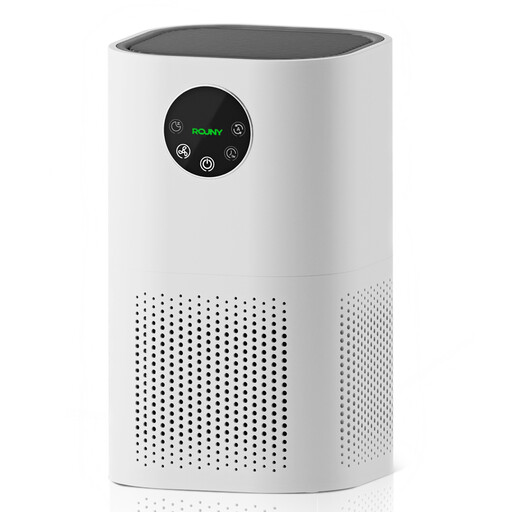
Why this choice suits this profile : With a CADR of 150 m³/h and a stated coverage area of 20 to 50 m², it is suitable for a bedroom, office or moderately sized living space.
The specifications state the airflow, noise level in sleep mode and indicative filter replacement interval, rather than focusing solely on a general coverage area.
H13 filter, air quality display, four speeds and a sleep mode rated at ≤ 25 dB.

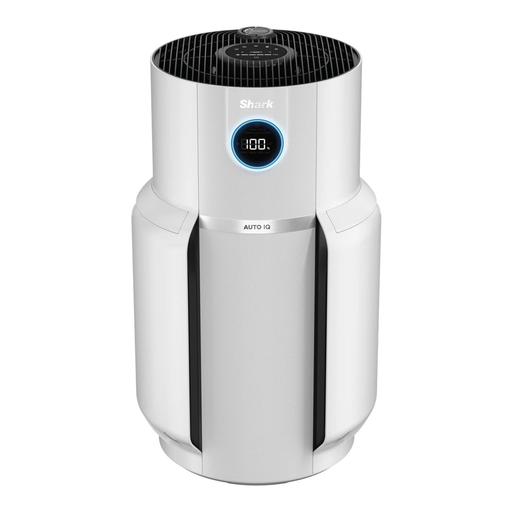
Why this choice suits this profile : With a stated CADR of more than 700 m³/h and coverage of up to 154 m² under the specified conditions, it is designed for large living rooms and open-plan spaces.
The specifications distinguish between the high airflow, the different filtration stages, laser detection and the coverage conditions, allowing for a more meaningful comparison.
App and voice assistant control, automatic mode, OdorFence filter and interactive display.
Why this choice suits this profile : This model is designed for large spaces, covering up to 130 m² according to the specifications, and for households looking to extend the intervals between filter replacements.
The NeverChange5 filter is rated to last for up to five years. However, the indicator and the filter’s actual condition should still be monitored.
Four stated filtration layers, automatic mode, LED display and quiet operation according to the specifications.
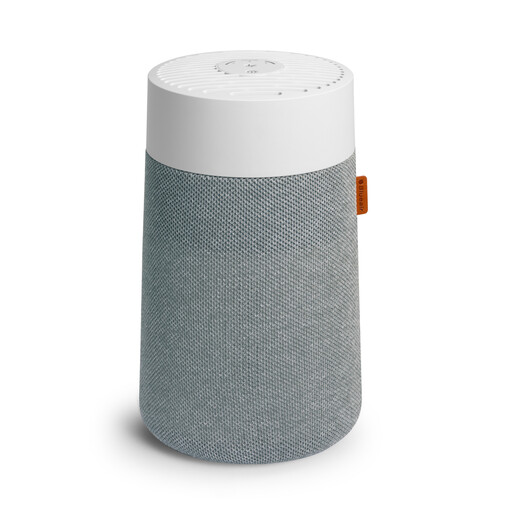
Why this choice suits this profile : Compact and easy to move, it can be used in a small bedroom, office or room of less than 20 m².
Its coverage area is limited and clearly stated. This reduces the risk of choosing a compact appliance for a large living room.
Stated CADR of 117 m³/h, HEPASilent filtration and a 29 × 17,3 × 17,3 cm design.
Place the purifier on a stable surface, generally leaving at least 30 cm around the air inlets and outlets. Keep it away from curtains and furniture, and avoid cramped corners or damp areas. In a bedroom, position it away from the bed so that the airflow is not directed straight at your face.
Dust the grilles and pre-filter regularly when instructed to do so in the manual. Always unplug the appliance before cleaning it or replacing its filter. If the model is connected, also make sure that you pair it with a secure wireless network.
A purifier is not a substitute for airing your home, removing a source of pollution or maintaining your ventilation system. If you have a respiratory condition, consult a healthcare professional with any medical questions.
We have brought together a complete selection, updated in real time, of products that meet these demanding criteria and European safety standards.
It depends on the size of the room, the CADR and the source of pollution. Continuous operation at low speed may be suitable in a bedroom or office. A higher speed can be useful after cooking or during a period of heavy dust. Follow the recommendations in the manual and keep an eye on the noise level.
The interval varies according to the model and conditions of use. Manufacturers often suggest six to nine months, but a home with pets, smoke or a lot of dust may require more frequent checks. Use the relevant indicator when available, and never wash a HEPA filter without the manufacturer’s explicit approval.
Consumption depends on the appliance’s power and how long it runs. In night mode, it generally uses less electricity than at maximum speed. To estimate the cost, multiply its power in kilowatts by the number of hours of use, then by the kilowatt-hour tariff set out in your electricity contract.