
Livraison le jour même ou le lendemain

Qualité garantie

Débloquez vos offres de bienvenue: Livraison GRATUITE | Jusqu'à -80 % | 30 jours d'essai gratuits à JoyPlus
Téléchargez l'application
Dust, pollen, cooking fumes, pet hair or lingering smells: an air purifier with a HEPA filter can complement your daily ventilation, as long as it’s suited to the room and how you plan to use it. The challenge is comparing the often unclear claims made by manufacturers.
Before buying an air purifier for your home, check three things: the airflow rate, the actual make-up of the filtration system and the cost of maintenance. A compact, undersized appliance may circulate the air without effectively treating the whole room. On the other hand, a very powerful model may be noisier and more expensive to run.
A diffuser or odour-control device makes the air smell pleasant, but it’s no substitute for a proper filtration system. Scented refills may contain substances that can cause an allergic reaction, so always check the label and instructions for use.
To reduce particles, look for genuine mechanical filtration. To tackle odours and certain gaseous compounds, an activated carbon filter is generally used alongside the main filter. These two functions meet different needs.
The HEPA label isn’t enough to tell two appliances apart. Check the stated class, such as H13, whether there’s a pre-filter, and the clean air delivery rate, often given as CADR and measured in m³/h. A highly effective filter in an appliance with limited airflow won’t necessarily perform as well as a more powerful system.
A saturated filter gradually becomes less effective and can also reduce airflow. The cost of consumables should therefore be factored into your budget. Check whether replacement cartridges are available, whether the appliance indicates when the filter is worn, and whether the filter can be washed. Some manufacturers clearly state that their composite filter must not be washed or reused.
Take the stated coverage area with a pinch of salt. Some manufacturers base their figures on one air change per hour in a large room, while others quote a higher rate for a smaller area.
For a bedroom or home office, compare the CADR and noise level at low speed. In an open-plan living room or a large room, opt for a higher airflow rate and make sure the air inlet is unobstructed. If it’s placed against a wall, behind a curtain or under a shelf, an air purifier won’t be able to work at its best.
A well-designed system generally includes:
Filtration is no substitute for opening the windows when outdoor air quality allows, or dealing directly with the source of an odour or smoke.
For a bedroom air purifier, the noise level in night mode matters. Compare the stated decibel levels for each speed: a particularly low figure may apply only to the lowest setting.
An air purifier with automatic mode can adjust its speed using a particle sensor. Connected models sometimes add scheduling, app-based monitoring or voice control. Handy features, certainly, but they don’t replace the essentials: airflow, filtration quality and filter availability.
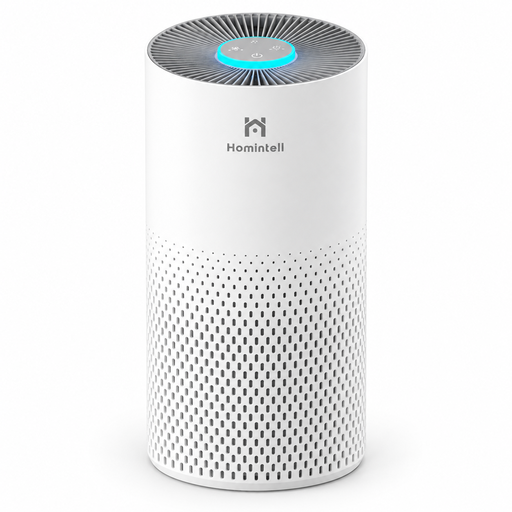
Why it suits this type of user : its compact design and touch controls make it a good fit for a bedroom, home office or room of around 16 to 18 m², according to the product information.
The product information lists a system combining a pre-filter, HEPA filter and activated carbon, as well as a filter replacement alert.
Three speeds, a 2-, 4- or 8-hour timer, a PM2.5 sensor and a spare filter included, according to the product description.
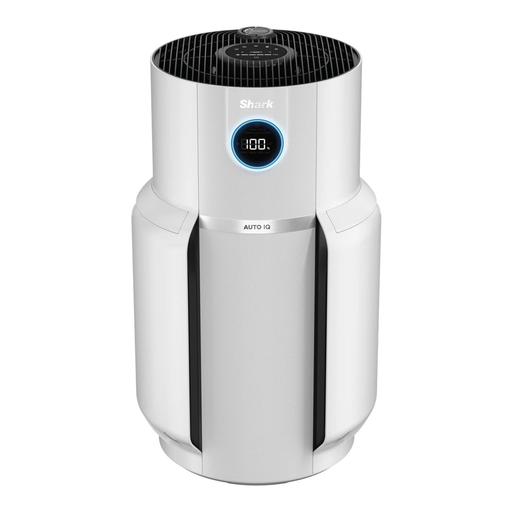
Why it suits this type of user : designed for living rooms and larger spaces, it displays air quality and adjusts automatically.
The stated coverage area distinguishes between use with one air change per hour and more intensive operation across a smaller area.
The manufacturer lists four filtration stages, an automatic mode, quiet operation and a filter said to last up to five years, depending on use.
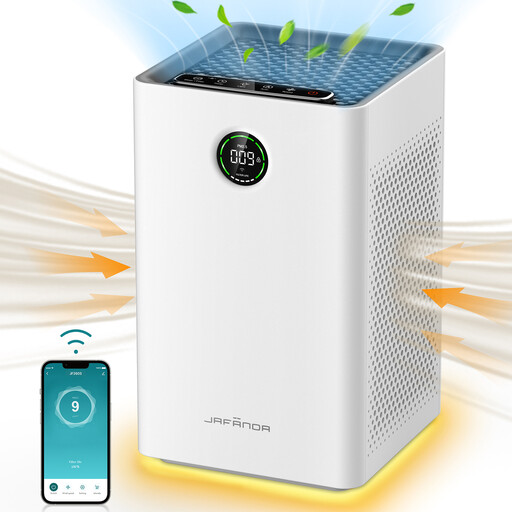
Why it suits this type of user : its stated airflow rate of 260 m³/h, Wi-Fi connectivity and voice control make it a good fit for a family home or for anyone who wants to schedule their appliance.
The product information details the CADR, coverage areas based on the number of air changes, and the H13 filter combined with activated carbon.
Automatic mode, PM2.5 monitoring, five speeds and a night mode rated at 23 dB.
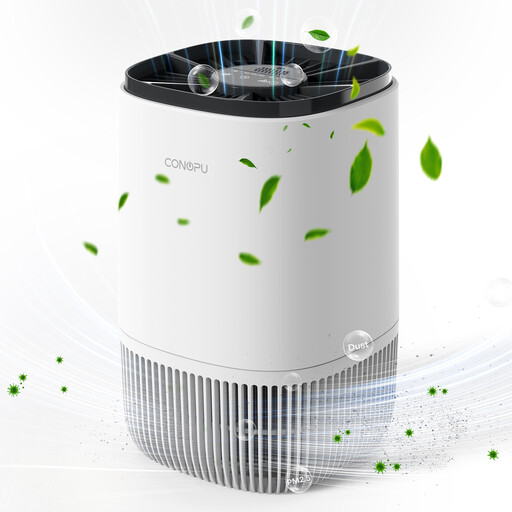
Why it suits this type of user : its portable design makes it easy to move between a bedroom, home office and living room. It offers three modes and a 24-hour timer.
The product information sets out the pre-filter, H13 filter and activated carbon layer, rather than relying on a vague promise of freshness.
Rated power of 5 W, dimensions of 170 × 170 × 260 mm and operation described as quiet.
We’ve brought together a comprehensive, regularly updated selection of products that meet these demanding criteria while complying with European safety regulations.
Place the air purifier on a stable surface, leaving enough space around the air inlets and outlets. Avoid very humid rooms, heat sources and areas where it could be splashed with water. In a bedroom, switch on night mode and turn off the indicator lights if the appliance offers this option.
Regularly dust the grille and replace the filter according to the indicator or the manufacturer’s recommendations. Only wash and reuse a filter if the instructions explicitly allow it. To keep electricity use down, choose automatic mode or use the timer when continuous purification isn’t needed.
Not necessarily. Running it for longer can make sense when the room is occupied or there’s a source of particles, but automatic mode and the timer let you adjust how it works to suit the situation. Remember to ventilate the room when outdoor air quality allows, too.
It depends on its power rating, how many hours you use it for and the price of the filters. An appliance rated at 23 to 32 W will generally use less electricity than a model running continuously at full power, but only your usage time will give you a realistic estimate of the cost. Remember to factor in the price of replacement cartridges and how often they need changing.
Compare a clearly identified HEPA filter, an airflow rate suited to the size of your room and a noise level that fits your daily routine. If you also want to reduce odours, check for an activated carbon filter. Appliances and their performance are no substitute for medical advice: if you have a respiratory problem, ask a healthcare professional for advice.