
Livraison le jour même ou le lendemain

Qualité garantie

Débloquez vos offres de bienvenue: Livraison GRATUITE | Jusqu'à -80 % | 30 jours d'essai gratuits à JoyPlus
Téléchargez l'application
Dust, pollen, cigarette smoke, cooking odours or pet particles: a HEPA air purifier can improve everyday comfort, provided you choose a model suited to the room and maintain it properly. However, the units available in the UK show significant differences in airflow, filtration, noise levels and filter costs.
Before you buy, three common pitfalls keep cropping up.
Expressed in m³/h, the CADR tells you the volume of air the unit filters under set conditions. It's a more useful metric for comparing models than a simple coverage area.
To estimate your needs, start by calculating your room's volume:
floor area × ceiling height = volume in m³
A 30 m² living room with a 2.5 m ceiling works out at around 75 m³. A model with a CADR of 150 m³/h will be fine for moderate use. For stronger air circulation or a larger room, a flow rate between 400 and 550 m³/h will generally be more suitable. However, the stated room sizes should be interpreted based on the number of air changes per hour the manufacturer has used.
For everyday use, a multi-stage system is usually the most practical:
Stated performance figures, such as "99.97%", should always be taken in context: particle size, test protocol and filter condition. They are not a medical promise and do not replace the need to air your home regularly.
For a bedroom, home office or child's room, check the noise level of night mode, rather than just the lowest setting. Product specs quote, for example, 20 dB for the Jafända JF268N, 24 dB for the ELECCI and up to 25 dB for the ROUNY in sleep mode.
A PM2.5 sensor, automatic mode and an air quality indicator can make using the unit simpler. These features do not, however, replace professional air quality testing. If you opt for a smart purifier, also check the compatibility of the app and the voice assistants you use at home.
Finally, compare the price and availability of replacement filters. Their stated lifespan, often between six and nine months, depends on how often you use the unit, whether there is smoke or pets, and the level of indoor pollution.
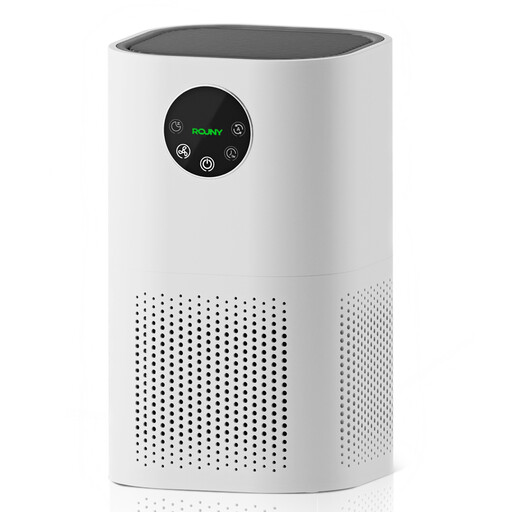
Why this choice suits this profile: With a CADR of 150 m³/h, four speeds and a stated coverage of 20 to 50 m², this model makes a good first purchase for a bedroom, home office or moderately sized living space.
The spec sheet clearly states the CADR, sleep mode at ≤ 25 dB and the filter replacement interval, quoted at between six and eight months.
Stated H13 filter, air quality display, timer of 2, 4 or 8 hours and four speeds.

Why this choice suits this profile: With a CADR above 700 m³/h and a stated coverage of up to 154 m², it targets large living rooms and open-plan homes, subject to the measurement conditions specified by the brand.
The airflow and coverage conditions are stated separately. This helps avoid confusing a large stated area with intensive purification.
Automatic mode, laser sensors, mobile app, voice controls and stated seven-stage filtration.
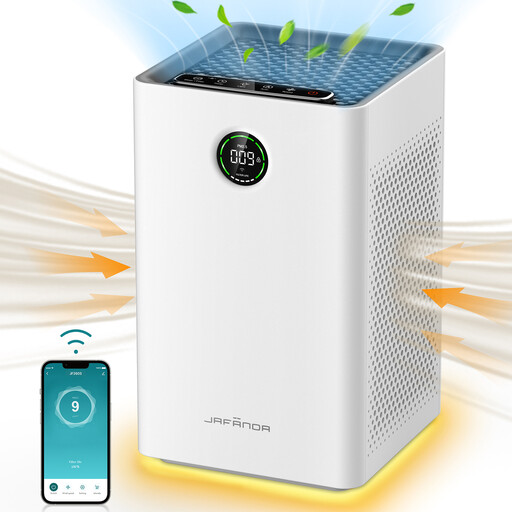
Why this choice suits this profile: Its five speeds, PM2.5 sensor, automatic mode and control via app or voice assistant make regular use in a large room easy.
The manufacturer distinguishes between coverage areas based on one, two or five air changes per hour, with a stated CADR of 260 m³/h.
Stated H13 filter with activated carbon, sleep mode from 23 dB, scheduling and air quality tracking.
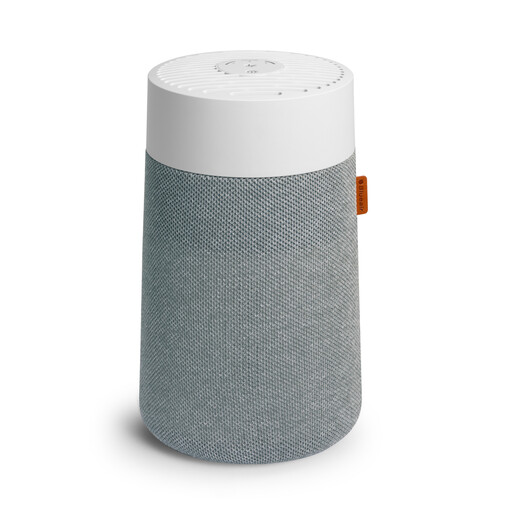
Why this choice suits this profile: Its compact size, CADR of 117 m³/h and stated coverage of up to 20 m² mean you can easily move it from a bedroom to a home office or small room.
Its dimensions and airflow are specified, which stops you choosing a compact unit for a room that is too large.
Stated HEPASilent filtration, lightweight unit at 2.5 kg and FMINI replacement filter specified by the brand.
We have put together a comprehensive, real-time updated selection of products that meet these exacting criteria as well as European safety regulations.
Place the purifier on a stable surface, leaving the recommended space around the air intakes and outlets. Keep it away from curtains, furniture, heat sources and damp rooms. In a bedroom, run the unit on a low speed before you go to bed, then activate night mode if the noise level suits you.
Dust the grille and the pre-filter regularly when it is washable. Always unplug the unit before cleaning or replacing the filter. Never immerse the purifier in water and do not run it without a filter properly installed.
The HEPA filter mainly targets the particles in smoke. To limit odours, choose a model fitted with activated carbon. The result depends on the amount of carbon, the ventilation and the source of the smell. It is still essential to air your home and remove the source of the smoke.
It all depends on the room volume, the CADR and the air quality. Continuous use on a low speed can be more pleasant than occasional use at full power. When a sensor is present, automatic mode can adjust the airflow, but the instructions in the manual should always take priority.
You need to factor in the electricity consumption and the price of the filters. Compare the wattage, the stated replacement interval and the availability of consumables. A unit with a long-life filter can reduce the number of interventions, but remember to check the price of the compatible filter before you buy.