
当日/次日达

品质保障

开启新人专享福利: 全场免邮 | 低至 2 折 | 免费试用 30 天 JoyPlus 会员
下载 Joybuy
Dust, pollen, cooking fumes, stubborn odours and particles left behind by pets: a HEPA air purifier can complement your home's everyday ventilation. However, you need to know how to read a product specification sheet, as claims are not always directly comparable. A small machine advertised for a large area may not deliver enough airflow, while a discreet appliance in night mode can become genuinely noisy at full power.
Before you buy, focus on the figures that really matter: purified air flow rate, coverage area, noise level, filter composition and the price of replacement consumables. Here are the key criteria to consider, followed by a selection suited to different needs.
Some manufacturers calculate the coverage area based on just one air change per hour. This figure does not guarantee that the appliance will filter the air effectively in a busy living room or a room exposed to a sudden increase in pollen.
When the information is available, compare the CADR instead, expressed in m³/h. An airflow rate of 150 m³/h may be suitable for a small room or for extended operation, but it will be less effective in a large living room than a model delivering more than 400 m³/h.
The term HEPA is not enough to describe the entire filtration system. Check for a pre-filter, a HEPA or HEPA H13 filter, and the conditions under which performance was measured. The pre-filter captures hair and visible dust, preventing the main filter from becoming clogged too quickly.
For cooking, tobacco or pet odours, a simple particle filter quickly shows its limitations. An air purifier with activated carbon will generally be more suitable, provided that the quantity and composition of the carbon are clearly specified.
A noise level measured in night mode does not reflect how loud the appliance is at full power. In a bedroom, check both the minimum and maximum figures, look for a night mode and make sure the indicator lights can be switched off.
Also think about the replacement filter: its price and availability matter just as much as the cost of the appliance itself. A budget air purifier may ultimately cost more if its filter needs replacing frequently or is difficult to find in France.
Measure the main room and take its ceiling height into account. In a studio flat, an air purifier installed near the bed will not have the same requirements as a model intended for a living room open onto the kitchen.
Here are some useful guidelines:
Avoid placing the air purifier behind a sofa, against a curtain or in a corner. Its air intakes and outlets must remain completely unobstructed.
A HEPA filter, particularly HEPA H13, is designed to capture fine particles according to a specific class and precise test conditions. Figures such as “99.97%” should therefore be accompanied by the size of the particles concerned and the test protocol used.
For allergy sufferers, an air purifier can help reduce airborne particles such as dust and pollen. It is not a substitute for cleaning, ventilation or advice from a healthcare professional. If you have pets, also check for a pre-filter that is easy to clean: hair can quickly reduce the airflow.
Activated carbon mainly targets odours and certain gaseous compounds. It does not replace effective ventilation and is not a miracle solution for every nuisance found in a home.
An air quality or fine-particle sensor can automatically adjust the ventilation speed. This is convenient for everyday use, but the colour indicator is specific to the appliance: it does not provide a complete diagnosis of indoor air quality.
A connected air purifier will generally allow you to schedule operating times, view an indicator in an app or control the appliance remotely. Before choosing one, check its compatibility with your home network and voice assistants, as well as its data-storage policies.
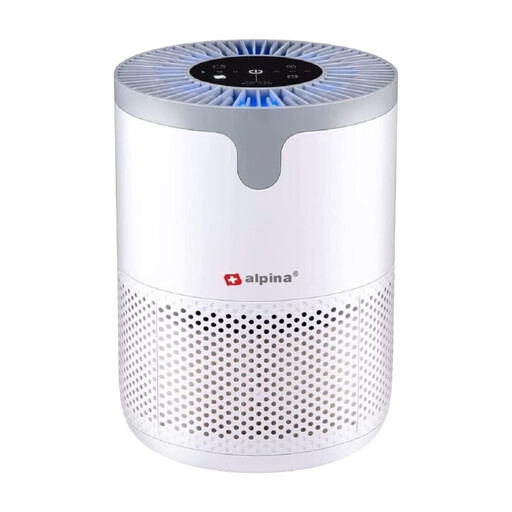
Why this choice suits this profile : Its compact design and advertised airflow rate of 60 m³/h are suitable for small rooms measuring 5 to 10 m², such as a bedroom or home office.
The advertised coverage area is limited and clearly stated, so you are less likely to choose it mistakenly for a large living room.
HEPA H13 filter, timer, night mode and three speeds according to the specification sheet.
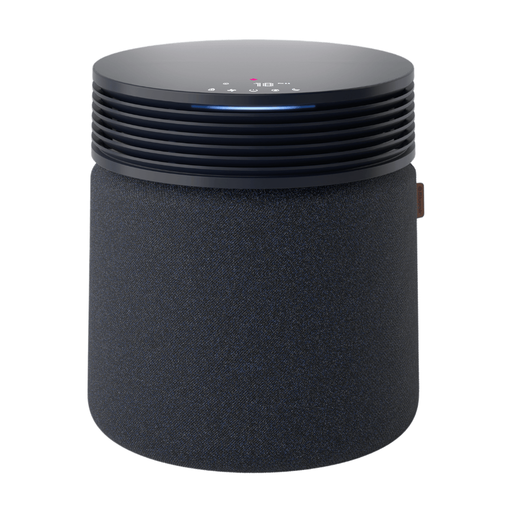
Why this choice suits this profile : This model is designed for large spaces and users looking for automatic management, an app and integration with voice assistants.
Its advertised airflow rate of more than 700 m³/h is accompanied by clearly specified coverage and air-change conditions.
Laser sensor, automatic mode, night mode and advertised seven-stage filtration.
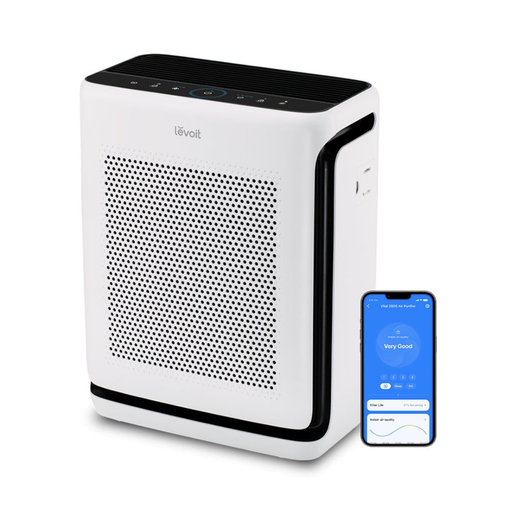
Why this choice suits this profile : Its advertised CADR of 425 m³/h is suitable for regular use in a living room, family bedroom or workspace.
The airflow, noise and coverage figures are distinguished according to the stated air-change rate.
Air quality sensor, automatic mode, VeSync app and an advertised noise level of 23 to 54 dB.
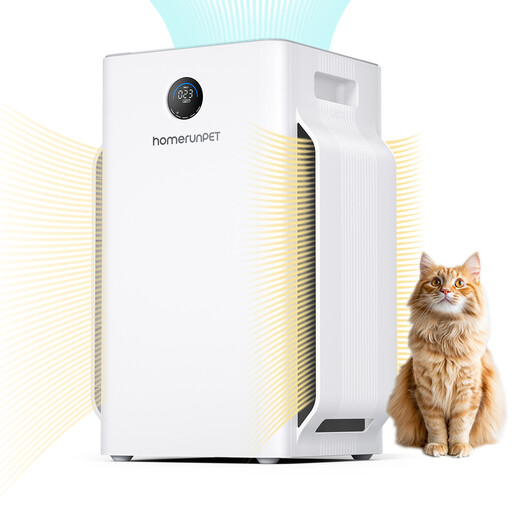
Why this choice suits this profile : Its design is aimed at homes with pets, where hair, dander and odours require regular maintenance.
The pre-filter and air quality monitoring are suited to a home where the amount of airborne particles can change quickly.
HEPA filter advertised as capturing 99.97 % down to 0.3 microns, odour control and a sleep mode advertised at 25 dB.
We have put together a comprehensive, real-time updated selection of products that meet these demanding criteria and European safety standards.
Yes. A compact, quiet model can be perfectly suitable for a bedroom, provided its airflow rate is appropriate for the room's volume. In particular, check the night mode, whether the indicator lights can be switched off and the minimum noise level.
It depends on its power consumption, how long it is used and the price of its filters. For a realistic estimate, add together the electricity consumption and the cost of periodically replacing the filter. Automatic mode or a reduced speed can help limit consumption, but the final cost will vary from one home to another.
Follow the appliance's indicator and the recommendations in the instructions. Filter life depends in particular on dust, pollen, smoke, pets and operating time. Reduced airflow, a persistent odour or a visibly saturated filter should prompt you to check it, even if the recommended replacement interval has not yet elapsed.