
Livraison le jour même ou le lendemain

Qualité garantie

Débloquez vos offres de bienvenue: Livraison GRATUITE | Jusqu'à -80 % | 30 jours d'essai gratuits à JoyPlus
Téléchargez l'application
Dust, pollen, cooking fumes, pet hair and lingering odours: a HEPA air purifier can help reduce some of the particles found in your home. However, you still need to choose a model suited to the room and how you intend to use it. A compact appliance designed for a bedroom will not refresh the air as effectively as a model intended for a large living room.
Before placing your order, it is best to avoid three common mistakes: relying solely on the stated room size, confusing the filtration rate with the actual purification speed, and underestimating the cost or availability of replacement filters.
Manufacturers often indicate a maximum room size, but this figure generally depends on the number of air changes per hour required. An appliance advertised as suitable for 50 m² may only provide one air change per hour. For more intensive purification, you may need to use it in a much smaller room.
When comparing models, look instead for the CADR, or clean air delivery rate, expressed in m³/h. This figure gives you a more practical idea of the appliance’s capabilities than simply stating “up to X m²”.
The “99.97%” claim should be viewed in context. It generally applies to a particular particle size and precise testing conditions, as detailed in the technical specifications. It does not mean that every substance in the air will be removed, nor that the room will be purified instantly.
A HEPA filter primarily targets particles. To tackle odours and certain gaseous compounds, it is better to choose an air purifier with an activated carbon filter.
Once saturated, a filter allows less air to pass through and may prevent the appliance from working as intended. Before ordering, check:
An appliance that is inexpensive to buy can quickly cost more to run if its consumables are rare or difficult to find.
The most versatile configuration generally combines a pre-filter, a HEPA filter and a layer of activated carbon. The pre-filter catches larger particles, such as hair, heavier dust and pet hair. The HEPA filter tackles fine particles, while activated carbon helps reduce certain odours.
The term HEPA H13 filter often appears in searches for air purifiers intended for allergy sufferers. However, the classification alone is not enough to distinguish between two appliances. Airflow, the airtightness of the filtration compartment and frequency of use are also important. For people with sensitivities, an air purifier is no substitute for appropriate ventilation, regular cleaning or advice from a healthcare professional.
For a bedroom or home office, a moderate CADR may be sufficient if the appliance runs regularly. In an open-plan living room, a large room or a home occupied by several people, choose a higher airflow rate and make sure that air circulation is not obstructed.
Avoid placing the appliance behind furniture, against a curtain or in an enclosed corner. Leave the recommended space around the air inlets and outlets. During intensive purification, also close the doors and windows.
A quiet air purifier should primarily be assessed by its night mode rather than its maximum noise level. In a bedroom, a difference of just a few decibels can be noticeable.
The following features can make everyday use more convenient:
A sensor makes automatic adjustment easier, but its display is not a complete analysis of indoor air quality.
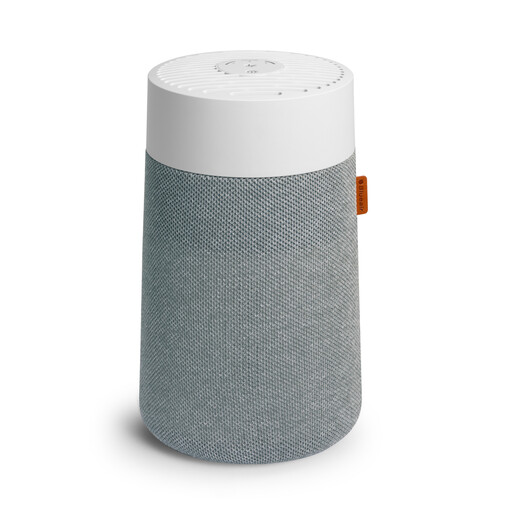
Why this choice suits this profile: its compact design and two-button controls make it suitable for a bedroom, home office or small room of up to 20 m², according to the supplied data.
The specifications state a CADR of 117 m³/h, along with a clearly defined reference room size. This makes it easier to compare performance more realistically.
Advertised HEPASilent technology, an easy-to-move design and a pre-installed filter. Replacement is recommended every 6 to 9 months, depending on use.

Why this choice suits this profile: this model is designed for larger spaces and for those who want to combine purification with connected monitoring and automatic settings.
Its stated CADR of over 700 m³/h is presented alongside several room-size and air-change scenarios, rather than being reduced to a single isolated figure.
App control, compatibility with voice commands, air quality sensors and multi-layer filtration with advertised odour management.
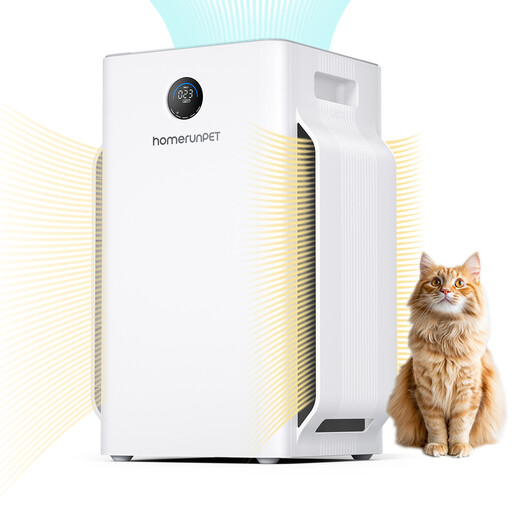
Why this choice suits this profile: its design, created with pet-owning households in mind, addresses everyday issues caused by dander, dust and odours.
The stated inclusion of a carbon pre-filter and an optional deodorising filter clearly distinguishes odour treatment from simple particle filtration.
Advertised night mode at 25 dB, particle sensor and anti-tip base with a secure filter compartment.
We have brought together a complete selection, updated in real time, of products that meet these demanding selection criteria and European safety standards.
Place it on a stable surface, leaving enough space around the air inlets and outlets. Avoid cluttered areas on the floor, curtains and placing it immediately next to a source of moisture. In a baby’s or child’s bedroom, secure the cable and activate the child lock if the appliance has one.
It depends on the room volume, the CADR and the level of indoor pollution. In automatic mode, the appliance can adjust the airflow to the particles detected. After cooking or ventilating a room exposed to smoke, running it at a high power setting may be useful, provided you follow the manufacturer’s recommendations.
You need to take into account electricity consumption and filter replacement. Compare the appliance’s power consumption, the stated filter lifespan and the price of consumables. Night mode or scheduling can prevent the appliance from running continuously at full power, but regular maintenance remains essential to preserve a proper airflow rate.