
Livraison le jour même ou le lendemain

Qualité garantie

Débloquez vos offres de bienvenue: Livraison GRATUITE | Jusqu'à -80 % | 30 jours d'essai gratuits à JoyPlus
Téléchargez l'application
Dust, pollen, cooking fumes, lingering odours and pet hair: a HEPA air purifier can help reduce some of the particles present in indoor air. But not all appliances offer the same level of performance. A 10 m² bedroom, an open-plan living room or a home with several pets do not require the same capabilities.
Before placing your order, three common mistakes come up time and again:
Here are the criteria to consider when choosing an air purifier for your home, bedroom, office or large room, without being swayed by marketing claims alone.
A HEPA H13 filter is designed to capture a large proportion of fine particles when properly integrated into the filtration system and used according to the manufacturer’s recommendations. Technical specifications sometimes quote an impressive capture rate. However, this may apply to the filter alone, under specific conditions, rather than to the air throughout the entire room.
For everyday use, it is generally best to choose a combination that includes:
An appliance sold as an air purifier for odours should therefore contain a sufficient quantity of activated carbon, clearly stated in its technical specifications. A HEPA filter alone is not as effective against odours.
The CADR, expressed in m³/h, refers to the volume of air filtered per unit of time. It is a much more useful indicator than the simple coverage area highlighted in an advertisement. In practice, an appliance delivering between 150 and 180 m³/h is more suited to a bedroom or medium-sized room. Above 400 m³/h, it is more suitable for a large living room, depending on the ceiling height and the desired number of air changes.
When choosing an air purifier for a large room, check:
A quiet air purifier should not be judged solely by the noise level stated for night mode. Also check the measured value at medium speed: a highly flattering figure obtained at the lowest setting says little about the noise produced when indoor pollution levels rise.
An air purifier with a PM2.5 sensor can monitor air quality in real time and automatically adjust the fan speed. This is a useful feature, but it does not replace airing your home when outdoor conditions are suitable or cleaning regularly.
Finally, remember to check the stated filter lifespan, its price and how it is replaced. If the instructions prohibit it, a filter should never be washed or reused.
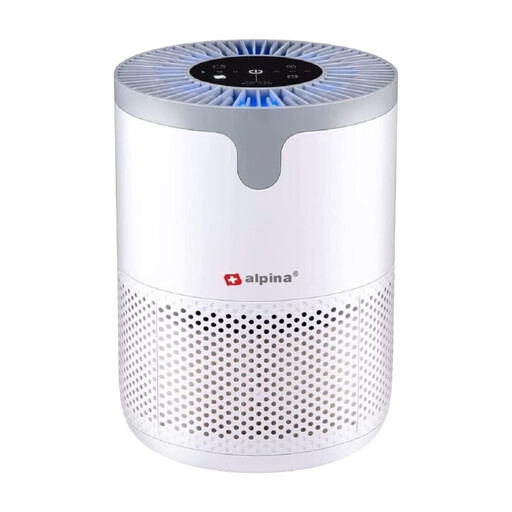
Why this choice suits this profile : its compact design and stated coverage of 5 to 10 m² make it a logical choice for a first installation in a small bedroom or office.
The coverage area and 60 m³/h airflow rate are clearly stated, helping prevent it from being used in a room that is too large. The stated filter is H13.
The product details list a timer, night mode, three fan speeds and an ioniser.
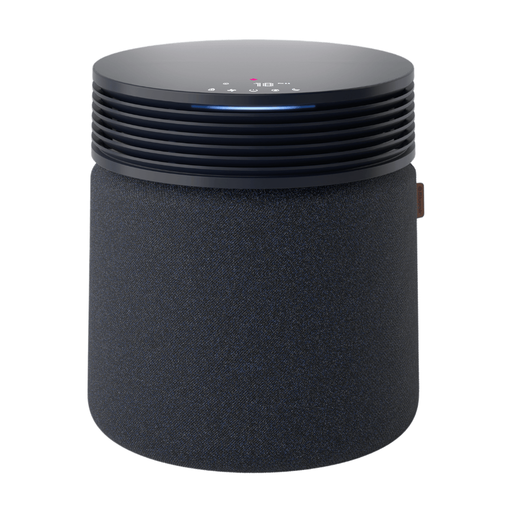
Why this choice suits this profile : this model is designed for large spaces, with a stated CADR of over 700 m³/h and connected controls for more precise air-quality monitoring.
The product details distinguish between airflow rate, stated coverage area and detection features, rather than relying solely on a filtration promise.
The listed features include an app, voice control, automatic mode, laser sensors and an OdorFence filter.
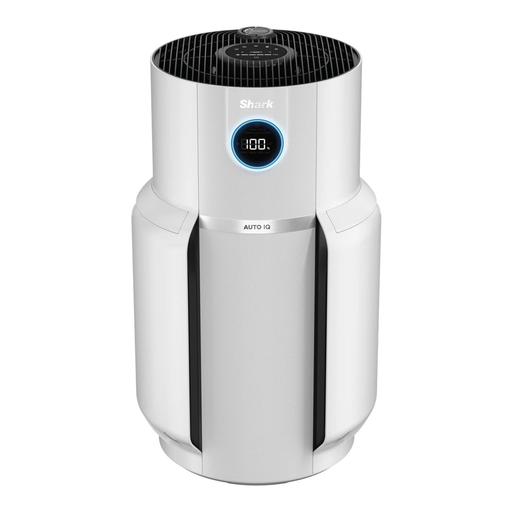
Why this choice suits this profile : its stated coverage of up to 130 m² with one air change per hour is aimed at large living rooms and homes where the appliance needs to run for long periods.
The product details show two coverage levels depending on the number of air changes and specify the stated lifespan of the NeverChange5 filter.
Four-layer filtration, automatic mode, LED display and odour-neutralising function.
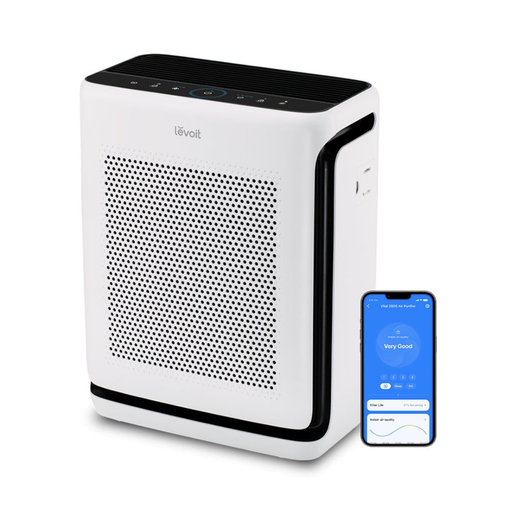
Why this choice suits this profile : its stated night-mode noise level of between 23 dB and 54 dB, air-quality sensor and app make it suitable for a bedroom or a home with pets.
The stated CADR of 425 m³/h is compared with different room sizes according to the air-change rate, making comparisons more realistic.
Three-stage filtration, PM2.5 monitoring, VeSync app, scheduling and voice control.
We have brought together a complete, real-time updated selection of products that meet these exacting criteria as well as European safety standards.
Place it on a stable surface, leaving enough space around the air inlets and outlets. Avoid positioning it behind furniture or a curtain, or directly against a wall. In a bedroom, night mode can reduce noise and brightness, but take the time to check the noise level stated in the technical specifications.
It depends on how the purifier is used, as well as the amount of dust, pollen and smoke in your home. Several manufacturers state a lifespan of six to nine months, while some systems promise longer use under specific conditions. The replacement indicator and the instructions remain the best points of reference.
Consumption depends on the appliance’s power rating, the number of hours it is used and the selected speed. To estimate it, multiply the power in watts by the usage time, then convert the result into kilowatt-hours. Automatic modes and lower speeds can help avoid running continuously at full power, but nothing replaces comparing the rated power of different models.