
Livraison le jour même ou le lendemain

Qualité garantie

Débloquez vos offres de bienvenue: Livraison GRATUITE | Jusqu'à -80 % | 30 jours d'essai gratuits à JoyPlus
Téléchargez l'application
Breathing healthier air at home has become a priority for many families, especially for allergy sufferers or pet owners. A HEPA air purifier seems like the ideal solution, but the market is saturated with marketing promises that make the choice difficult. Our mission: to help you cut through the noise. Let's break down the essential criteria together to make the right choice, without falling for the most common traps.
Before diving into the technical specs, it's crucial to know the common mistakes that could lead to buyer's remorse.
To ensure your device will meet your expectations, focus on these three key points.
The CADR, or Clean Air Delivery Rate, is the number one performance metric. Expressed in cubic metres per hour (m?/h), it measures the volume of air the device can purify in one hour. To choose the right CADR, the rule is simple: it should be proportional to the size of the room.
An effective purifier doesn't rely solely on its HEPA filter. A good system layers several stages for maximum efficiency:
Certain options significantly improve the day-to-day experience:
Here are a few models that suit different user profiles, taking into account the criteria we've just discussed.
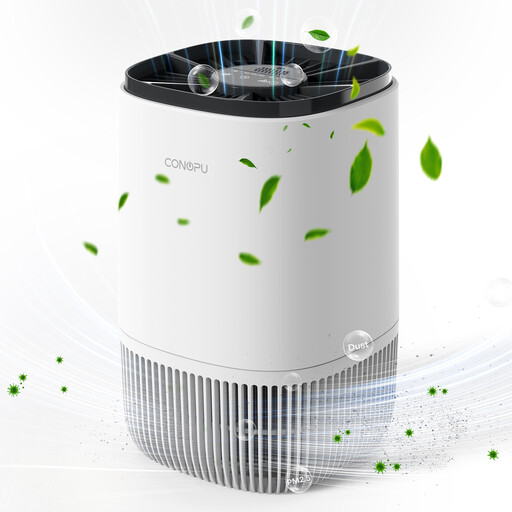
Why we recommend it: Ideal for a bedroom or small office, this compact model focuses on the essentials: H13 HEPA filtration and ultra-simple operation. It's an excellent entry point to experience the benefits of a purifier without breaking the bank.
It includes a true HEPA H13 filter, not just a "HEPA-type." Its 3 modes, including one for night, prevent noise disturbance and ensure peaceful nights.
3-in-1 filtration (pre-filter, HEPA, activated carbon) for comprehensive action. Compact and portable design, easy to move from one room to another.
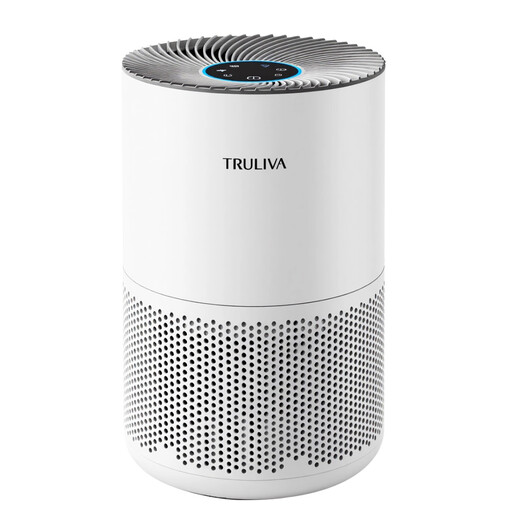
Why we recommend it: With its 260 m?/h CADR, it's designed for rooms up to 31 m?, like a living room or a large bedroom. It's a valuable ally for homes with pets or allergy sufferers thanks to its specialised filters.
Its smart sleep mode operates at just 24 dB, making it a very discreet device for nighttime use. Its washable pre-filter helps extend the replacement interval of the main cartridge, thus keeping costs under control.
High CADR of 260 m?/h for fast and effective purification. Specialised filters for VOCs, smoke, and pet allergens.
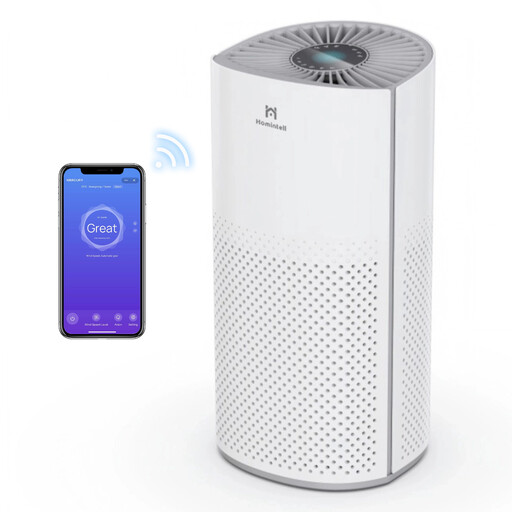
Why we recommend it: For smart home enthusiasts who love to be in control, this model offers complete management via Wi-Fi and an app. Its PM2.5 sensor allows for automatic adjustments and precise air quality monitoring.
The sleep mode at 20 dB is virtually inaudible. The app sends a reminder after 2200 hours of use to change the filter, preventing you from forgetting maintenance and losing efficiency.
Smart control via Wi-Fi and app. PM2.5 sensor with a light indicator for real-time monitoring. 3-in-1 filtration with an HEPA H13 filter.
Discover our full selection of products that meet our selection criteria and current safety standards.
The lifespan of a HEPA filter depends on the air quality and frequency of use. On average, a replacement is recommended every 6 to 12 months. Many recent models, like the Homintell purifier, include a light indicator or an app notification to let you know when the time has come. A washable pre-filter can also help extend the life of the main HEPA filter.
For maximum efficiency, place your purifier in the room where you spend the most time (bedroom, living room). Leave a space of at least 20 to 30 cm around the device to ensure good air circulation. Avoid tucking it into a corner or behind furniture.
Yes, and that's the role of the pre-filter. It acts as the first line of defence to effectively capture pet hair and larger dust particles, which prevents the HEPA filter from getting clogged too quickly. The HEPA filter, in turn, tackles much finer particles like pet dander, which is often the real cause of allergies. The combination is therefore remarkably effective for pet owners.