
Livraison le jour même ou le lendemain

Qualité garantie

Débloquez vos offres de bienvenue: Livraison GRATUITE | Jusqu'à -80 % | 30 jours d'essai gratuits à JoyPlus
Téléchargez l'application
Indoor pollution, allergies, pet dander... Breathing healthier air at home has become a priority. To achieve this, the HEPA air purifier stands out as the gold-standard solution. The problem? The market is flooded with models making vague, or even misleading, marketing claims. Before you invest, it's crucial to know how to avoid the pitfalls to make a truly effective purchase.
As a product expert at Joybuy, my mission is to help you see things more clearly. Let's break down the common mistakes to avoid and the criteria that truly matter.
Marketing can sometimes be deceptive. Here are three common traps that can turn your purchase into a disappointment:
To make the right choice, rely on objective data. Here are the two non-negotiable indicators to scrutinise.
The acronym HEPA (High Efficiency Particulate Air) refers to a filtration standard. However, not all HEPA filters are created equal.
The CADR is the most reliable indicator for assessing a purifier's true effectiveness. It measures the volume of clean air the device can generate in one hour (expressed in m?/h).
To choose the right CADR, a simple rule of thumb is to ensure the device can exchange the air in your room at least 3 to 5 times per hour. For example, for a 20 m? bedroom with a 2.5 m ceiling height (a volume of 50 m?), a CADR of at least 150 m?/h (50 m? x 3) is recommended for effective purification. Checking this spec will prevent you from ending up with an unsuitable device.
To illustrate these criteria in action, here are a few models that meet specific needs.
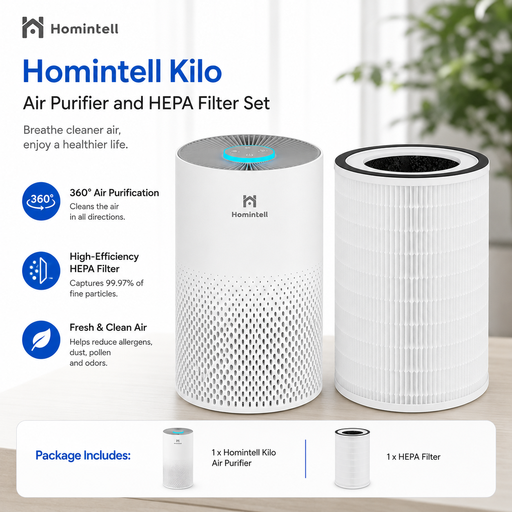
Why this model? Perfect for a first-time purchase or for equipping a small room like an office or a child's bedroom. Its 150 m?/h CADR is well-suited for areas up to 18 m?, offering a significant improvement in air quality without breaking the bank.
This model clearly states its capacity (CADR 150 m?/h for ≤ 18 m?), avoiding the trap of being undersized for small rooms.
It features three-stage filtration (pre-filter, H11 HEPA, activated carbon) and a timer—very handy features for daily use.
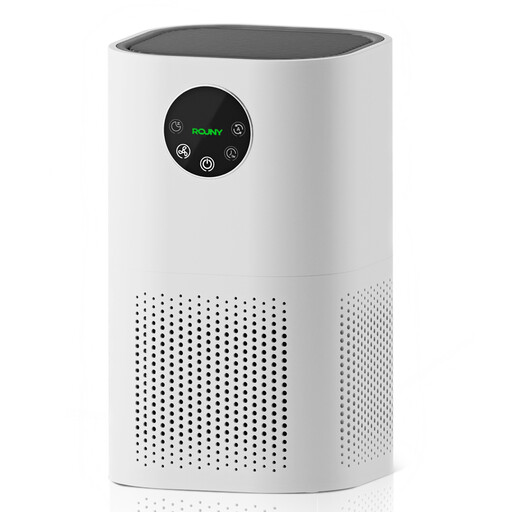
Why this model? The H13 HEPA filter is a major asset for people sensitive to pollen, dust mites, and other fine allergens. Its sleep mode at ≤25 dB makes it an excellent air purifier for bedrooms, ensuring a healthy environment without disturbing sleep.
It avoids the "fake quiet" trap with a measured noise level of ≤25 dB in sleep mode, which is as quiet as a whisper.
Its HEPA H13 filtration and air quality sensor allow you to monitor the purification effectiveness in real time.
Why this model? A good air purifier for pets must handle fur, dander (dead skin flakes), and odours. This model's filtration system, with its H13 HEPA filter, is highly effective at capturing allergenic dander, while the pre-filter takes care of visible fur.
Unlike " air fresheners " that only mask odours, this purifier tackles them at the source thanks to its multi-stage filtration, which includes an essential activated carbon filter.
Its versatility makes it suitable for living areas (up to 50 m? according to the manufacturer), where pets spend most of their time, while remaining quiet enough not to disturb them.
We have compiled a complete selection of products that meet these quality criteria and current standards.
The replacement frequency depends on your ambient air quality and how often you use it. The cost varies from one brand to another, but it's a budget you should plan for to ensure consistent performance. A word of advice: always check the price of replacement filters before you decide.
To maintain consistent air quality, continuous operation is indeed recommended. Most recent models are designed for this, with low-power modes and very low noise levels. Using the timer is also an excellent alternative to automate its operation during key times of the day.
Place it in the room where you spend the most time (bedroom, living room). For optimal air circulation, leave about 50 cm of clear space around the unit. Avoid wedging it in a corner, behind a sofa, or under furniture, as this will significantly reduce its effectiveness.