
Livraison le jour même ou le lendemain

Qualité garantie

Débloquez vos offres de bienvenue: Livraison GRATUITE | Jusqu'à -80 % | 30 jours d'essai gratuits à JoyPlus
Téléchargez l'application
Switching between sitting and standing positions can make a home workspace more comfortable and versatile. But not all electric desks are created equal, nor do they all meet the same needs. Desktop dimensions, weight capacity, motor, stability and accessories – a rushed comparison can easily overlook essential criteria.
This guide helps you sort through the options before buying a height-adjustable electric standing desk, whether for remote work, studying, gaming or setting up a home office.
A 70 kg static load capacity doesn't mean it's advisable to load the desk up to that limit every day. Add up the weight of your screens, monitor arm, computer, speakers and other accessories, then keep a safety margin.
A 120 x 60 cm desktop is generally suitable for a laptop, one monitor and a few documents. To set up two monitors, a tower or bulkier gaming equipment, a 160 x 70 cm desktop offers more depth and a more comfortable surface area.
Product listings often boast a discreet motor without actually specifying its noise level in decibels. In a shared flat or bedroom, pay attention to both the motor's operation and the frame's stability. A desk that wobbles when raised to its highest position can be far more annoying than a motor that's slightly audible.
A height-adjustable desk must be installed on a level surface, with enough clearance to move up and down without hitting a wall, shelf or cabinet. The models featured here are intended for indoor use: their electrical components must be kept away from liquids.
Some models include an anti-collision sensor. This doesn't mean you can skip clearing the movement area or adjusting its sensitivity correctly. On the models concerned, continuous use of the adjustment for two minutes may trigger an overheat protection. The waiting time before you can use it again is then 18 minutes.
Compare the actual adjustment range rather than relying solely on the label "sit-stand desk". The models in this selection generally adjust from 72 to 118 or 120 cm. The ideal height when sitting depends on your chair, your height and the angle of your forearms when they rest on the keyboard.
A digital control panel makes daily adjustments simpler. The height memory function is particularly handy if several people use the desk or if you regularly alternate between two positions. Some models also offer a break reminder, designed to encourage regular position changes – though this is not medical advice.
Also think about measuring the available depth behind the desk. The desktop needs to be able to rise without rubbing against the wall and without obstructing a window, shelf or power socket.
The selected models state a maximum static load of 70 kg. This figure should be weighed against the total weight of your equipment. A steel frame and adjustable feet can improve stability, but the type of floor, quality of assembly and load distribution also play a key role.
Cable management, hooks and storage pouches help reduce clutter around the desktop. A USB-C port can also be used to charge a compatible device. However, check the power output before plugging in a power-hungry piece of equipment.
Finally, check the CE markings and information regarding compliance with European standards on the product page and in the supplied documentation. They don't replace the essential precautions during installation and use.
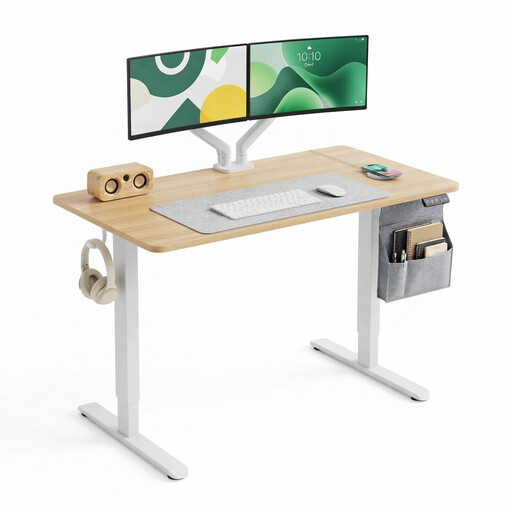
Why this choice suits this profile: Its compact size is ideal for a first electric desk set up in a bedroom, studio or small remote-working space.
Its adjustment range of 72 to 118 cm and digital display make adjustments easy to read. The two memory positions also save you from fumbling around each time you change.
120 x 60 cm desktop, stated static load of 70 kg, two presets and two hooks included.
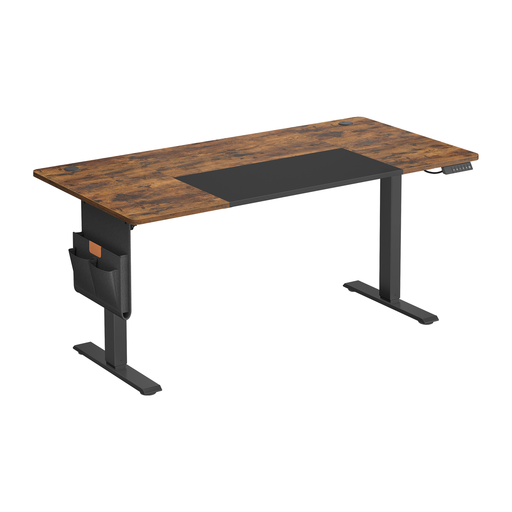
Why this choice suits this profile: Its large desktop is designed for those who want to set up multiple peripherals or create a complete workspace.
The dimensions and 70 kg limit are clearly stated. The height memory, cable management and USB-C port bring together several practical features.
160 x 70 cm desktop, adjustment from 72 to 120 cm, motor described as quiet, height memory and USB-C port.
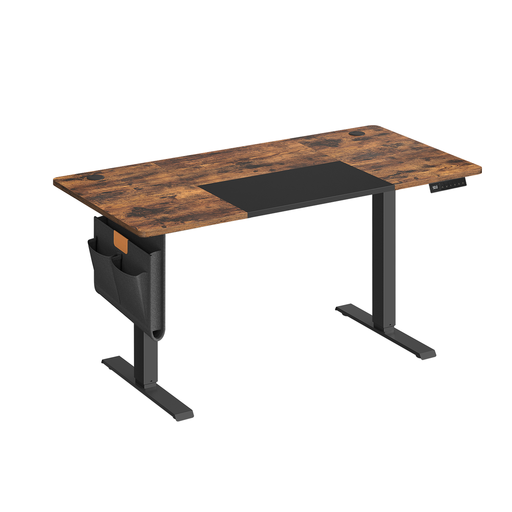
Why this choice suits this profile: The four presets make frequent changes easy, whether between multiple users or between different work and gaming setups.
The four memory heights save you from repeating the same adjustments. The listing also mentions cable management, an organiser and a built-in sensor.
Continuous adjustment from 72 to 120 cm, four memories, USB-C port, stated static load of 70 kg and 140 x 60 cm desktop.
We've put together a comprehensive list, updated in real time, of products that meet these demanding selection criteria and European safety requirements.
Set the desktop so that your forearms remain roughly horizontal when your hands rest on the keyboard. When standing, position the screen directly in front of you and avoid compensating for a poor height by hunching your shoulders. Take the time to gradually adjust the desk alongside your chair and screen.
It depends on how often you adjust it, the weight placed on it, the quality of assembly and maintenance. Respect the stated maximum load, protect the desk from liquids, check the fixings regularly and never force the mechanism. The overheat protection cycles must also be respected.
The motor mainly runs during the few seconds it takes to change the desktop height. Consumption depends on the motor, the number of adjustments and the control panel's features. For an accurate estimate, check the electrical specifications of the model. If the manual recommends it, also unplug the adapter during long periods of non-use.