
Same-day & Next-day Delivery

Quality Guaranteed

Unlock Your Welcome Offers: FREE Delivery | Up to 80% OFF | Free 30-day JoyPlus trial
Download the APP
A well-organised garage, cellar, or workshop is the key to a functional space and successful projects. Yet, choosing the right storage solution can quickly become a headache. Faced with a jungle of options, it's easy to fall into common traps that turn a good investment into a bulky disappointment. As a product expert for Joybuy, my mission is to help you see things more clearly.
Before you make a decision, here are the three mistakes to avoid:
For cellar and garage storage that stands the test of time and use, focus on a few non-negotiable technical specifications.
The sturdiness of a heavy-duty shelving unit depends on its frame. Don't just rely on the total advertised load; check the capacity per shelf. A value of 100 kg or more per level is a good indicator of strength. Examine the thickness of the steel structure. Galvanised or powder-coated steel offers better resistance to corrosion, a crucial point for damp environments. The presence of reinforcement crossbars under each shelf is also a real plus for durability, as they prevent sagging in the centre.
The choice of shelf material should be dictated by your storage location.
A good metal shelving unit should be simple to install. Boltless, interlocking systems are the standard today. They allow for quick assembly, often without tools (except perhaps a rubber mallet). Also, check if the shelving can be assembled as a single tall column or split into two lower workbenches. This versatility is a major asset for optimising your space.
Here are a few options that meet these selection criteria, tailored for different user profiles.
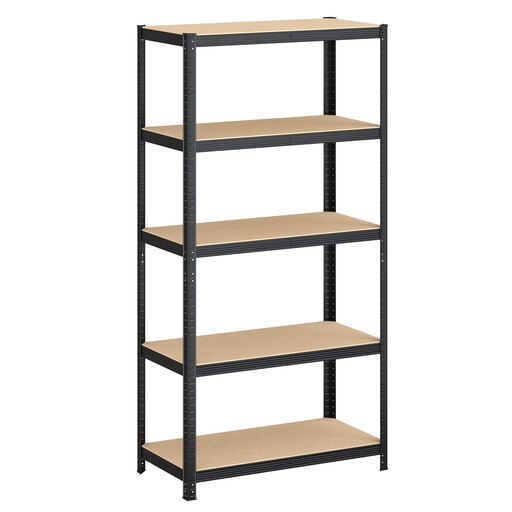
Why this model? Ideal for a first garage or cellar setup. Its 120 kg capacity per shelf is more than enough for storing tools, storage boxes, or gardening equipment without breaking the bank.
The load capacity is clearly defined per shelf (120 kg), a reliable indicator. The tool-free interlocking system avoids any assembly headaches.
Versatile design that can be converted into two workbenches. Simple and fast assembly thanks to its interlocking structure.
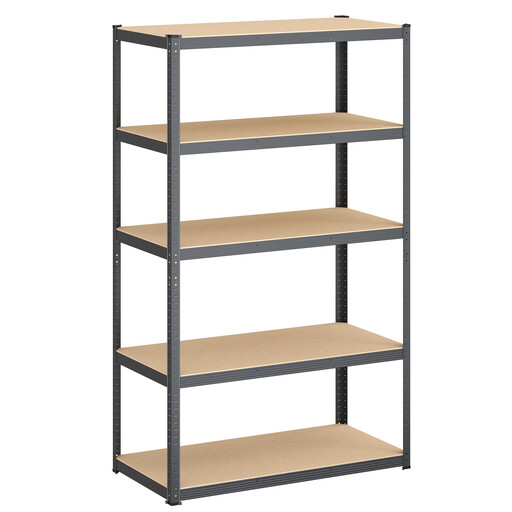
Why this model? Designed for tradespeople, demanding DIYers, or small businesses. Its 150 kg capacity per shelf and generous dimensions (120 cm wide, 60 cm deep) allow for storing heavy and bulky equipment.
Its reinforced steel structure and high load capacity bypass the pitfall of fragility. The included anti-tip kit is an additional safety guarantee.
Very high load capacity (750 kg total). A large depth of 60 cm, practical for bulky items.
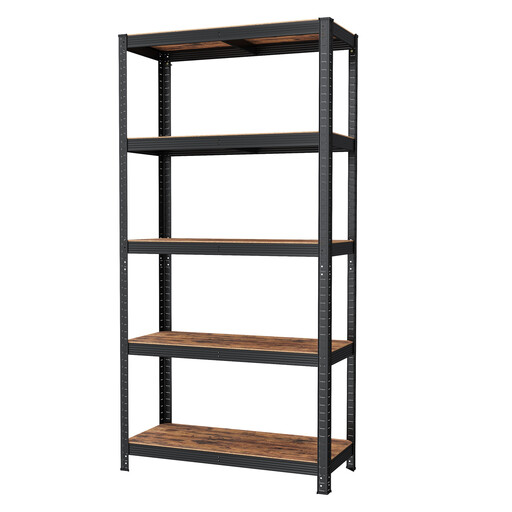
Why this model? For those who want maximum storage capacity without sacrificing aesthetics. Perfect for a visible workshop or a storage area that needs to be as tidy as it is functional.
This model combines a 175 kg load capacity per shelf with a stylish finish, proving that sturdiness and design are not mutually exclusive.
Very high load capacity (875 kg total). Rustic brown finish that stands out from standard industrial colours.
Discover our full selection of products that meet our quality criteria and UK safety standards.
The static load is the maximum weight a shelf can support when the load is stationary and evenly distributed. This is the value most often highlighted by manufacturers. The dynamic load, on the other hand, refers to its ability to support a moving weight (for example, during loading or unloading). The latter is always lower than the static load. For everyday use, rely on the static load, but always allow for a safety margin.
Yes, it is essential. Most quality models include an anti-tip kit. Fixing the shelving unit to the wall is a critical safety measure, especially if you are storing heavy items up high or if children might be near it. This ensures the structure's stability and prevents any risk of accidents.
It is strongly discouraged. MDF is a wood-based composite material that absorbs moisture. In a damp cellar or garage, it is likely to swell, grow mould, and lose all its load-bearing capacity. For such environments, opt for shelves with metal boards or ensure the room is very well-ventilated and dehumidified.