
Livraison le jour même ou le lendemain

Qualité garantie

Débloquez vos offres de bienvenue: Livraison GRATUITE | Jusqu'à -80 % | 30 jours d'essai gratuits à JoyPlus
Téléchargez l'application
A cluttered garage, a difficult-to-organise cellar or a workshop overrun with tools: mess can quickly waste both time and space. Metal garage shelving can help you get things under control, provided you check a few essential features before placing your order.
Some listings boast impressive load capacities without explaining the conditions they apply to. Others promise “tool-free” assembly, even though a mallet or wall fixing may still be essential. Here’s what to check to avoid an unstable installation or shelving that’s unsuitable for your space.
A total capacity of 600, 875 or 1 250 kg doesn’t mean each shelf can support that much. The key is to check the maximum static load per shelf and make sure it applies to a load distributed evenly across the surface.
A heavy box placed in the centre concentrates pressure in one small area. To keep things safe, put the heaviest items on the lower shelves and spread the load across the full surface of each shelf.
A tall shelving unit can topple if it’s unevenly loaded, installed on an uneven floor or used without an anti-tip device. A wall-fixing kit is a real plus, but you’ll still need to make sure the installation is suitable for your type of wall.
Before assembly, measure the available height, check where the skirting boards are and inspect the floor. In a garage or cellar, a few centimetres overlooked during planning could prevent a door from opening or make the walkway narrower.
A metal frame alone doesn’t tell you how much an industrial shelving unit can really hold. The thickness of the uprights, the shape of the braces, the type of joints and the shelf material all matter just as much.
MDF boards are common in garage shelving. They’re suitable for many indoor uses when you stay within the maximum load, but they don’t cope well with prolonged damp. If you’re planning to install shelving in an unheated garden shed or a room prone to condensation, check the manufacturer’s recommendations before you buy.
When comparing heavy-duty storage shelving, consider these features together:
A 5-tier garage shelving unit that’s 200 cm high offers useful vertical storage, but it still needs to be practical for everyday use. Items you use every week are easier to reach on the middle shelves than on those near the floor or ceiling.
Adjustable steel shelving lets you change the height between shelves to fit a toolbox, vacuum cleaner, canister or bulky box. Check the adjustment increments: some models can be adjusted every 5 cm, while others offer different spacing.
Modular shelving can also be split into two separate units or even converted into a workbench. That’s useful versatility if you’re moving, reorganising your garage or want to separate storage from your DIY area.
Tool-free shelving usually uses a slot-together system. Assembly is often quicker than with screws, but depending on the model, you may still need a mallet, gloves and a perfectly level surface. Follow the instructions and fit the anti-tip device before loading the unit.
For a workshop or damp garage, check the metal finish and the stated conditions of use carefully. Shelving with adjustable shelves isn’t automatically designed for outdoor use or very humid conditions.
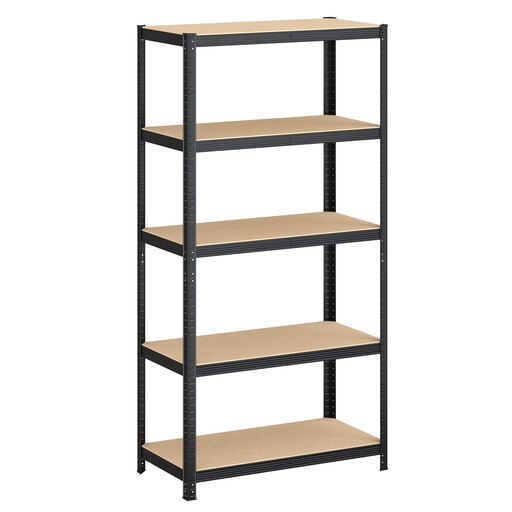
Why it suits this type of user : Measuring 50 × 100 × 200 cm, with five tiers and slot-together assembly, this unit is ideal for organising a garage, cellar or home DIY space.
The listing gives a maximum static load of 120 kg per tier and 600 kg in total. An anti-tip kit is included, but the unit must be secured to the wall before use.
Shelves adjust in 5 cm increments, the frame can be split into two units, and it’s made from galvanised steel.
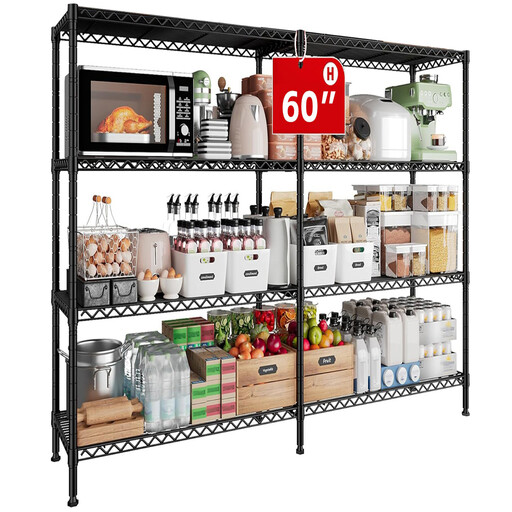
Why it suits this type of user : Its corner design makes good use of space that often goes to waste in a garage, storeroom or workshop. It’s a good fit if you need storage that works in an unusual-shaped room.
The frame has adjustable feet to compensate for some unevenness in the floor. Make sure you stay within the stated load capacity and distribute weight evenly across the shelves.
Four adjustable tiers, a stated total static load capacity of 544 kg and the option to create two separate units.
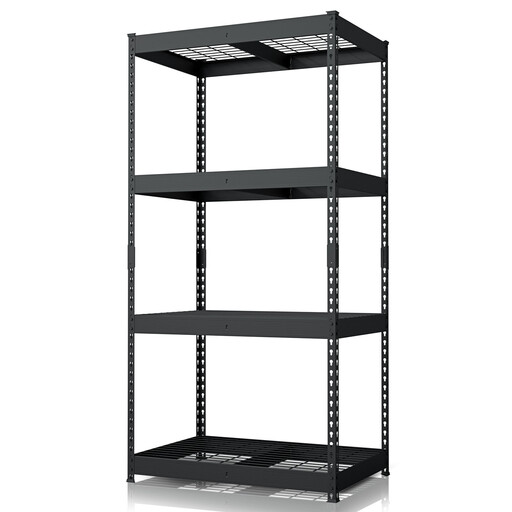
Why it suits this type of user : This shelving unit is ideal for workshops, storerooms and storage areas where heavy tools or supplies need to be kept accessible and well ventilated.
The listing gives different load capacities per shelf, from 250 to 350 kg depending on the configuration. Be sure to check the size you’ve chosen before ordering.
Wire mesh shelves, tool-free rivet assembly and adjustable tiers, depending on the configuration selected.
We’ve brought together a comprehensive selection, updated in real time, of products that meet these demanding selection criteria and European safety standards.
To reduce risks and keep the frame in good condition:
The lifespan of your shelving depends on the load it carries, how often it’s moved, the level of humidity and the condition of the joints. Regularly inspect the uprights, boards and fixings.
Estimate the weight of the items you plan to put on each tier, then allow a safety margin. Always compare this figure with the stated static load per shelf, not just the total capacity of the frame.
A slot-together system generally reduces the number of tools needed. A mallet can still make assembly easier, and you’ll need fixings suited to the wall when securing the unit.
It depends on ventilation, condensation and the manufacturer’s recommendations. MDF boards and some metal finishes aren’t designed to withstand prolonged damp. If you’re installing shelving in a garden shed, check the guidance before you buy and protect the frame from water ingress.