
Livraison le jour même ou le lendemain

Qualité garantie

Débloquez vos offres de bienvenue: Livraison GRATUITE | Jusqu'à -80 % | 30 jours d'essai gratuits à JoyPlus
Téléchargez l'application
Whether it's for a last-minute repair, a DIY project, or a wall mounting, choosing a multi-purpose strong adhesive can quickly become a headache. On shelves saturated with promises of "?extreme hold?" and "?instant bonding,?" it's all too easy to walk away with an unsuitable product, a repair that doesn't last, and ultimately, wasted money.
As a product expert at Joybuy, my mission is to help you cut through the noise. Let's forget the marketing jargon and focus on what's essential. Here are the most common pitfalls and our advice for avoiding them, so you can find the adhesive you truly need.
To make the right choice, it's crucial to decipher a few technical parameters. These are what determine the product's real performance, far beyond the advertising slogans.
Not all strong adhesives are created equal. Their chemical composition defines their ideal use cases:
Before any purchase, carefully check the list of compatible materials and, most importantly, the exclusions. The note "?Not suitable for PE, PP, PTFE?" is a warning sign not to be ignored. If you need to glue plastic, it is crucial to identify its type. For difficult cases, a specific plastic adhesive, supplied with a primer, will often be essential. Likewise, for glass or very smooth surfaces, a transparent adhesive specially formulated for these substrates will ensure a result that is both clean and durable.
To guide you, we have matched common needs with products whose technical specifications precisely meet those uses.
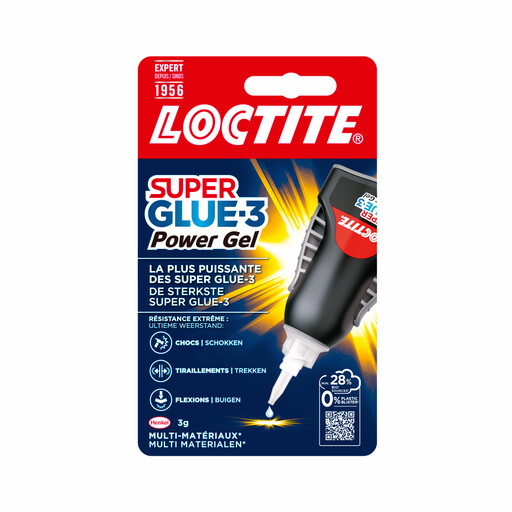
Why this choice: Ideal for small, everyday repairs (a detached shoe sole, a broken mug handle). Its non-drip gel formula makes it very practical for vertical and precise applications, without drips or mess.
It solves the problem of traditional liquid glues, which are often difficult to dispense. The squeeze bottle and gel texture allow for controlled application, preventing excess that can weaken the bond.
Its rubber-infused formula provides flexibility, making it resistant to shocks and twists, unlike a classic **super glue**.
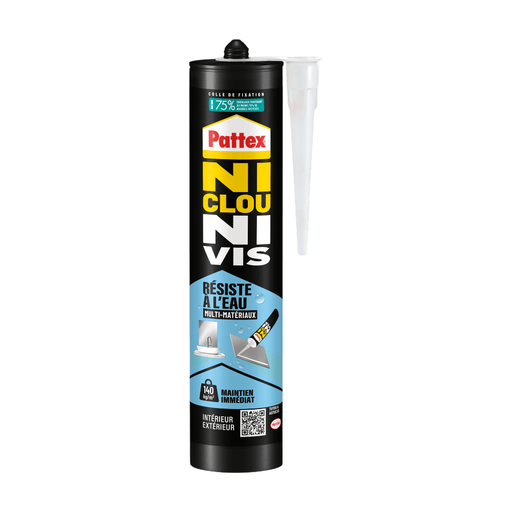
Why this choice: Perfect for renters or anyone who wants to mount objects (frames, small shelves, curtain rods) without damaging the walls. Its initial grab is high, and its water resistance makes it the ideal partner for the kitchen or bathroom.
It perfectly addresses the pitfall of usage conditions. By being specifically formulated to withstand moisture and temperature variations (-30°C to +80°C), it ensures a reliable bond where a standard adhesive would fail.
The Flextec technology gives it a flexibility that absorbs slight movements and vibrations, ensuring a longer-lasting bond. Bonus: it remains repositionable for 10 minutes.
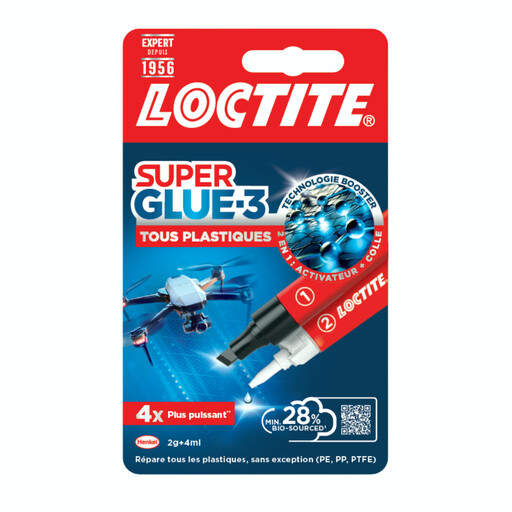
Why this choice: This is THE solution for repairing objects made from plastics known to be " un-glueable, " such as polyethylene (PE) or polypropylene (PP). The activator pen prepares the surface to allow the cyanoacrylate adhesive to finally bond effectively.
It debunks the myth of the " universal " glue. Instead of a false promise, it provides a targeted two-step solution (activator + adhesive) that tackles the root of the problem: the low surface energy of these plastics.
This 2-in-1 system makes it possible to save items that would otherwise end up in the trash, offering a durable repair solution for toys, car accessories, or home appliances.
We have curated a complete range of products that meet our stringent selection criteria and current regulations.
You must distinguish between the initial grab (the moment the objects hold together, often a few seconds or minutes) and the full cure (when the adhesive reaches its maximum strength). For a super glue, the grab is almost instant, but optimal strength is only achieved after 12 to 24 hours. For a sealant adhesive or epoxy, the full cure can take 24 to 48 hours. Adhering to this timeframe is imperative, especially if the bonded object needs to bear a load.
Yes, most sealant adhesives and epoxy putties can be painted once fully cured. This is a major advantage for visible repairs. It is even advisable to lightly sand the hardened surface to improve paint adhesion. Just remember to check this information on the packaging.
If the glue is not yet dry, a cloth soaked in acetone (or nail polish remover) will do the trick on many surfaces (be sure to test on an inconspicuous area first!). If the glue has hardened, there are specific "glue remover" or "debonder" products. On skin, above all, do not pull! Soak the area in warm, soapy water and peel it apart very gently, or use an oily substance (oil, butter).