
Livraison le jour même ou le lendemain

Qualité garantie

Débloquez vos offres de bienvenue: Livraison GRATUITE | Jusqu'à -80 % | 30 jours d'essai gratuits à JoyPlus
Téléchargez l'application
A well-organised garage or basement is the difference between a chaotic storeroom and a functional, secure storage space. The cornerstone of this organisation? Heavy-duty shelving. But faced with an overwhelming market full of vague promises, it's easy to make the wrong purchase. Before pulling out your credit card, it's best to know the pitfalls to avoid so you can invest in a reliable model that's built to last.
Buying a heavy-duty storage solution may seem simple, but watch out for misleading features that can render a product useless, or even dangerous. Here are the red flags you should never ignore.
To make an informed decision, focus on a few technical specifications that guarantee the performance and longevity of your metal shelving unit.
The backbone of a good industrial shelving unit is its frame. Opt for a structure made of galvanised or powder-coated steel. This treatment protects the metal from rust—a critical feature for an installation in a garage, workshop, or basement where ambient humidity is a reality. Also, check for reinforcement crossbars under each shelf; they are essential for distributing weight evenly and preventing the shelves from sagging.
Forget the total load capacity displayed prominently on the packaging. A capacity of 150?kg to 175?kg per shelf is an excellent indicator of sturdiness, allowing you to confidently store tools, canned goods, archives, or DIY equipment. This figure ensures that each level can support heavy items without risk of collapse.
The best shelving units are also the most versatile. Look for models with height-adjustable shelves to adapt the space to objects of various sizes. Some systems even allow you to split the unit in two to create a modular workbench at half-height—a perfect two-in-one solution for a workshop shelf. The now-common boltless, interlocking assembly systems ensure quick setup and excellent rigidity once the shelf is loaded.
Rather than an endless list, here are a few models tailored to specific needs to help you find the perfect fit.
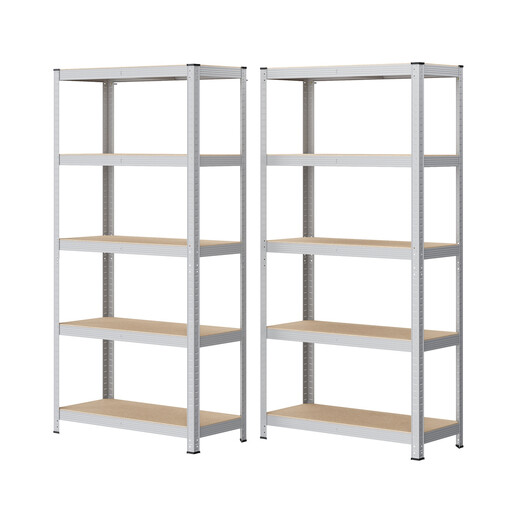
Why we chose it: The strength of this two-pack is its flexibility. You can use them as two separate tall shelving units or combine them to create one long line of storage. The ability to transform them into two workbenches makes it a perfect solution for anyone needing both a workspace and storage.
No unpleasant surprises here: the capacity is clearly stated as 175 kg per shelf, and each unit comes with its own anti-tip kit for maximum stability.
The modularity of a two-pack, with the option to create a functional workbench for an auxiliary workspace.
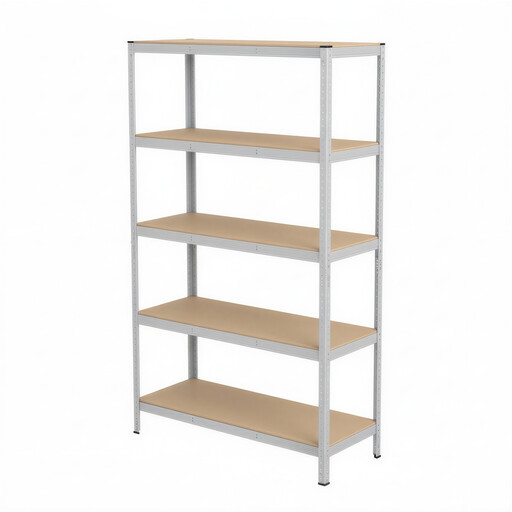
Why we chose it: With its generous dimensions (120 cm wide), this shelving unit is designed for those who need to store bulky items: large toolboxes, gardening equipment, or big archive boxes. Its 200 cm height allows you to make full use of the room's vertical space.
The structure is built for heavy loads, with a capacity of 150 kg per shelf, consistent with its larger surface area. The anti-tip kit is, of course, included to secure the entire unit.
A wide 120 cm span for bulky items and a 200 cm height for maximum optimisation of vertical space.
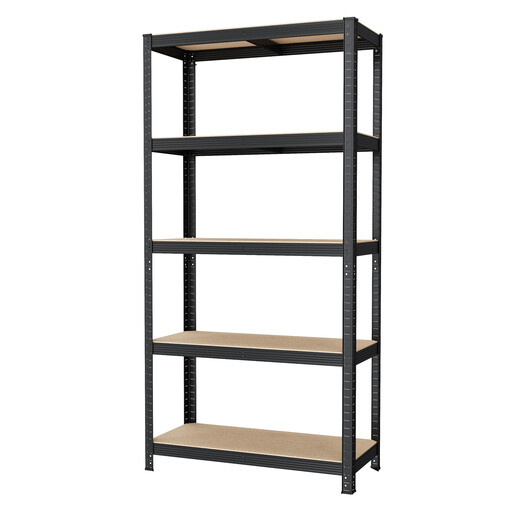
Why we chose it: This is the classic, high-performance option for a garage or workshop. Its black finish gives it a cleaner, more discreet look than silver models, fitting better into a tidy workspace. Its very high load capacity makes it a reliable choice.
It ticks all the boxes: a high and unambiguous load capacity (875 kg total, or 175 kg per level) and the essential inclusion of an anti-tip device.
Very high load capacity for intensive use and a sleek black finish for better integration into a clean workshop or garage.
Explore our full selection of products that meet our standards for quality and safety.
Stability is the golden rule. First, always use the provided anti-tip kit to securely fasten the unit to the wall, especially if children are present. Ensure the floor is level; if not, shim the base of the unit. Finally, distribute the load intelligently: place the heaviest items on the bottom shelves to lower the centre of gravity and maximise stability.
MDF (medium-density fibreboard) shelves are a cost-effective and very strong option in dry environments. They have the advantage of offering a solid, smooth surface. However, for storage in a very damp basement, they can eventually absorb moisture, swell, and warp. All-metal shelves, on the other hand, are impervious to moisture and easier to clean, but they are also generally more expensive.
Yes, modern interlocking systems are designed to be extremely robust. The various components (uprights, crossbars) fit into one another, and it's the weight of the stored items that "locks" the structure into place and reinforces its rigidity. This type of assembly is not only reliable but also allows for much faster setup than a system with nuts and bolts. However, it is advisable to wear work gloves during assembly to avoid small cuts.