
Livraison le jour même ou le lendemain

Qualité garantie

Débloquez vos offres de bienvenue: Livraison GRATUITE | Jusqu'à -80 % | 30 jours d'essai gratuits à JoyPlus
Téléchargez l'application
A well-organised garage or basement is the key to a functional and safe workspace. But to achieve that, you need the right storage solution. And when it comes to heavy-duty garage shelving, the buying process often feels like navigating a minefield: unrealistic weight capacity claims, materials that rust in a single winter, questionable stability... In short, a bad investment is always just around the corner.
Our mission: to help you cut through the noise. Let's forget the marketing jargon and break down the criteria that truly make a difference. Here are the 3 mistakes you must avoid.
To make a truly informed choice, focus on these three specifications. They are the real guarantors of quality and longevity for your future garage racking.
This is THE non-negotiable criterion. Forget the total load and look for the maximum weight capacity per shelf. This figure, and this figure alone, tells you if you can safely place an engine block, full toolboxes, or archive boxes on it. For serious use, don't go below 120?kg per shelf. This information should be crystal clear on the product page.
For a basement shelf or workshop, the composition makes all the difference.
Good modular shelving is an incredible asset. Some models can be transformed in a flash, going from one tall unit to two half-height workbenches. This is ideal for adapting to your space and projects. Also, consider the assembly: boltless shelving, with a clip or rivet-based interlocking system, radically simplifies setup while ensuring excellent rigidity.
To move from theory to practice, here are some models that check all the boxes and meet specific needs.
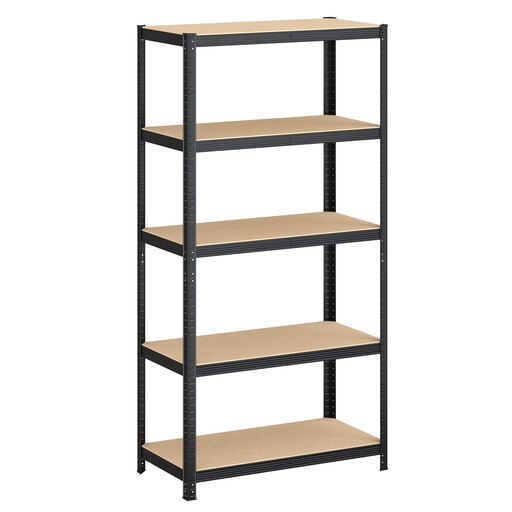
Why we chose it: The perfect solution for organising tools, paint cans, and gardening equipment. It's sturdy, simple to assemble, and completely hassle-free.
There are no nasty surprises here: the 120 kg per shelf capacity is clearly stated, a real guarantee for storing heavy items. The included anti-tip kit provides peace of mind and secures the installation.
Its smart interlocking system allows for assembly without a single tool. A real time and energy saver.
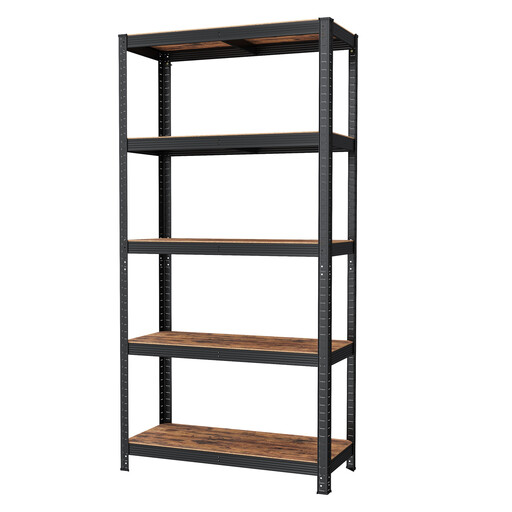
Why we chose it: Designed for pros, passionate mechanics, or demanding collectors. Ideal for storing seriously heavy equipment: engine parts, archives, material stock...
With its 175 kg load capacity per shelf, this unit is in a league of its own. Its powder-coated steel frame is built for the demanding environment of a workshop.
Its modularity is its key strength: it transforms into two independent workbenches, perfect for creating a solid work surface with storage right underneath.
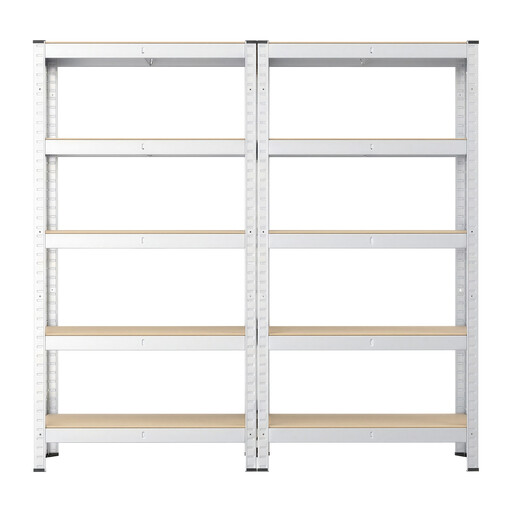
Why we chose it: The ideal solution for outfitting an entire garage wall, setting up a large basement, or organising a small warehouse with uniform equipment.
This set ensures perfect consistency in quality and capacity (130 kg per shelf). No more cobbling together mismatched and potentially unstable shelves.
A turnkey and cost-effective solution for thinking big, with the flexibility to configure the two units together or separately to suit your needs.
From the workshop to the kitchen and the living room, every room has its own storage needs. Discover our other guides and selections to optimise every square foot.
Is it absolutely necessary to fix a heavy-duty shelf to the wall? Yes, it's a matter of safety. Do not skip this step. Good models always come with an anti-tip kit. Installing it is essential, especially if the shelf is tall or if children might be nearby. This is what will prevent it from tipping over in case of an impact or an unbalanced load.
How should I distribute weight intelligently on the shelf? The golden rule: always place the heaviest items on the bottom shelves. This lowers the unit's centre of gravity and makes it much more stable. Also, remember to distribute the weight across the entire surface of the shelf, rather than concentrating it all in the middle.
What is the lifespan of a good garage shelf? The longevity of your heavy-duty racking depends on 3 factors: the quality of the steel and its treatment, the humidity of the room, and whether you respect the maximum load capacities. A quality model, used correctly in a not-too-humid environment, can easily last you for more than ten years. A quick visual check once a year to look for rust or any potential warping is a good habit to get into.