
Livraison le jour même ou le lendemain

Qualité garantie

Débloquez vos offres de bienvenue: Livraison GRATUITE | Jusqu'à -80 % | 30 jours d'essai gratuits à JoyPlus
Téléchargez l'application
Organising your garage, cellar, or workshop is the first step towards a more efficient and safer workspace. The problem? It's hard to navigate the maze of confusing marketing descriptions and products that don't live up to their promises. A heavy-duty garage shelving unit that sags or rusts after a few months isn't just a waste of money—it's a real safety hazard.
To avoid buyer's remorse, here's how to sidestep the most common pitfalls and make a smart choice.
To avoid unpleasant surprises, focus on a few key technical specs that don't lie.
Forget the total capacity. The only figure that counts is the maximum load supported by each shelf. This determines what you can actually store. For general use in a garage or workshop, a capacity of 120 kg to 175 kg per level offers good versatility. Verify that this information is clearly stated by the manufacturer. Also, think about weight distribution: the heaviest items should always go on the bottom shelves to ensure the unit's stability.
A steel shelving unit is an excellent starting point, but not all steel is created equal.
Your storage needs change over time. A modular shelving unit will offer you welcome flexibility.
To put theory into practice, here are concrete solutions for three typical user profiles.
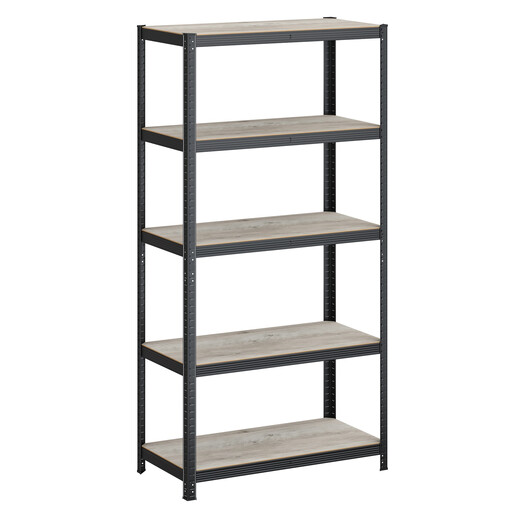
Profile: Ideal for anyone seeking a versatile and reliable storage solution for the garage, laundry room, or pantry. Perfect for storing everything from archive boxes to gardening equipment and paint cans.
The load capacity is clearly stated as 120 kg per shelf: a realistic figure that's more than enough for typical home use. Its steel frame and boltless design minimise the risk of unpleasant surprises.
Its clever design allows it to be split into two shorter units, for example, to create a workbench with storage underneath. The anti-tip kit is included for maximum safety.
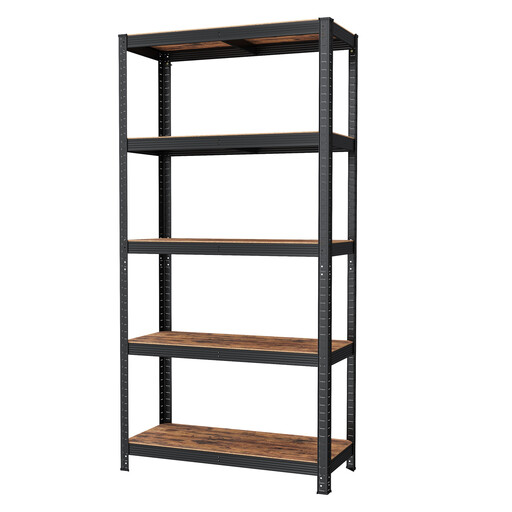
Profile: Built for workshops and garages where heavy equipment, engines, mechanical parts, or material stock are stored. Robustness comes first.
This model is straightforward: it advertises a capacity of 175 kg per shelf, placing it firmly in the truly heavy-duty category. The steel frame is designed to handle these loads without flinching.
The total load capacity of 875 kg and adjustable shelves allow you to store bulky and very heavy items with confidence. It can also be split into two workbenches for a reinforced workspace.
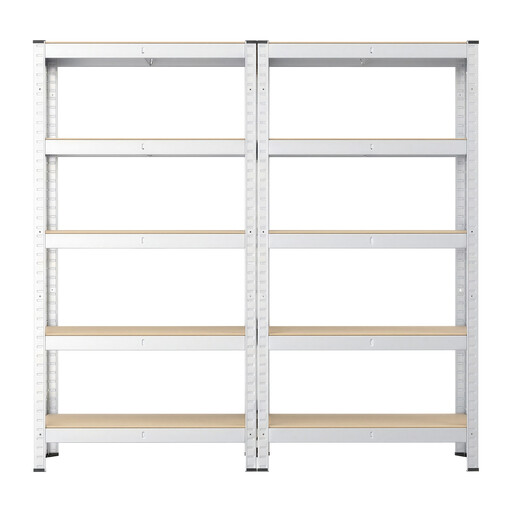
Profile: Perfect for smaller spaces like a narrow cellar, a pantry, or a small workshop. This set of two units offers great layout flexibility to maximise storage in awkward configurations.
This set avoids the "one-size-fits-all" trap by offering a modular solution. Its shallow depth of 30 cm is its main advantage, fitting where a standard 50 or 60 cm shelf would not.
Sold as a set of two, it allows you to create one long line of shelving or place them in separate areas. Despite its compact size, each shelf supports up to 130 kg, offering a very respectable storage capacity.
Explore our full selection of products that meet our quality criteria and safety standards.
Yes, provided they are assembled correctly. Modern clip-in systems are designed to become more rigid under load. For perfect stability, using the provided anti-tip kit to secure the shelf to the wall is essential. This is a non-negotiable safety step, especially with heavy loads.
The golden rule: always place the heaviest items on the bottom shelves, and in the centre if possible. Avoid concentrating all the weight on the front edge of the shelf. Proper weight distribution across all levels is the secret to your unit's longevity.
It's possible, but under certain conditions. You must choose a frame made of galvanised steel or one with a powder-coated finish to prevent corrosion. Standard MDF shelves will eventually swell. If humidity is high, opt for models with 100% metal shelves, or apply a water-repellent varnish to the MDF decks yourself before assembly.