
Same-day & Next-day Delivery

Quality Guaranteed

Unlock Your Welcome Offers: FREE Delivery | Up to 80% OFF | Free 30-day JoyPlus trial
Download the APP
A well-organized garage, basement, or workshop is essential. But achieving that requires a reliable storage solution. However, choosing heavy-duty garage shelving often turns into a headache. Between the advertised load capacities and the actual quality of the materials, a bad investment is always just around the corner. The goal isn't just to find any shelf, but THE right one: a unit that will fit your space, safely support your equipment, and, most importantly, stand the test of time. Let's review the pitfalls to avoid and the criteria that truly matter.
Marketing loves impressive numbers, but certain technical details can turn a good deal into a major regret. Here are the key points to watch out for.
To choose a storage shelf that is both durable and safe, focus on these few objective characteristics.
Forget the advertised total capacity and look at just one number: the maximum load per shelf. For typical garage use (tyres, toolboxes, canisters), a capacity of 120?kg per tier is a solid baseline. For a workshop shelf intended for storing mechanical parts or heavy equipment, aim for at least 175?kg per shelf. This ensures that each level will support heavy objects without ever buckling.
The frame is the skeleton of your shelving unit. Opt for a steel shelf with a finish that protects it from corrosion. Galvanized steel (silver finish) or powder-coated steel (painted, often in black or grey) offers excellent rust resistance, a crucial factor in damp rooms.
Versatility is another major advantage. A modular shelving unit, with height-adjustable shelves, allows you to adapt the space to objects of various sizes. Some models can even be split into two lower workbenches, a very practical solution for optimising a workspace.
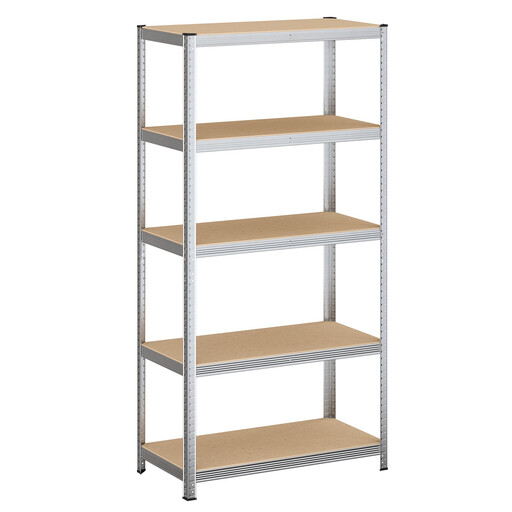
Who is it for? Perfect as a first unit for storing seasonal gear, storage boxes, and gardening tools. Its dimensions (100 x 50 x 200 cm) offer generous storage volume with a controlled footprint.
With a capacity of 120 kg per shelf, its sturdiness is clearly defined and realistic for home use. The included anti-tip kit secures the structure and prevents any risk of instability.
Its versatility: the unit can be assembled as one tall column or split into two lower units to serve as a workbench. The interlocking assembly requires no screws.
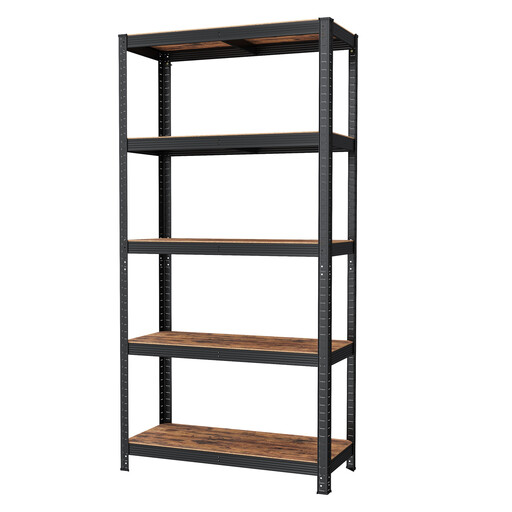
Who is it for? Designed for heavier loads, this model is perfect for DIY enthusiasts and craftspeople who store power tools, paint cans, or mechanical parts. Its polished look even allows it to fit into a pantry or laundry room.
The load capacity is unambiguous: 175 kg per shelf, a serious figure that meets the demands of a workshop. The powder-coated steel frame guarantees rust protection far superior to that of raw steel.
Its sturdiness, which allows you to store heavy items with complete peace of mind. Like other models in the range, it can be configured as two workbenches to create an auxiliary work surface.
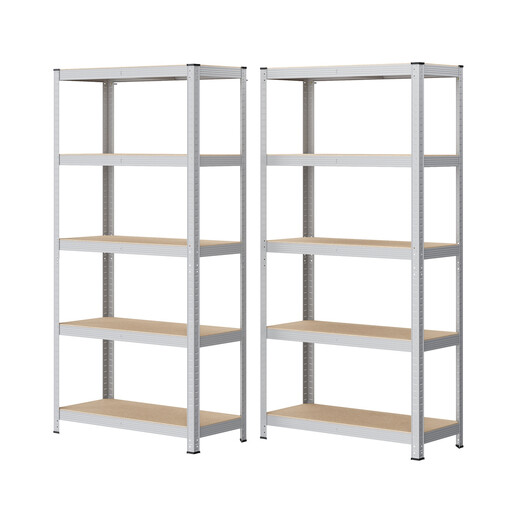
Who is it for? For those looking to outfit an entire wall, a large pantry, or a small warehouse, this set of two shelving units offers an unbeatable capacity-to-price ratio. It allows you to create a uniform and robust storage line.
The set consists of two independent units, each supporting a total of 875 kg (or 175 kg per shelf). This avoids the pitfall of overly long shelves that lack support points and end up sagging in the middle.
Installation flexibility. You can align the two shelving units, place them in a corner, or even transform them into four separate workbenches. The galvanized steel frame is perfectly suited for damp environments like basements.
Explore our full selection of models that meet our criteria for sturdiness and safety.
Even if the frame is designed to be freestanding, it is strongly recommended to use the provided anti-tip kit to secure it to the wall. This is an essential safety measure, especially if the unit is tall, heavily loaded, or accessible to children. Safety first!
The "tool-free" label simply means there are no screws or bolts. Assembly is done by interlocking the crossbeams into the uprights. In practice, using a rubber mallet is almost essential to properly lock the parts into place without damaging them. Wearing work gloves is also highly recommended to protect yourself from the sometimes sharp metal edges.
The steel frame is designed to last for decades. The weak link remains the MDF boards, especially if they are exposed to moisture. In a damp basement or garage, their lifespan can be significantly reduced. Our tip: before assembly, apply a coat of waterproof varnish or paint to the boards (especially the edges) to seal them.