
Livraison le jour même ou le lendemain

Qualité garantie

Débloquez vos offres de bienvenue: Livraison GRATUITE | Jusqu'à -80 % | 30 jours d'essai gratuits à JoyPlus
Téléchargez l'application
A well-organized garage or basement is the key to a functional workshop and peace of mind. Yet, choosing the right shelving unit is often a headache. Between marketing promises and the poor quality of some materials, it's easy to end up with a wobbly structure incapable of supporting the weight of your tools. To avoid buyer's remorse, it's best to know the most common pitfalls before you invest.
The first and most common pitfall relates to load capacity. A shelf advertised for "800?kg" will only support that weight if it's perfectly distributed across the entire structure; in reality, each individual shelf has a much lower limit. Another point of caution is the quality of the materials. Steel that is too thin or untreated wood boards can rust or warp in a damp basement, jeopardizing the safety of your setup. Finally, be wary of assembly systems that look simple in photos but often turn out to be unstable or a nightmare to put together.
To make an informed choice, focus on a few key technical points that never lie. They are the true measure of a quality heavy-duty garage shelving unit.
The most critical piece of information is the maximum load per shelf. This figure, not the total capacity, determines what you can actually store. A shelving unit with a total capacity of 875?kg and 5 shelves actually offers a capacity of 175?kg per level. This is the number that should guide your choice, whether you plan to store toolboxes, mechanical parts, or cement bags. For heavy-duty garage storage, a capacity of 150?kg per shelf is a good starting point.
The durability of your metal shelving unit depends on two elements:
A good modular shelving unit offers invaluable flexibility. Some models can be assembled as a single tall column or split into two lower workbenches, adapting to your space and evolving needs. A crucial safety point is the inclusion of an anti-tip kit. This allows you to securely fasten the unit to the wall, preventing any risk of accidents, especially if you have children or pets.
To put theory into practice, here is our selection of models suited for different profiles.
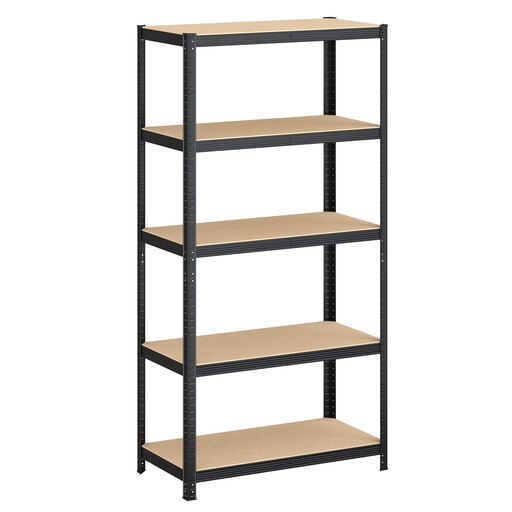
Why we recommend it: Ideal for organizing your garage or laundry room. This reliable solution will effortlessly hold gardening equipment, archive boxes, or supplies. A balanced choice for regular home use.
The 120 kg per shelf capacity is clearly stated, giving you a realistic idea of its capabilities. Its steel frame and tool-free assembly save you from the nasty surprises of a complex installation or a flimsy shelf.
Its versatility: it can be assembled as one tall unit or split into two workbenches, offering maximum flexibility for setting up your workshop.
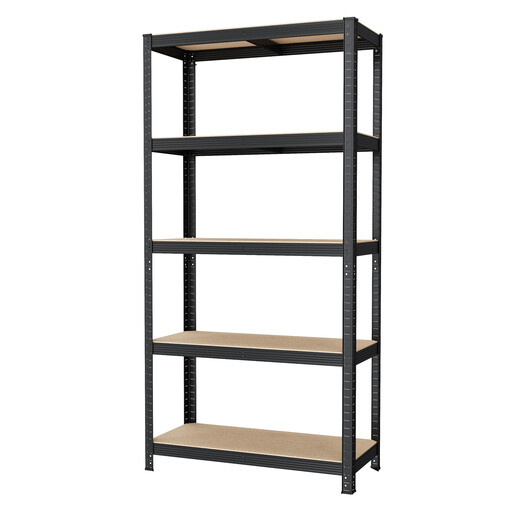
Why we recommend it: Designed for heavy-duty use, it's perfect for storing very heavy loads like engine parts, anvils, or fully-loaded tool chests. The ideal solution for professional workshops or the garages of serious enthusiasts.
With a capacity of 175 kg per shelf, it makes no compromises on sturdiness. The reinforced steel frame and included anti-tip kit ensure rock-solid stability, even with heavy items.
Its XXL load capacity. The height-adjustable shelves also allow you to customize the space to accommodate equipment of all sizes.
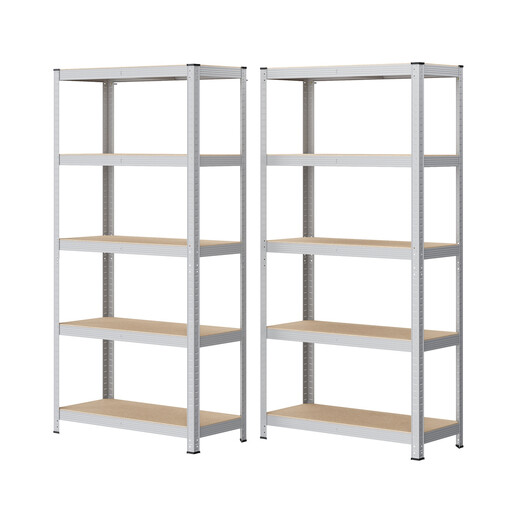
Why we recommend it: Perfect for outfitting a large garage, warehouse, or spacious basement. This set of two offers a complete and cost-effective garage storage solution for organizing a large volume of equipment.
This set offers maximum flexibility. Each modular shelving unit can be used separately, combined to create a long storage wall, or converted into four workbenches, avoiding the pitfall of a rigid, ill-fitting system.
Unbeatable value for a large-scale setup, without compromising on the 175 kg per shelf load capacity for each unit.
We have compiled a complete list of products that meet our quality and safety criteria.
Safety is paramount. To ensure perfect stability, it is imperative to secure the unit to the wall using the anti-tip kit that is usually included. Another essential habit: distribute the load evenly, always placing the heaviest items on the bottom shelves. Finally, make sure the floor is level.
Standard MDF is susceptible to moisture and can swell or warp over time. If your basement shelving is intended for a very humid environment, you have two options: either ensure the room is well-ventilated, or apply a coat of water-resistant varnish or paint to the boards to protect them and extend their lifespan.
Most modern models are designed for simple assembly. They use an interlocking system that requires no screws or bolts. A rubber mallet can sometimes be useful for securely setting the crossbars in place. In any case, wearing work gloves is highly recommended for safely handling the metal parts.