
Livraison le jour même ou le lendemain

Qualité garantie

Débloquez vos offres de bienvenue: Livraison GRATUITE | Jusqu'à -80 % | 30 jours d'essai gratuits à JoyPlus
Téléchargez l'application
A tidy garage, basement, or workshop is the foundation of a functional workspace and a home where you can breathe easy. But when it comes to choosing a truly robust storage solution, things get tricky. Faced with aggressive marketing and sometimes unrealistic claims of durability, it's easy to make a purchase you'll regret, or even a dangerous one. As the Head of Product Recommendations at Joybuy, my mission is to guide you. Follow this guide to avoid the common pitfalls and find the perfect heavy-duty garage shelving for your needs.
Before you make a decision, watch out for these three common traps that can cost you dearly in time and money.
To ensure you don't make a mistake, focus on a few technical specifications that make all the difference.
The backbone of your shelving unit is its metal frame. Opt for metal shelving made of galvanised or powder-coated steel. These finishes provide excellent protection against rust, a non-negotiable feature for a basement or garage. Also, check for reinforcements like crossbars under each shelf; they significantly improve rigidity and weight distribution.
The choice of shelving board is crucial and depends entirely on what you plan to store:
A good modular shelving unit should adapt to your needs. Adjustable shelf height is a basic requirement, but some models go further. They can be split into two smaller units to create, for example, a garage workbench with storage space underneath. Finally, a non-negotiable criterion: the inclusion of an anti-tip kit to securely fasten the unit to the wall. This is an essential safety guarantee, especially with children at home or heavy loads stored up high.
Rather than an endless list, here are a few products that match specific user profiles and perfectly illustrate our advice.
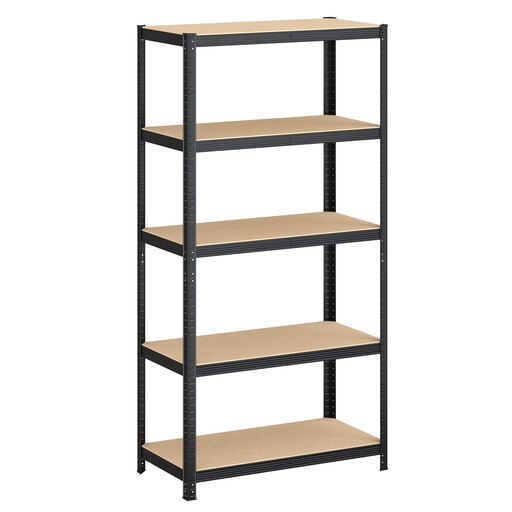
Why we chose it: Ideal for tidying up the garage or garden shed and storing tools, paint cans, and gardening equipment. Its great versatility is a real plus for optimising space.
The load is specified per shelf (120 kg), a much more reliable figure than the total capacity. The included anti-tip kit prevents any risk of instability.
Sturdy steel frame; can be split into two separate workbenches for maximum flexibility.
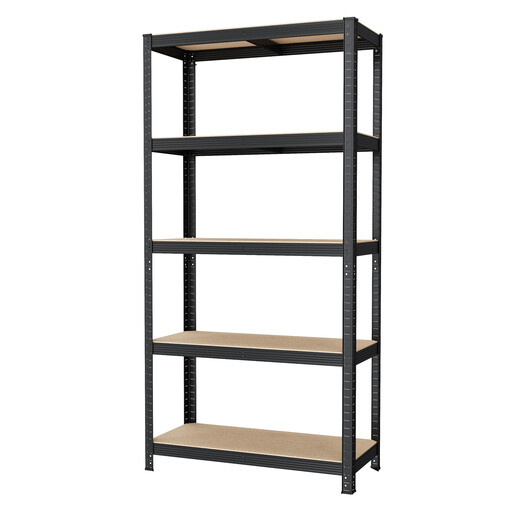
Why we chose it: Built for very heavy loads, it's perfect for a workshop, warehouse, or for storing construction materials, car parts, or bulky archives.
With 175 kg per shelf, it handles heavy, concentrated loads without breaking a sweat. Its high-quality steel frame is a guarantee of durability and stability.
Massive total load capacity (875 kg); height-adjustable shelves to accommodate objects of all sizes.
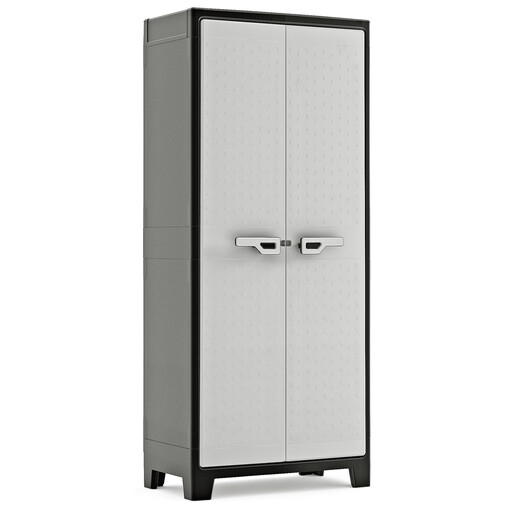
Why we chose it: The ideal solution for protecting your belongings from dust and moisture in a basement, laundry room, or garage. The enclosed cabinet format ensures a cleaner, more organised look.
Made entirely of polypropylene, it is completely impervious to moisture, unlike MDF shelves. It's the answer to the #1 problem of basement storage.
Water-resistant and lockable (padlock not included) for secure storage; 4 adjustable shelves for customised organisation.
We have selected a full range of products that meet our quality and safety criteria.
1. What is the difference between static load and real-world load for a garage shelf? The maximum static load, which manufacturers love to highlight, is the weight the shelf can support when stationary and with perfect distribution. The real-world (or dynamic) load is what it experiences day-to-day: objects placed down a bit too quickly, highly concentrated weight, etc. As a safety precaution, assume that the actual usable capacity is 20-30% lower than the maximum static load advertised per shelf.
2. How do I secure a heavy-duty shelf to the wall to ensure safety? You must use the provided anti-tip kit. It usually contains brackets and screws. Attach the brackets to the upper uprights of the shelving unit, then anchor them firmly into the wall using wall plugs appropriate for your wall type (concrete, brick, plasterboard). This is a non-negotiable step to eliminate any risk of tipping, especially with heavy loads.
3. Are shelves with MDF boards suitable for a damp basement? Frankly, it's not ideal. Standard MDF is like a sponge: it absorbs moisture, swells, and warps. If you are set on MDF, look for a water-resistant version (often green in colour) and make sure the room is well-ventilated. But for a basement or cellar, let's be honest: a resin cabinet or metal shelves will always be a safer and more durable choice.