
Livraison le jour même ou le lendemain

Qualité garantie

Débloquez vos offres de bienvenue: Livraison GRATUITE | Jusqu'à -80 % | 30 jours d'essai gratuits à JoyPlus
Téléchargez l'application
Furnishing a French apartment or modern home often comes with one major constraint: drywalls constructed from hollow plasterboard, commonly referred to across France as placo. Suspending framed art, decorative mirrors or wall hangings traditionally demands an electric drill, specialised expanding rawlplugs and substantial clearance behind the board. For renters concerned about security deposits and homeowners keen to avoid messy gypsum dust, traditional masonry techniques can feel needlessly destructive for routine interior decoration.
Modern tool-free claw hangers solve this dilemma by relying on hardened steel prongs that sink cleanly into the gypsum core using firm thumb pressure alone. Achieving a durable hang depends on matching the fixture to true downward shear loads, understanding the depth profile of your frames and ensuring the wall surface remains structurally sound. Taking a measured approach to these mechanical factors lets you display ambitious decorative items safely without reaching for a toolbox.
Published weight ratings apply directly to downward vertical shear force flush against a flat wall surface. When displaying deep box frames, projecting coat hooks or mirrors suspended on long, forward-slanting picture wire, outward cantilever leverage multiplies the pulling strain exerted on the wall. Selecting hardware based purely on the nominal weight of an object without accounting for its forward projection can cause the fixing to prize away from the plasterboard core over time.
Adhesive strips often appear to be the simplest damage-free option, yet their grip is limited strictly to the outermost layer of emulsion paint. In variable room temperatures or humid hallway environments, decorative wall paint can delaminate under sustained load, bringing down heavy artwork and tearing away paper linings. Mechanical penetration into the gypsum core using hardened steel claws establishes a physical interlock that cannot peel away with ambient changes.
Wall-mounted claw fixings are engineered specifically for vertical drywall where gravitational pull maintains contact between the bracket plate and the wall face. Attempting to use push-in wall anchors for horizontal ceiling mounts exposes the teeth to direct extraction rather than shear resistance. Without an expanding backplate on the reverse of the plasterboard panel, direct downward tension will pull pronged fixings out of overhead drylining.
Drywall fixings carry certified static weight thresholds that indicate the upper limit for vertical loads on sound plasterboard panels.
The physical interface between the metal fixture and the internal gypsum core determines whether the mount stays rock solid or gradually loosens.
Minimising permanent structural damage is vital when outfitting rented accommodation or maintaining smooth paintwork across continental homes.
Match your decorative wall projects to the precise load capacities and profiles best suited to your living space.
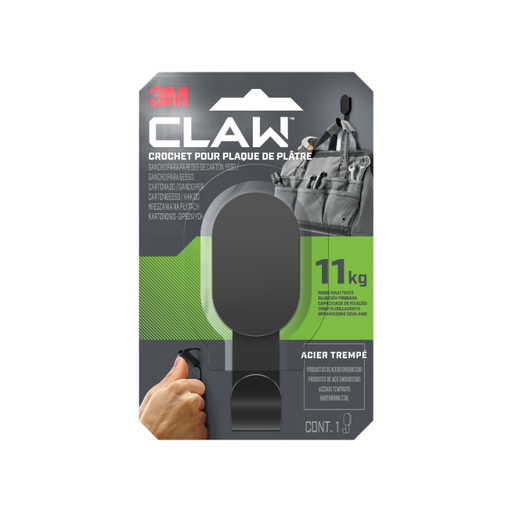
Why This Fits Their Persona: Engineered with hardened steel claws, this single black metal hook supports medium-sized art, framed prints and gallery canvases weighing up to 11 kg on standard plasterboard walls. It installs flush with firm thumb pressure, eliminating the mess of drywall dust and the need for power drills.
Unlike surface adhesive hangers that risk peeling away delicate emulsion on older walls, the hardened steel claws lock securely into the inner gypsum core to prevent sudden shear failure.
Offers a dependable 11 kg load threshold in a discreet black finish, providing robust hanging stability for mid-scale wall decor without creating large anchor holes.
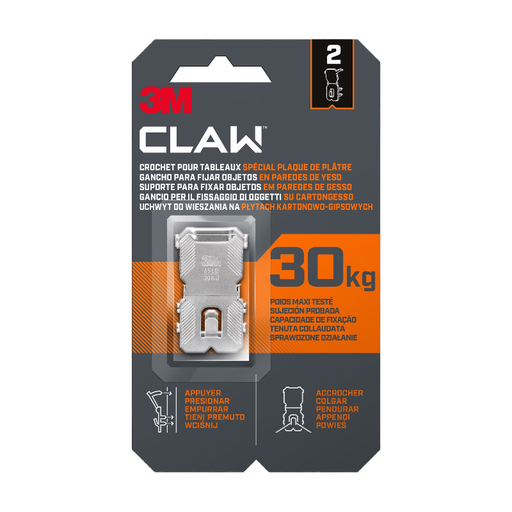
Why This Fits Their Persona: Supplied as a pack of two robust metal hooks, this system is engineered to secure substantial wall furnishings up to 30 kg directly in plasterboard. Designed for tool-free installation, the heavy-duty claws push smoothly into place using thumb force alone, bypassing drills and heavy wall plugs entirely.
Sidesteps the structural blowout common with wide butterfly wall anchors, supporting significant decor pieces while leaving only minimal, easily repairable puncture slits in the drywall lining.
Delivers an impressive 30 kg total load capacity across two dedicated metal hooks, making it ideal for substantial framed artwork and decorative hallway mirrors.
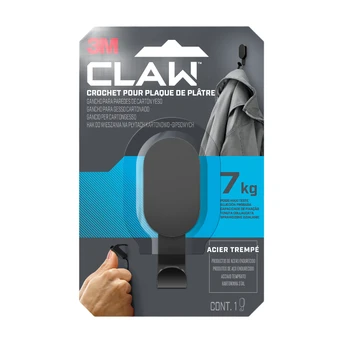
Why This Fits Their Persona: Designed for swift room transformations, this single black metal hook handles framed family photographs, lightweight wall clocks and smaller prints weighing up to 7 kg. The integrated hardened steel prongs push effortlessly into plasterboard, allowing you to curate room displays in minutes.
Prevents over-engineering lighter interior jobs with unnecessary drill bits or oversized plastic wall plugs, protecting apartment surfaces from needless physical damage.
Combines a practical 7 kg capacity with a clean black metal profile, delivering swift, reliable positioning that leaves minimal trace upon removal.
If your decorating plans involve masonry walls, solid timber panelling or standalone display units, browse our wider selection of home organisation and hanging hardware tailored for continental residences.
Dedicated drywall claw hooks can safely carry between 7 kg and 30 kg depending on the specific model and proper weight distribution. Because their hardened steel prongs leverage vertical shear force against the dense gypsum core, they deliver remarkable stability without requiring expanding plastic or metal wall plugs.
Yes, they are purpose-built for completely tool-free installation. You simply position the hook bracket against the plasterboard and apply firm, direct pressure with both thumbs until the steel prongs sink fully flush with the wall surface.
No, claw hooks are engineered exclusively for vertical walls where downward gravity creates steady shear resistance. When mounted overhead on a ceiling, the entire weight acts as a direct pulling force that can prize the prongs straight out of hollow drywall.