
Livraison le jour même ou le lendemain

Qualité garantie

Débloquez vos offres de bienvenue: Livraison GRATUITE | Jusqu'à -80 % | 30 jours d'essai gratuits à JoyPlus
Téléchargez l'application
A heated straightening brush can make styling at home considerably easier. But to make the right choice, it is best not to rely solely on marketing promises. Classic straightening brushes, hot air brushes, brush straighteners and multi-function devices do not work in the same way, nor are they used at the same temperature or under the same conditions.
Before placing your order, three common mistakes are worth avoiding:
The temperature should suit your hair fibre and the result you are looking for. Fine, damaged or colour-treated hair generally responds better to moderate heat. Thick, curly or difficult-to-manage hair may require more power and several passes.
A heated straightening brush with several temperature settings allows you to adjust the heat gradually. The K·SKIN KD382, for example, offers six settings from 130 °C to 200 °C, according to its product details. This range allows you to start gently and increase the temperature if necessary.
However, the stated temperature is not a guarantee of protection. When recommended in the instructions, use the device on dry hair, work in small sections and apply a heat-protective product that is compatible with your routine.
A brush for curly and straight hair does not necessarily meet the same needs as a brush designed for drying. The main formats are as follows:
A versatile device can save you from buying multiple tools, but it is often bulkier and takes a little time to get used to.
For a cordless device, check the battery capacity, charging time and the battery life actually stated by the manufacturer. The K·SKIN KD382 has a 3,000 mAh battery and offers approximately 30 minutes of use after a full charge. The Sunluxy KD382 version specifies a 4,000 mAh battery, while also claiming around 30 minutes of battery life.
For prolonged daily use, a corded model may prove more practical. The Shark SmoothStyle HT202EU Silk is mains-powered, with 900 W of power, two modes — damp hair and dry hair — and three temperature settings.
For safety, look for an insulated handle, heated surfaces positioned far enough from the scalp and an automatic shut-off function where available. Clear instructions in French are also a real advantage. Product listings sometimes mention CE and RoHS markings; always consult the documentation and seller information to find out which conditions apply to the model sold in France.
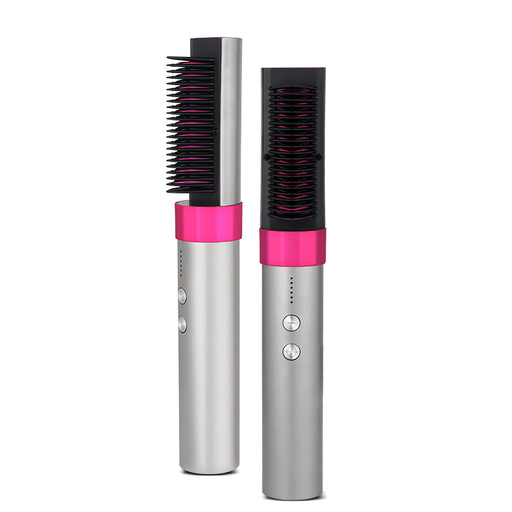
Why this model suits this profile : its cordless design is convenient for quick touch-ups at home or on the go, without needing a socket nearby.
The six temperature settings mean you do not have to use a single setting for every task. The bristles described as anti-scald also help limit direct contact with the hot areas.
PTC heating in approximately one minute, a range from 130 °C to 200 °C and an integrated 3,000 mAh battery.
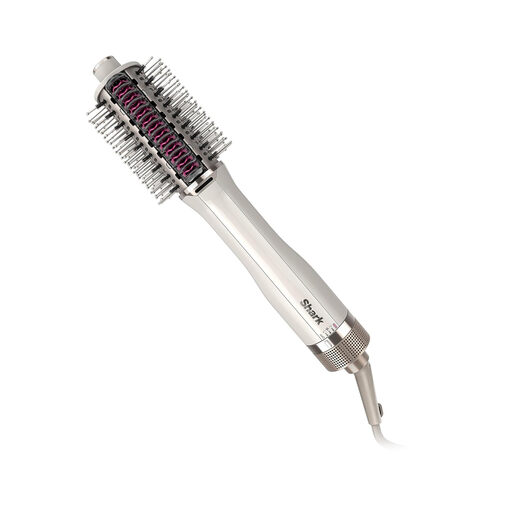
Why this model suits this profile : this 2-in-1 device is ideal for anyone who wants to switch from drying to styling with a single corded appliance.
The separate damp-hair and dry-hair modes make operation clearer, unlike devices whose instructions are vague about the acceptable level of moisture.
Stated power of 900 W, three temperature settings, three speeds and a listed weight of 730 g.
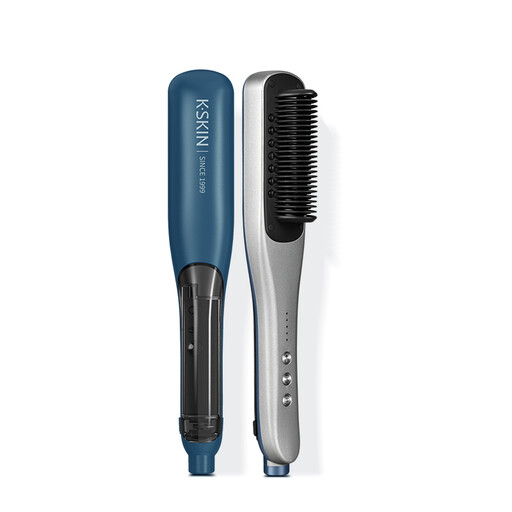
Why this model suits this profile : its moisture-diffusion system is designed for users looking for a steam straightening brush for regular styling sessions.
The 25 bristles and PTC heating are clearly described. You can therefore assess the device’s design rather than relying on a simple anti-frizz promise.
Steam function, PTC heating and stated dimensions of 36.3 × 9.8 × 6 cm.
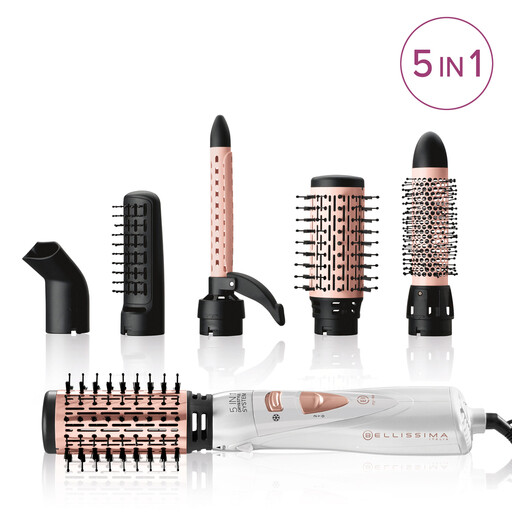
Why this model suits this profile : its interchangeable attachments let you switch between straightening, adding volume, creating waves, curling and targeted drying in one household.
Each of the five attachments has a specific function. This allows you to check that they match your actual needs and avoid buying a device that is too specialised.
1,000 W DC motor, ceramic coating, two speeds, two temperature settings and a cool-air button.
We have put together a complete, real-time updated list of products that fully meet these strict selection criteria and European safety regulations.
Not always. A classic heated brush should generally be used on dry hair. A hot air brush or a device with an explicitly stated damp-hair mode can be used on towel-dried hair, in accordance with the instructions. Check this before every purchase.
Start with the lowest available setting, often between 130 °C and 160 °C depending on the device. Make a quick pass over a small section, then gradually increase the temperature if necessary. The displayed temperature does not replace safe-use precautions or the application of heat protection.
It depends on its power and how long it is used. A compact heated brush generally uses less electricity than a 900 W or 1,000 W hot air brush, but it does not dry hair in the same way. To compare two models, look at their power rating in watts, heating time and the average duration of a styling session.