
Livraison le jour même ou le lendemain

Qualité garantie

Débloquez vos offres de bienvenue: Livraison GRATUITE | Jusqu'à -80 % | 30 jours d'essai gratuits à JoyPlus
Téléchargez l'application
A hair straightener can quickly disappoint if you choose one based only on its maximum temperature or promises of shine. Fine, thick, curly, coloured or hard-to-manage hair doesn’t all respond to heat and different types of styling tools in the same way.
Before choosing between a ceramic hair straightener, a straightening brush or a steam straightener, here are the main pitfalls to avoid and the features to look out for.
A temperature of 230 °C may sound appealing, but it isn’t always necessary. For fine or damaged hair, a lower heat setting is generally preferable. Thick hair, on the other hand, may need more power, but there’s no need to go over the same section repeatedly.
Look for a model with several precise heat settings, rather than one that only offers a maximum temperature.
Most standard hair straighteners are designed for use on dry hair. A ‘wet hair’ setting may refer to a drying mode or a hot air brush, rather than plates designed to straighten soaking-wet hair.
So check the intended use carefully. The Shark SmoothStyle, for example, has separate wet hair and dry hair modes. The Wavytalk Thermal Brush, meanwhile, specifies that it is not a drying brush and should not be used on wet hair.
Even an ionic straightener or one with ceramic plates doesn’t replace a heat protectant for hair. Residue from serum, oil or styling products can also build up on the plates and affect how smoothly they glide.
Apply a small amount of heat-protectant serum to the lengths, let it dry if needed, then wipe the plates with a soft cloth once they’re cool. If you’re using a steam straightener, don’t pour oil directly into the reservoir.
For regular use, look for at least two or three temperature settings. The tools in this selection offer a range of temperatures:
Always start with the lowest temperature that gives you the result you want. Work with small sections of completely dry hair and avoid holding the plates still in one place.
A ceramic hair straightener helps distribute heat evenly and glide smoothly through your hair. Floating plates adapt better to the thickness of each section. Narrow plates are suited to short hair, fringes and creating waves; wider plates let you style long or thick hair more quickly.
A heated brush smooths the hair fibre while generally preserving more volume. It’s a good choice if you want a more controlled style without necessarily getting a completely flat finish.
If you’re travelling, check the weight, cable length, voltage compatibility and whether the tool has an automatic shut-off. A cordless hair straightener should also be assessed by its battery life, charging time and whether it can be used while charging.
A 360° swivel cord, plate lock and heat-resistant mat are particularly handy. With a steam straightener, use only the water specified in the instructions: the Dreame SteamSleek requires distilled or purified water, and the reservoir must be emptied after each use.
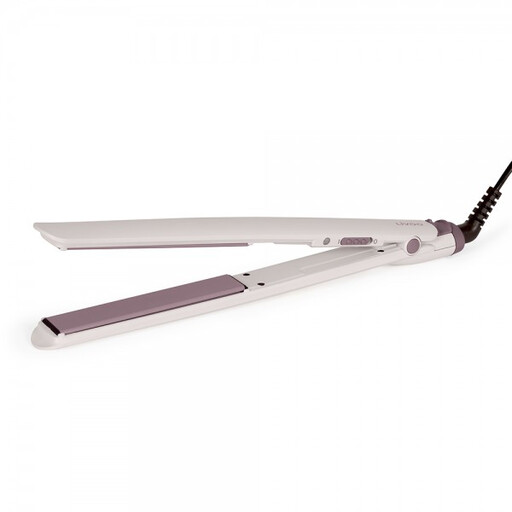
Why it suits this profile : Its straightforward design makes it ideal for a first straightener and an at-home styling routine.
It’s not all about the maximum temperature: its floating ceramic plates and on/off button make it simple and intuitive to use.
Heats up in a stated 45 seconds, 120 × 25 mm plates, 1.85 m swivel cord, and settings for straightening or waving.
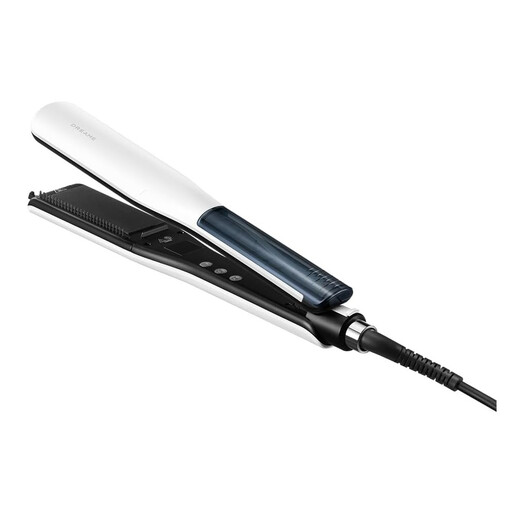
Why it suits this profile : This model is for anyone looking to combine advanced settings, steam styling and digital monitoring.
The instructions explain the precautions for using steam, handling the reservoir and avoiding hot surfaces, helping you use the tool safely.
Ceramic plates, temperatures from 160 °C to 230 °C, built-in reservoir and 100–240 V power supply.
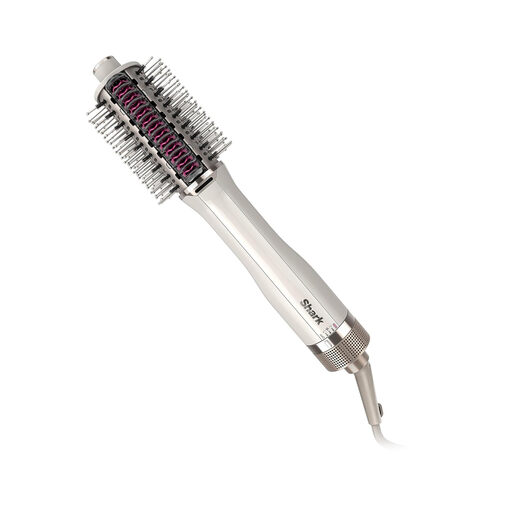
Why it suits this profile : It’s ideal if you want to cut down on the number of tools you use for drying, styling and touch-ups.
Its two modes are clearly separated: the wet hair mode dries and styles, while the dry hair mode activates the straightening comb.
900 W power, three heat settings, three speeds, nylon and boar-bristle brushes, and a stated weight of 730 g.
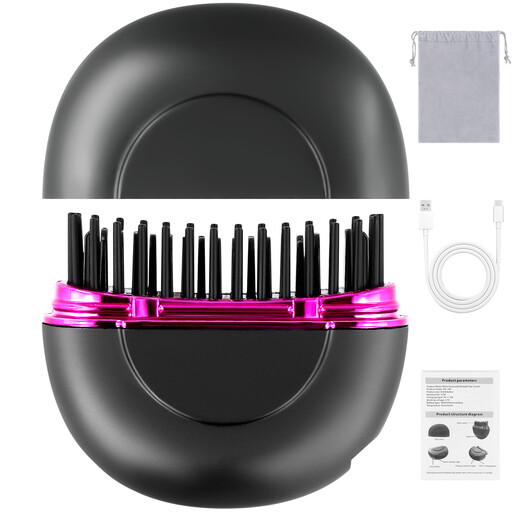
Why it suits this profile : Its light weight and compact design make it handy for touch-ups at work, on holiday or when you’re out and about.
It offers practical portability features, including a lithium-ion battery, rechargeable design and stated weight of 127 g.
PTC technology, stated 10-second heat-up time, negative ions and a compact 8.8 × 8.8 cm design.
The results also depend on how you prepare your hair. A heat-protectant smoothing serum for hair, such as L’Oréal Paris Elseve Dream Long Smoothing Serum, can be applied to damp hair before styling or to dry hair as a finishing touch. The brand claims protection up to 230 °C; this is a manufacturer claim and doesn’t mean you can skip setting your tool correctly.
For a frizz-control routine, you can also pair it with:
Always follow the instructions, ingredient list and precautions on the packaging, particularly if you have a sensitive scalp or a known allergy.
We’ve put together a comprehensive, regularly updated list of products that meet these strict selection criteria and European safety regulations.
Frequent use increases your exposure to heat. Apply heat protection, choose the lowest setting that suits your hair and limit the number of passes over each section. Your hair must be completely dry unless the instructions explicitly state that the tool has a wet hair mode.
As a general rule, start with a low temperature, around 140 to 160 °C, then increase it if you’re not getting the result you want. Thick or very curly hair may need a higher setting, but you shouldn’t automatically use the maximum temperature.
It depends on how often you use it, how well you maintain it and the condition of the cord or battery. Clean the plates when they’re cool, put the tool away once it has cooled completely, and stop using it if you notice any damage to the cable, plug or casing.