If you regularly want to cook and blend soups in the same appliance, choose a heated blender. For drinks, sauces or soups that are already cooked, a standard blender will do the blending but won’t cook. A food processor is worth considering if you’ll also use its chopping, grating or kneading functions and have space for its attachments. In every case, check the usable capacity, maximum continuous running time and cleaning instructions for the model you’re considering.
Which appliance is right for you?
The first distinction is simple: do you only want to blend, or do you also want to cook and carry out other food-preparation tasks?
For making homemade soup regularly
If you’re starting with raw vegetables and want to avoid transferring them between a saucepan and a blender, consider a heated blender. Que Choisir says these appliances can cook and blend, then keep soup warm. Check how much soup the jug can actually make.
For switching between drinks and sauces
If you mainly make smoothies and sauces, or occasionally crush ice, look at standard blenders. Que Choisir describes these as blending functions: compare the settings and permitted running time for your recipes, and don’t assume the appliance can cook.
For cooking with a range of functions
A food processor is worth considering if you’ll also use it regularly to chop, grate, slice or knead. However, Que Choisir points out that you should choose a bowl size to suit your household’s needs and allow enough room for the appliance.
What should you check before choosing?
Start by choosing an appliance to suit the jobs you need it to do, then check that its capacity and practical requirements work for your kitchen.
Standard blender
Consider it: for drinks, sauces and soups that are already cooked, when you don’t need the appliance to cook.
Bear in mind: you’ll need to cook the vegetables separately.
Heated blender
Consider it: for cooking and blending soups in the same appliance, a use described by Que Choisir.
Bear in mind: programmes control the settings; also check the instructions for handling the hot jug and lid.
Food processor
Consider it: if you regularly blend as well as grate, slice, chop or knead.
Bear in mind: the motor unit, bowls and attachments need storage space; Que Choisir highlights how bulky this type of appliance can be.
| Factor |
What to check |
What I need |
| Cooking and recipes |
Check whether the appliance cooks or only blends; look at soup programmes, settings and ice-crushing functions in light of the recipes you make. |
I start my soups with raw vegetables, or I mainly want to blend drinks, sauces and ingredients that are already cooked. |
| Running time and settings |
Check the maximum continuous running time and recommended breaks; compare speeds, Pulse mode and useful programmes rather than focusing on wattage alone. |
For thick mixtures or several batches, I want to know how long the appliance can run without a break. |
| Capacity and space |
Compare the usable capacity with the amount you’ll prepare; check the dimensions and allow storage space for a food processor’s attachments. |
I sometimes cook for several people, but the appliance also needs to fit on my worktop. |
| Jug and handling |
Check the jug’s weight and material, as well as the instructions for hot ingredients. Glass can break if dropped; plastic is lighter. |
If I often pour out a large amount of soup or store the jug on a high shelf, how easy it is to handle matters as much as its capacity. |
| Cleaning |
Check the manual to see which parts can be removed and which are dishwasher-safe; make sure you can reach the areas beneath the blades. |
After regular use, I want to be able to clean the parts that come into contact with food according to the model’s instructions. |
What mistakes should you avoid?
-
Choosing based on wattage alone
The stated power doesn’t tell you how long the appliance can run before it needs a break. This matters if you’re making several preparations in a row or blending a thick mixture.
Check the continuous running time and recommended breaks in the manual, then look at the speeds and modes that suit your recipes.
-
Expecting a standard blender to cook vegetables
Que Choisir distinguishes between the blending function of a standard blender and the cooking function available with a heated blender. So, if you’re making soup from raw vegetables, your choice of appliance affects the preparation steps.
Choose a heated model if you want to cook and blend in the same appliance. If the soup is already cooked, check that the blender you’re considering can safely handle its temperature before blending.
-
Choosing a glass jug without considering how you’ll handle it
A glass jug lets you see what’s inside, but it becomes heavier when full and can break if dropped.
Think about how you’ll carry the filled jug to your serving bowls and where you’ll store it. Then compare its weight and how easy it is to handle with other jugs you’re considering.
-
Underestimating how much space a food processor takes up
A food processor’s motor unit, bowls and attachments take up space, even when you’re only using it to blend. Que Choisir recommends choosing a bowl size to suit your household’s needs.
List the functions you’ll use regularly and measure the space available for the appliance and its attachments before deciding on this option.
Three brands to consider
These models illustrate different types of appliance; their features don’t apply to every model from each brand.
Moulinex
The Easy Soup LM841B10 is an example of a heated blender for making soup in the appliance.
- Moulinex lists a 1.2 L jug and five automatic programmes for this model, including settings for soup, compote and smoothies.
- Check that the 1.2 L capacity suits the portions you want to make, and that the programme settings work for your recipes.
Philips
The Series 5000 HR3020/20 is an example of a standard blender to consider if taking it apart for cleaning is important to you.
- Philips says the blades are removable and the detachable parts of this model are dishwasher-safe.
- This information applies to the HR3020/20. Check the manual for any other model before taking it apart or washing its parts.
Magimix
The CS 4200XL is an example of a food processor for blending soups and sauces as well as preparing other dishes.
- As well as blending, Magimix lists grating, slicing, chopping and kneading functions for this model.
- Before choosing this type of food processor, check the bowl size and allow room for the motor unit and any attachments you’ll actually use.
Appliances available on Joybuy
These options offer different ways to blend at home: a hand blender for blending in a container, blenders for drinks and cold ingredients, and a multifunction cooking food processor. Their uses and temperature limits aren’t interchangeable.
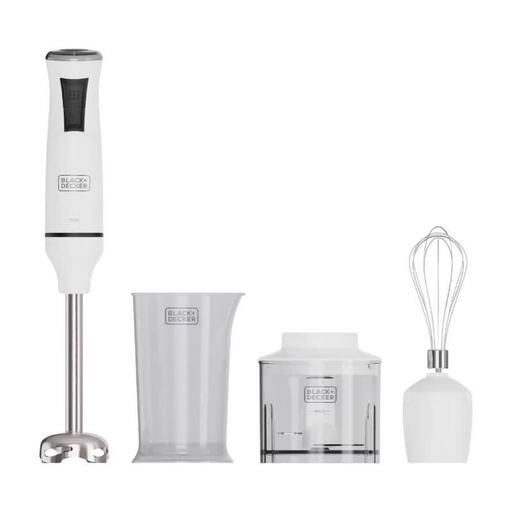 Image unavailable
BLACK+DECKER BXHBA601E hand blender
Its blending foot lets you blend soups, purées or compotes directly in the container. The product description lists 20 speeds, a Turbo mode, and chopping and emulsifying attachments. Continuous blending is limited to 60 seconds; leave liquids above 60 °C to cool before blending.
View on Joybuy
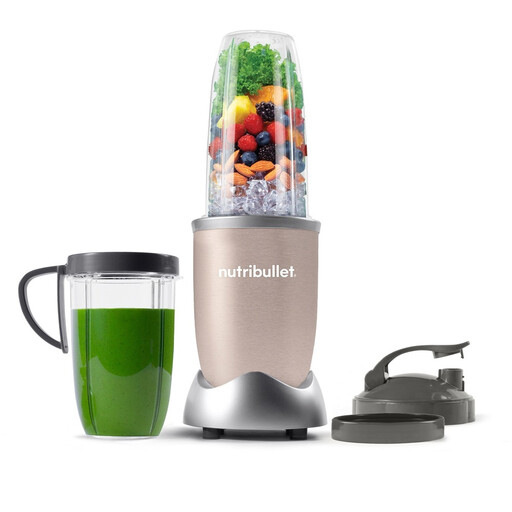 Image unavailable
nutribullet Pro NB907CP Champagne, 900 W
This personal blender is designed for smoothies, dips and coulis. Its motor is rated at 900 W, and the blade assembly can be removed for cleaning. If you’re making several portions or blending multiple recipes in a row, check the cup’s usable capacity and the maximum continuous running time. Don’t assume it’s suitable for hot soup.
View on Joybuy
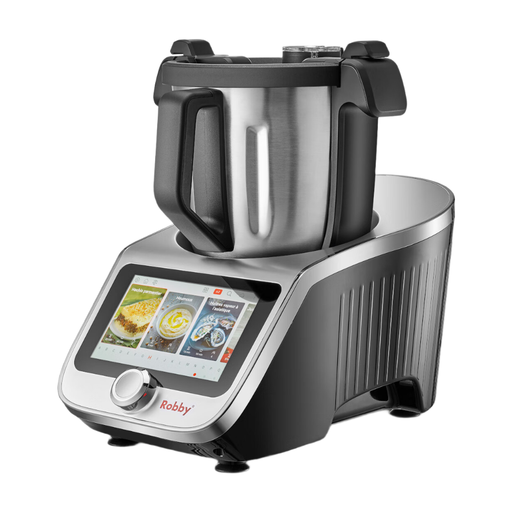 Image unavailable
Robby Smart cooking food processor with XL bowl, scales, touchscreen and 750 recipes
Its heating and blending functions, along with its soup programmes, make it suitable for cooking and blending in the same appliance. The product description lists a 3 L usable-capacity bowl and eight speeds. Allow space for its dimensions of 40 × 26 × 36 cm and weight of 9.4 kg; use oven gloves when handling the hot bowl.
View on Joybuy
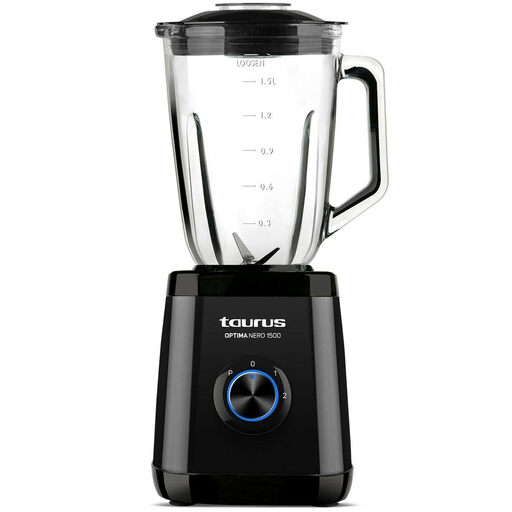 Image unavailable
TAURUS Optima Nero 1500, 1500 W, 1.5 L glass jug
This blender is described as suitable for smoothies, purées, emulsions and crushed ice; it has a Pulse mode and removable blades. Continuous blending is limited to two minutes, and liquids above 60 °C must be left to cool before use. Check how many speeds the variant you choose has. Also consider the weight of the whole appliance and the risk of the glass jug breaking.
View on Joybuy
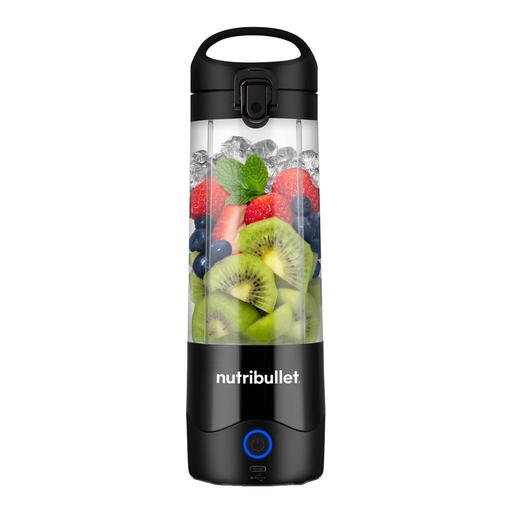 Image unavailable
nutribullet Portable NBP003B black, USB-C rechargeable
Its 475 ml Tritan cup is designed for blending a single drink to take with you. The product description lists USB-C charging and 20-second blending cycles; follow the recommended breaks between cycles. If you want to make soups or sauces, check the manual to confirm what it can be used for before choosing it.
View on Joybuy
Frequently asked questions
Do you need a heated blender to make soup?
No. A standard blender can blend soup that’s already cooked, provided the manual says it can handle the temperature. Que Choisir says a heated blender can also cook and blend soup in the appliance. Check its usable capacity against the number of portions you want to make.
Which material should you choose for the jug?
Choose based on how you’ll handle the jug: glass lets you see the ingredients as they blend, but it’s heavy and can break if dropped; plastic is lighter, though its durability depends on its quality. You can’t see inside a stainless-steel jug without opening the lid. Also check the model’s instructions for hot ingredients.
Are blender parts dishwasher-safe?
It depends on the model and the part. Philips says the detachable parts of the HR3020/20 are dishwasher-safe and its blades can be removed. Check the manual for your model to find out which parts can be washed and which make up the electrical base.
What should you check if a blender breaks down in France?
First, check whether the model can be repaired and whether spare parts are available. The French ministries responsible for ecology describe a repair bonus that applies to certain repairs carried out by an accredited repairer. Check that both the appliance and the repair are eligible before arranging the work.
Where should you take a blender at the end of its life?
Take it to a collection point for electrical appliances rather than putting it with household waste or packaging. Ecosystem says small electrical appliances can be taken to designated collection points.


