If you often make soups and compotes
If you want to cook and blend in the same jug, look for a heated blender with programmes suited to your recipes. Some models also have a keep-warm function, as Que Choisir Ensemble explains for this category.


A heated blender is a good choice if you regularly make soups or compotes and want to cook and blend in the same jug, provided its programmes and capacity suit your recipes. If you’d rather use a saucepan you already own, pair it with a suitable blender; consider a food processor with cooking functions if you’ll also use its other features. Whichever you choose, check how to clean it and follow the instructions for hot ingredients.
If you want to cook and blend in the same jug, look for a heated blender with programmes suited to your recipes. Some models also have a keep-warm function, as Que Choisir Ensemble explains for this category.
Pairing a saucepan with a hand blender lets you cook separately without having to find space for a heated blender. However, check the instructions to see how to use the hand blender with hot ingredients.
A food processor with cooking functions may be worth considering if you’ll also use features such as chopping, grating or kneading. Compare each model’s features with how you’ll actually use it, rather than choosing based on the number of functions alone.
First decide whether you want to cook in the blending jug, then check that the appliance’s instructions cover your recipes, quantities and cleaning needs.
| Priority | What to check | Consider your needs |
|---|---|---|
| How it works | Que Choisir Ensemble distinguishes heated blenders, which can cook and blend, from standard blenders, which are designed mainly for blending. With a saucepan and hand blender, cooking and blending are separate; a food processor with cooking functions is only worthwhile if you’ll use its other features. | I want to cook and blend in one jug, or I’d rather keep cooking in my saucepan before blending. |
| Recipes and capacity | Check that the soup and compote programmes suit the recipes you plan to make. Look at the jug capacity and the fill limits in the instructions, and don’t assume the stated capacity is the same as the usable amount of soup. | For family meals, I need to be able to make my usual quantity; for occasional use, I don’t want to choose a jug just because it has a large capacity. |
| Cleaning and storage | Check which parts need washing separately, whether they’re dishwasher-safe and how much space the appliance takes up. A cleaning cycle alone doesn’t tell you how to clean the blades, seal or lid. | I want to know where I’ll store the appliance and what I’ll need to clean after making soup, not just whether it has a cleaning programme. |
| Hot ingredients | Check the temperature limits and instructions for the specific model, especially those for the jug and lid. For example, the instructions for a SEB hand blender prohibit using it in a saucepan on the hob. This guidance doesn’t replace the instructions for another model. | If I blend soup after cooking, I need to check my appliance’s instructions before using it with hot ingredients. |
A standard blender isn’t designed to cook soup directly in its jug. Que Choisir Ensemble identifies cooking as the key functional difference with a heated blender.
If you don’t want to use a saucepan, check the product listing and instructions to confirm that the model has a heating function and cooking programmes.
Soup, compote, blending and cleaning programmes are designed for different tasks. The number of programmes doesn’t tell you whether the appliance can make your recipe or how much you can prepare.
Match the programmes to the dishes you plan to make, then check the capacity and fill markings in the instructions.
A cleaning cycle alone doesn’t explain how to clean the lid, seal, blades or removable parts.
Check the instructions to see which parts can be removed, which need to be washed by hand and which are dishwasher-safe.
Hot ingredients and electrical appliances call for you to follow the instructions for the specific model you’re using. The DGCCRF highlights, among other things, the risk of burns from electrical equipment; the instructions for a SEB hand blender prohibit using it in a saucepan on the hob.
Before use, check the appliance is in good condition and follow its instructions for hot ingredients, the jug and the lid.
These models are suited to making soup or compote with separate cooking, followed by blending with a hand blender. None of them can cook ingredients like a heated blender.
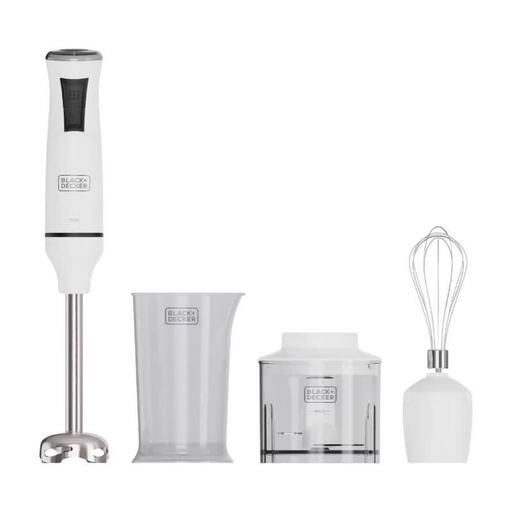 Image unavailable
For blending soups, purées or compotes after cooking them separately. The product listing specifies 20 speeds, a turbo function and removable accessories that are stated to be dishwasher-safe.
Do not blend liquids above 60 °C with this model. Let the soup cool first if needed, and do not use the blender continuously for more than 60 seconds.
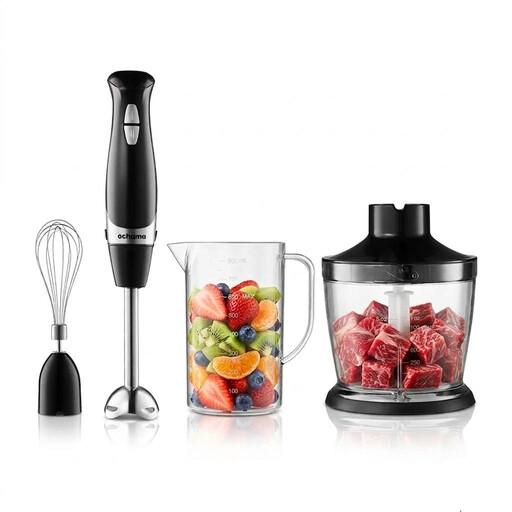 Image unavailable
For blending soup or purée after cooking it separately. This model has two speeds, a whisk, a 500 ml chopper and an 800 ml container.
Before blending hot soup, check the temperature guidance in the instructions. Do not immerse the motor unit.
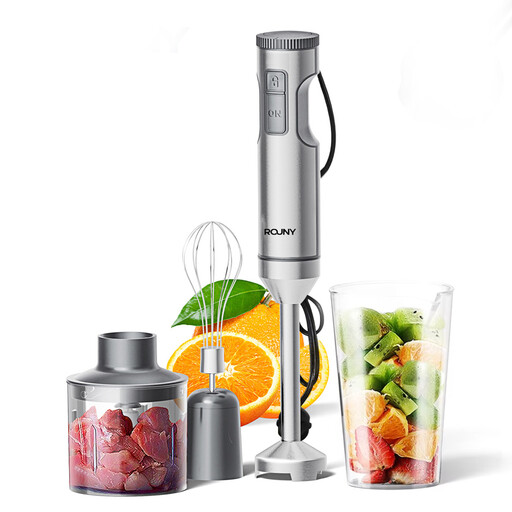 Image unavailable
For blending soups after cooking them separately. The set includes a 700 ml container, a 500 ml chopper and a whisk; the product listing states that the speed is adjustable.
Check the instructions before blending hot ingredients. The product listing limits continuous use to one minute, followed by a one-minute break.
No. It combines cooking and blending for recipes that suit its programmes, but it won’t necessarily cover every use for a saucepan and blender. If you use a saucepan with a hand blender, you’ll cook and blend in two steps.
Compare the amount you usually make with the model’s fill markings, rather than looking at the jug’s stated capacity alone. Moulinex and Senya, for example, list models with capacities of 1.2 L and 1.5 L. These figures alone don’t tell you how much soup you can make for every recipe.
No. It doesn’t guarantee that every part will be clean after the cycle or that every part is dishwasher-safe. Check the instructions for the lid, seal, blades and other parts that come into contact with food.
Check the blender is in good condition, then follow its temperature limits and instructions. Guidance varies between models: for example, the instructions for a SEB hand blender prohibit using it in a saucepan on the hob.