
Livraison le jour même ou le lendemain

Qualité garantie

Débloquez vos offres de bienvenue: Livraison GRATUITE | Jusqu'à -80 % | 30 jours d'essai gratuits à JoyPlus
Téléchargez l'application
A heat pump tumble dryer helps reduce electricity consumption while drying clothes at a moderate temperature. However, not all models are the same or designed to meet the same needs. Capacity, energy rating, water drainage and filter maintenance all have a direct impact on everyday convenience.
Before comparing appliances, here are the main pitfalls to avoid.
A 10 kg tumble dryer is ideal for large loads, bedding or towels. However, it usually takes up more space and may be oversized for a single person. By contrast, an 8 kg tumble dryer will often meet the needs of a couple or medium-sized family.
Capacity refers to the maximum weight of dry laundry that the drum can hold. To achieve even drying, however, it is best not to fill the appliance completely every time.
The EU energy label allows you to compare appliances on a scale from A to G. A tumble dryer with energy rating D may have reasonable consumption compared with older models, but other figures are just as important: annual consumption in kWh, cycle duration and capacity.
For example, the Electrolux model featured below has an E rating and annual consumption of 235 kWh. This gives you a more practical estimate of running costs than relying on the vague promise of being “economical”.
A filter that is awkward to clean, a poorly positioned water tank or a door that is incompatible with your utility room layout can quickly make the appliance difficult to use. A heat pump condenser tumble dryer, in particular, requires regular filter cleaning and sufficient airflow around the appliance.
Measure the available space before placing your order. Standard dimensions are around 60 cm wide and 85 cm high, but depth can vary considerably. The Electrolux EDH1018CD, for example, has a depth of 65 cm and a stated noise level of 66 dB(A).
You should also check:
A heat pump tumble dryer recovers and reuses some of the heat generated during the cycle. Laundry is generally dried at a lower temperature than with a conventional condenser tumble dryer, making it more suitable for delicate fabrics.
The trade-off is that cycles may take longer. You therefore need to find the right balance between consumption, duration and frequency of use. For households running several cycles every week, annual consumption and the available programmes deserve particular attention.
Some options can be especially useful in specific situations:
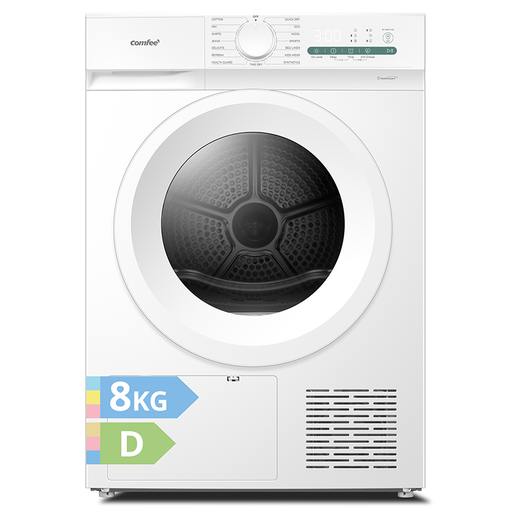
Why this choice suits this profile : With its 8 kg capacity and controls with an LED display, this model is suitable for everyday family use without overwhelming you with a confusing array of settings.
The D rating and heat pump are clearly stated in the product details. This means you can compare the appliance using concrete criteria rather than relying on a vague promise of savings.
8 kg capacity, three stated drying levels, Refresh programme and quick-drying function.
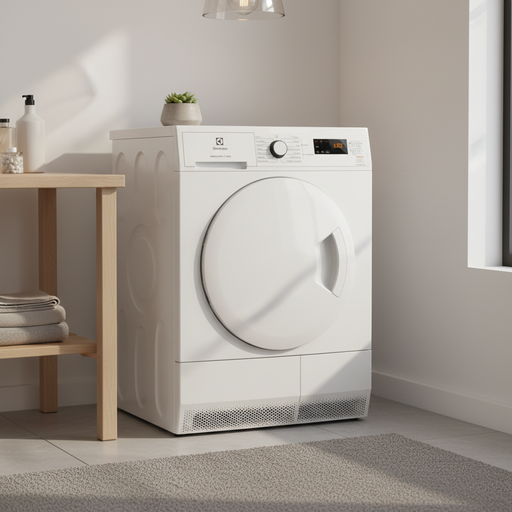
Why this choice suits this profile : This white tumble dryer combines a reversible door, a zinc drum and OptiSense sensors. It is an appealing package for users who care about both installation and fabric care.
The stated annual consumption of 235 kWh and E rating are clearly specified. This allows buyers to factor running costs into their budget rather than looking only at the purchase price.
8 kg capacity, OptiSense technology, propane refrigerant and a stated noise level of 66 dB(A).
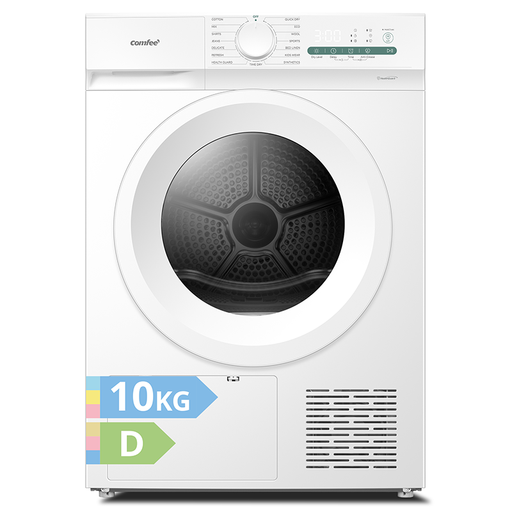
Why this choice suits this profile : The 10 kg capacity stated in the product name is aimed at households that run load after load, particularly when they need to dry bulky laundry or deal with pet hair.
The capacity, D rating and stated functions are visible in the product details. Nevertheless, check the exact capacity in the specifications before completing your purchase, as the detailed description also mentions 8 kg.
Heat pump, double-layer filter presented for pet hair, UV light according to the manufacturer, Refresh programme and LED display.
We have put together a complete, real-time updated list of products that fully meet these demanding selection criteria, as well as European safety regulations.
A heat pump operates at a lower temperature and reuses some of the heat produced. Actual consumption nevertheless depends on the energy rating, number of cycles, load and selected programme. For an accurate indication, check the annual consumption in kWh shown on the energy label.
It can be installed in a properly ventilated room, on a stable floor and close to a suitable electrical socket. Leave the recommended clearance around the appliance to promote airflow. Before installation, also check the water tank drainage system and the direction in which the door opens.
Its lifespan depends on maintenance, cycle frequency and compliance with the recommended loads. Clean the filter after every use or according to the instructions in the manual, empty the tank when necessary and remove dust from the areas specified by the manufacturer. Regular maintenance helps maintain consistent performance and reduce the strain placed on the appliance.