Households that regularly dry full loads
If you want to use an airer less often and have room for a separate appliance, compare heat pump tumble dryers by the capacity that suits your laundry, cycle times and maintenance requirements.


If you have room for a separate appliance and want to rely less on an airer, consider a heat pump tumble dryer: it works without an external exhaust hose. A washer-dryer is a better fit if space is limited, as long as you keep to its drying capacity. Improving your washing machine’s spin performance is another option if you plan to keep using an airer. For new tumble dryers placed on the EU market from 1 July 2025, the European Commission says that the applicable requirements restrict market access to heat pump models that meet them.
If you want to use an airer less often and have room for a separate appliance, compare heat pump tumble dryers by the capacity that suits your laundry, cycle times and maintenance requirements.
If there’s no room for a second appliance, a washer-dryer combines washing and drying in one space. However, its drying capacity may be lower than its washing capacity, as UFC-Que Choisir points out.
If you don’t want to add mechanical drying, check your washing machine’s spin efficiency before replacing it. ADEME recommends checking this on the energy label, along with the energy and noise information.
First decide whether you want to dry your laundry in an appliance or continue using an airer. If you choose a drying appliance, the space available and the amount of laundry you need to dry will help you decide between a separate tumble dryer and a washer-dryer.
| Priority | What to check | Who it matters to |
|---|---|---|
| Regular use and electricity | Compare the capacity that suits your loads and the tumble dryer’s weighted energy consumption per cycle, as shown on its label. | If you use an airer often, cutting back on it without losing sight of electricity consumption becomes the main priority. Around 36% of consumers would put this first. |
| Capacity and cycle time | Check the drying capacity and the duration of the full-load Eco programme; check the load limits for any quick programme. | For a household that does several loads of washing, it’s important to have dry laundry without running multiple cycles. The ability to keep up with the household’s needs would come before other factors for around 29% of consumers. |
| Available space | Measure the space and compare the washing and drying capacities of a washer-dryer separately. | If you can only fit one appliance, combining washing and drying matters more than being able to process a full load without handling the laundry. Around 21% of consumers would make the appliance’s footprint their priority. |
| Air-drying on an airer | For a washing machine, check the spin efficiency and noise level on the energy label, as well as the care instructions for your fabrics. | If you plan to keep using an airer, you’ll mainly want your laundry to come out of the washing machine better spun. This would be the main priority for around 14% of consumers. |
When comparing tumble dryers, the energy label and European EPREL product database provide information including capacity, weighted energy consumption per cycle, the duration of the full-load Eco programme and noise level. These details don’t replace the instruction manual: also check the clearances needed in the room and how condensed water is collected or drained away.
According to UFC-Que Choisir, a vented tumble dryer needs an external opening or access to a ventilation duct. It’s therefore not suitable for a home without one.
Check that the technology is specifically described as a heat pump condenser dryer rather than relying on the general term ‘tumble dryer’.
An older conventional condenser dryer shouldn’t be treated as equivalent to a new heat pump model. The European Commission says that, from 1 July 2025, only heat pump tumble dryers that meet the new requirements can be placed on the EU market. This date alone doesn’t determine the status of a second-hand appliance or one that was already placed on the market before then.
When buying new, identify the technology and check the applicable energy label and the model’s product information. If you’re considering old stock or a second-hand appliance, clarify its status before comparing it with other models.
A washer-dryer may take more laundry for washing than for drying. For example, the Samsung WD90DG6B85BKU3 has a washing capacity of 9 kg and a drying capacity of 6 kg.
Check both limits. If you fill the drum to its washing capacity, check the manual to see how much laundry to remove before starting the drying cycle.
A condenser tumble dryer needs the filter to be easy to access and, depending on the model, the condenser and water tank too. Electrolux recommends cleaning the filter after every cycle and emptying the tank regularly if the appliance has one.
Before you buy, find these parts in the manual and check whether your installation allows the water to drain away directly.
These examples illustrate different formats and features to compare; they don’t represent every range from each brand.
The Bosch WQA23300FR heat pump tumble dryer is a useful example when considering the space needed for a separate appliance.
The Whirlpool FFTBCM118XBFR is an example of an older conventional condenser tumble dryer, rather than a standard choice for a new appliance being placed on the market today.
The Samsung WD90DG6B85BKU3 washer-dryer is an example of a single appliance for homes where space is limited.
This selection includes a heat pump tumble dryer for reducing your reliance on an airer, as well as washing machines for households that want to keep air-drying their laundry and are looking at spin performance. A washing machine on its own doesn’t mechanically dry laundry.
 Image unavailable
Worth considering if you have room for a separate tumble dryer and want to reduce air-drying without needing an external exhaust hose. The model name indicates a capacity of 8 kg and energy rating C. Before choosing, compare the Eco programme duration and energy consumption per cycle with your needs, and check the installation instructions in the manual.
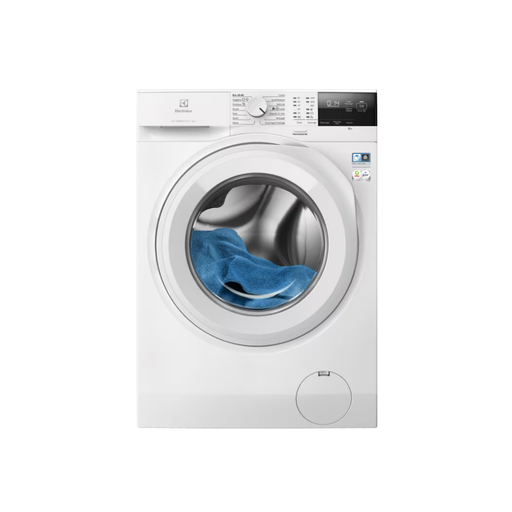 Image unavailable
A choice to consider if you plan to keep using an airer and want to look at your washing machine’s spin performance before air-drying. This model has a washing capacity of 8 kg and a maximum spin speed of 1,400 rpm. It isn’t a replacement for a tumble dryer; also check its spin efficiency rating on the energy label.
 Image unavailable
Consider this model if your usual loads suit a 6 kg washing capacity and you plan to keep using an airer. The product name indicates a top-loading design and a maximum spin speed of 1,400 rpm. Check that a top-opening machine suits the space you have in mind; this model doesn’t mechanically dry laundry.
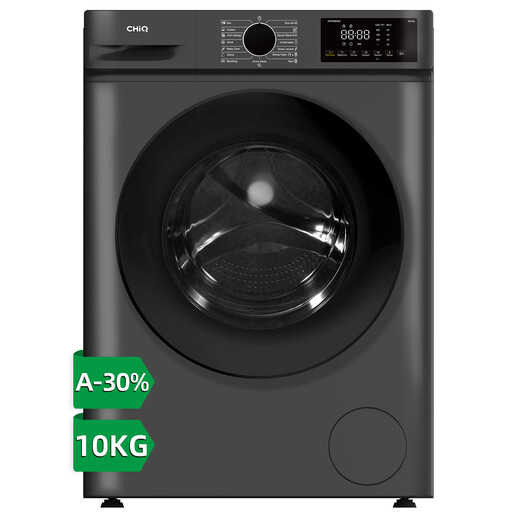 Image unavailable
For washing loads that warrant a stated capacity of 10 kg, if you’ll continue to air-dry your laundry. The listed maximum spin speed is 1,400 rpm. Check its spin efficiency rating and dimensions separately before comparing it with another washing machine. It doesn’t have a mechanical drying function.
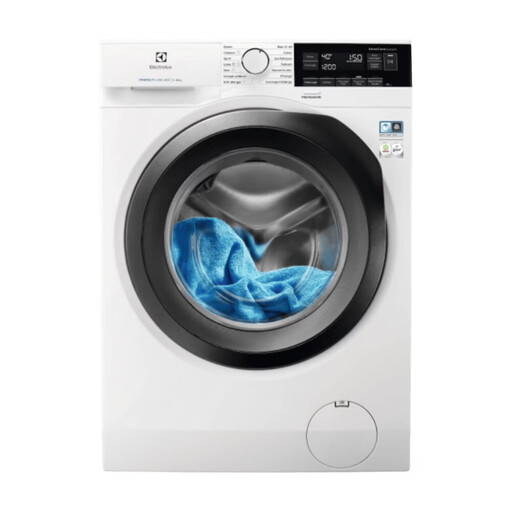 Image unavailable
Another 8 kg washing option if you plan to keep air-drying your laundry. The product name indicates a maximum spin speed of 1,400 rpm and energy rating C. To assess how well this model will prepare your laundry for air-drying, check its spin efficiency rating specifically: the energy rating isn’t a substitute for it.
Yes. According to UFC-Que Choisir, a heat pump condenser tumble dryer doesn’t need the external exhaust hose required by a vented model. However, check the manual for clearances, the power supply and how water is collected. For a new appliance placed on the EU market from 1 July 2025, also check that it meets the heat pump tumble dryer requirements specified by the European Commission.
No. The fact that a tumble dryer doesn’t need an exhaust hose doesn’t mean the room is suitable. In France, the decree of 24 March 1982 published by Légifrance provides for general, permanent ventilation in a home, at least during periods when outdoor temperatures mean the windows must be kept closed. Check the home’s ventilation and the appliance’s installation requirements in its manual.
Plan to clean the filter and maintain the condenser and water tank, depending on the model’s features. Electrolux recommends cleaning the filter after every cycle and emptying the tank regularly if there is one. Follow your appliance’s manual for other maintenance and for any direct water drainage.
Not if the load exceeds its drying capacity. UFC-Que Choisir points out that drying capacity is generally lower than washing capacity. For example, the Samsung WD90DG6B85BKU3 has a washing capacity of 9 kg and a drying capacity of 6 kg. Reduce the load before drying if needed, and follow the programme limits in the manual.