Households that regularly dry large loads
If you often dry large loads and don’t have an external vent, compare the capacity of a separate tumble dryer with that of your washing machine. You’ll also need space for a second appliance.


If you dry clothes regularly and don’t have an external vent, choose a separate heat pump tumble dryer if you have room for it and want to match its capacity to your laundry loads. If you only have space for one appliance, a washer-dryer saves you from adding a second machine. However, its drying capacity is lower than its washing capacity, as UFC-Que Choisir points out. Be sure to check the cycle time and energy consumption for the model you’re considering, too.
If you often dry large loads and don’t have an external vent, compare the capacity of a separate tumble dryer with that of your washing machine. You’ll also need space for a second appliance.
If there’s no room for two appliances, a washer-dryer combines both functions. Its drying capacity is still lower than its washing capacity, according to UFC-Que Choisir, so you may need to reduce a full wash load before drying it.
If you dry clothes regularly, compare the energy figures and programme duration shown on the labels of the models you’re considering. An energy rating alone doesn’t tell you how long a cycle takes or how much laundry you can dry.
Without an external vent, first check how much space you have. Then consider how much laundry you need to dry, along with the energy use and cycle time for the programmes that suit your needs.
Consider this if: you have room for a second appliance and can choose a capacity to suit your laundry loads.
Bear in mind: you’ll need a dedicated space, and it’s worth checking the eco programme duration for each model.
Consider this if: washing and drying need to fit into a single appliance.
Bear in mind: according to UFC-Que Choisir, the drying capacity is lower than the washing capacity, so you may need to remove some laundry between the two stages.
| Factor | What to check | Who it matters to |
|---|---|---|
| Energy use | Compare the energy figures and cycle duration for the programme you need, using similar appliances and programmes. | If I dry laundry often, I want to keep track of the electricity used for each cycle; around 46% of consumers put energy use first. |
| Available space | Measure the space and the appliance; for a combined machine, check the washing and drying capacities separately. | In a small home, I need both functions to fit into one space; around 36% of consumers prioritise saving space. |
| Drying capacity | Compare the capacities in kg with your usual laundry loads, then check how long the suitable programme takes. | With large laundry loads, I’d rather not split them; capacity comes first for around 18% of consumers. |
A vented model expels moist air outside. The European Commission and UFC-Que Choisir specify that it needs an external outlet or a suitable vent hose.
If your home doesn’t have one, look for a condenser model instead of assuming you can install a vented dryer without a hose.
According to UFC-Que Choisir, a washer-dryer’s drying capacity is lower than its washing capacity. A full wash load may therefore be too large to dry in one go.
Compare both capacities in kg, and choose based on the largest load you actually want to dry.
Splitting a load can mean extra time and cycles.
ADEME describes air-drying laundry as a major source of indoor moisture.
If you also use a clothes airer, choose a large, well-ventilated room or one with an extractor, as ADEME recommends.
Bosch’s range in France includes tumble dryers, including heat pump models, with stated capacities of 7 to 9 kg.
Miele’s French range includes T1 and T2 heat pump tumble dryers.
Samsung’s French range includes heat pump tumble dryers and a heat pump washer-dryer. These are two formats worth comparing when space is limited.
These models offer two options for homes without an external air outlet: install a separate heat pump tumble dryer, or combine washing and drying in one appliance. Compare their drying capacity with your usual loads, and check how much space they take up before choosing.
 Image unavailable
Worth considering if you need one appliance to handle both washing and drying. Its stated capacity is 11 kg for washing and 6 kg for drying, so allow for a load that’s suitable for drying. Check the duration and energy use of the cycle you plan to use, too.
 Image unavailable
Worth comparing if you have space for a separate tumble dryer. Its stated capacity is 8 kg and its listed energy rating is C. Also check energy use per cycle, the eco programme duration, the dimensions and the noise level for your room.
 Image unavailable
Worth considering if you need a separate appliance for drying loads of up to 8 kg, as stated. The title lists a D energy rating and a quick programme; check the load limit for that programme, as well as the eco programme duration and the appliance dimensions.
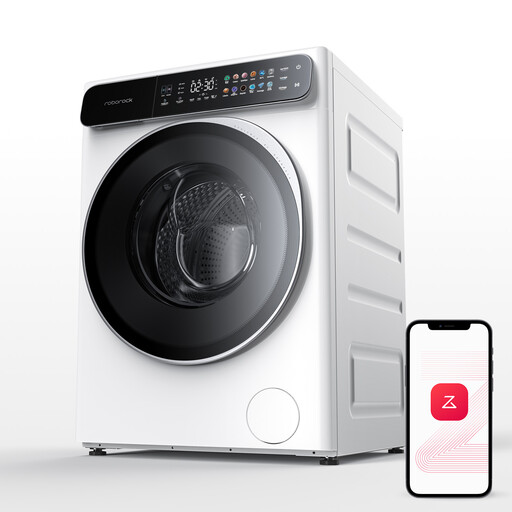 Image unavailable
Worth considering when space is tight and you need a combined appliance. The title lists a 10 kg washing capacity and a 6 kg drying capacity, so don’t assume that a 10 kg wash load can be dried in one go. Compare the duration and energy use of the wash-and-dry cycle, too.
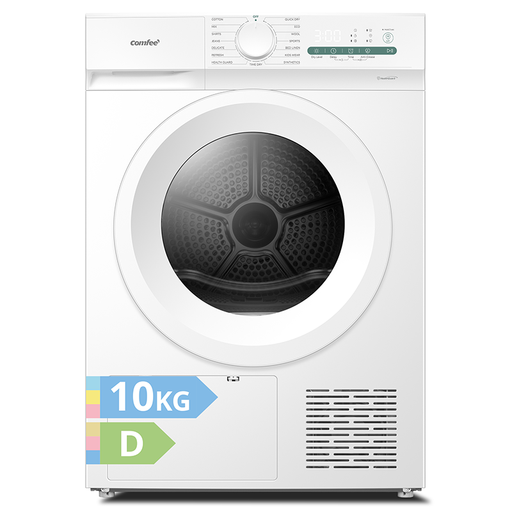 Image unavailable
Worth considering if you have room for a separate tumble dryer. The title and description give different drying capacities: 10 kg and 8 kg. Confirm the capacity of the exact model before choosing it for your laundry loads. Then compare the eco programme duration, energy use and dimensions.
No. A heat pump condenser tumble dryer doesn’t need an air duct leading outside. Depending on the installation, condensed water is collected in a tank or sent to a drain. By contrast, the European Commission specifies that a vented tumble dryer must expel air outside.
Choose a washer-dryer if both functions need to fit into one space and you can adjust your loads to suit its drying capacity. UFC-Que Choisir points out that this is lower than the washing capacity. Also compare the duration, water use and energy use listed for the wash-and-dry cycle.
Compare the energy use and duration of the programme that suits your needs, along with capacity and noise, rather than looking at the energy rating alone. The European Commission says the label for washer-dryers shows separate energy and water figures for the wash-and-dry cycle, among other information. Compare like-for-like cycles.
It’s best to air-dry laundry in a suitable room. ADEME describes air-drying as a major source of indoor moisture and recommends using a large, well-ventilated room or one with an extractor.