If you want to get the clothes airer out of your living space, a heat pump tumble dryer offers a straightforward solution without needing a vent to the outside. If you’d rather keep using the airer, a dehumidifier can help manage the room’s humidity, but it won’t refresh the air, so ventilation or extraction still needs to be considered. If you’re buying a new appliance in France, also check the installation requirements, capacity and maintenance for the model. According to the European Commission, since 1 July 2025, only domestic heat pump tumble dryers can be newly placed on the EU market.
Who is each option for?
People without an external vent
If you often dry laundry indoors and can’t connect a vent hose, compare a heat pump tumble dryer with keeping your airer and using a dehumidifier. A vented tumble dryer needs an opening to the outside or access to a vent, as UFC-Que Choisir points out.
Households that do laundry frequently
If you want to keep airers out of your living space on a regular basis, look at the capacity, programme length, noise level and maintenance tasks for the tumble dryer you’re considering.
People who want to keep using an airer
A dehumidifier is one option to consider for managing humidity while laundry dries on an airer. It doesn’t replace ventilation in your home: ADEME recommends drying laundry in a large, well-ventilated room or one with an extractor.
What should you check before choosing?
First decide whether you want to stop using an airer, then check the room’s requirements and the extra tasks the appliance will add to your routine.
| Priority | What to check | Your needs |
|---|
| Managing humidity |
Choose between a drum that collects condensation and an airer that lets laundry dry in the room. If you keep the airer, check the ventilation or extraction; ADEME points out that drying this way releases a lot of moisture into the indoor air. |
I want to remove the airer from the room, or keep it while managing the extra humidity it creates. |
| Installation |
UFC-Que Choisir explains that a vented tumble dryer needs an opening to the outside or a vent. For a condenser model, check the available space and how condensation is collected or drained away. |
Without a suitable vent, I want to choose an appliance I can actually install in my home. |
| Energy use and drying time |
For a tumble dryer, compare the stated energy use and reference programme duration using labels with the same scale. For a dehumidifier, also check its energy use and the conditions used to determine its stated extraction rate. |
With regular laundry loads, I want to know both the energy use and the time required before choosing. |
| Capacity and space |
Check the tumble dryer’s capacity in kg and its installation dimensions. If you plan to use a dehumidifier near an airer, consider the room size, water tank and whether continuous drainage is possible. |
My laundry loads need to suit the appliance without taking up even more space in the room where I already dry them. |
| Noise and maintenance |
Compare the stated noise level and think about where the appliance will go. Check the manual for how to clean the filters and, depending on the model, the condenser: UFC-Que Choisir found that a build-up of dirt could lengthen cycles on some of the appliances it tested. |
If the appliance will run near living areas, its noise level and how often it needs cleaning will affect my choice. |
What pitfalls should you avoid?
-
Assuming an open window is enough for a vented tumble dryer
This type of appliance needs an opening to the outside or access to a vent, according to UFC-Que Choisir. Having a window doesn’t, by itself, confirm that your planned installation is suitable.
Before choosing this type of appliance, check the required connection in the manual and make sure it’s compatible with your home.
-
Relying on the energy rating alone
A rating on its own doesn’t tell you how long a programme takes or what maintenance is required. Old ratings and the new A to G scale shouldn’t be compared as if they were based on the same label.
Compare the energy use and reference programme duration on the product information for the models you’re considering, taking their labelling scale into account.
-
Taking “self-cleaning” to mean “maintenance-free”
In a test published in 2020, UFC-Que Choisir found that a build-up of dirt could lengthen cycles and increase energy use on some tumble dryers. The maintenance tasks that remain depend on the model.
Check the manual to find out which filters need cleaning, how to access the condenser and how often maintenance is recommended.
-
Confusing dehumidification with ventilation
A dehumidifier removes moisture from the air, but it doesn’t refresh the air in your home. ADEME distinguishes the air renewal provided by ventilation from the conditions needed to dry laundry on an airer.
If you keep using an airer, choose a well-ventilated room or one with an extractor. Don’t rely on a dehumidifier alone to solve inadequate ventilation.
What do the brands tell you?
Bosch
In France, Bosch offers 8 kg and 9 kg heat pump tumble dryers.
- Some models highlight a self-cleaning condenser: check the maintenance requirements for the specific model.
- A test of one Bosch model published by UFC-Que Choisir in 2020 isn’t enough to generalise its cleaning needs to the brand’s entire current range.
Miele
Miele’s product information for the 8 kg TWC640WP lists an integrated condensation water drainage kit and a filter cleaning indicator.
- This information helps you check how water is managed and what maintenance reminders are provided for this model.
- Check the capacity, noise level and energy label separately for the model you’re considering; the TWC640WP’s specifications don’t describe the entire range.
Beko
Beko offers a range of heat pump tumble dryers for the French market.
- The brand’s information explains the difference between this type of appliance and a tumble dryer that needs a vent hose to expel air.
- The brand’s claims about drying performance and energy use don’t replace checking the energy label, programme duration and maintenance requirements for each model.
Electrolux
Electrolux publishes maintenance instructions for the filters and condensers in its tumble dryers.
- Its guidance says to clean the filter at the end of every cycle.
- Condenser checks depend on the model, so consult the manual for the one you choose.
Joybuy products for both uses
These options cover two ways to manage indoor laundry drying: switch to a heat pump tumble dryer or keep using an airer with a dehumidifier. The stated capacities and features don’t replace checking the installation requirements and conditions of use.
 Image unavailable
Hotpoint CHD84MWBSEE, 8 kg heat pump tumble dryer, white, energy class C
If you do laundry regularly and want to keep the airer out of your living space, this model has a stated capacity of 8 kg. Check its dimensions, programme duration, energy use and maintenance instructions. If you want to drain condensation directly, confirm what connection your installation requires.
View on Joybuy
 Image unavailable
Comfee CD08EHP05W-HR, 8 kg heat pump tumble dryer, white, energy class D
With a stated capacity of 8 kg, this is worth considering if you’d rather dry laundry in a drum than on an airer. Before deciding where to put it, check its dimensions, how condensation is managed, cycle duration and the maintenance instructions in the manual.
View on Joybuy
 Image unavailable
TRULIVA 25 L/day, dehumidifier with laundry mode and 2.8 L tank
This option lets you keep using an airer and includes a hose for continuous drainage. Its stated extraction rate of up to 25 L/day is based on conditions of 90 % relative humidity and 95 °F. Compare these with the conditions in your room, then check the noise level where you plan to place it. The appliance doesn’t replace ventilation.
View on Joybuy
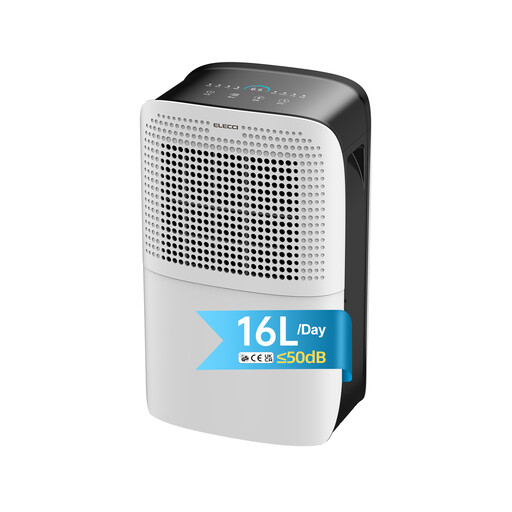 Image unavailable
ELECCI 16 L/day, dehumidifier with 3.1 L tank
If you’re keeping an airer in a dedicated room, this model has a drying mode and continuous drainage. Its stated extraction rate of up to 16 L/day is based on 95 °F and 90 % relative humidity: check whether it’s suitable for your room and how noisy it is before deciding. It doesn’t refresh the air in your home.
View on Joybuy
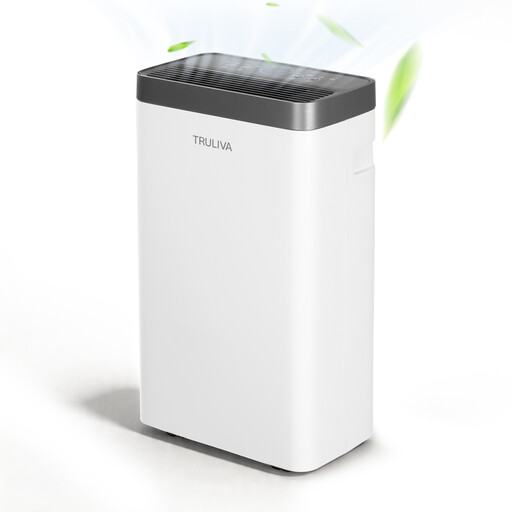 Image unavailable
TRULIVA AP10-2012EE, dehumidifier with laundry mode
This model lets you keep using an airer and offers continuous drainage and a 24-hour timer. It’s stated to cover an area of around 32 m²: check that this suits the room you’ll use it in, as well as the noise level and humidity settings. A dehumidifier doesn’t replace ventilation.
View on Joybuy
Frequently asked questions
Can you use a vented tumble dryer in a flat with no outside vent?
Not without the opening to the outside or access to a vent needed to expel moist air, as UFC-Que Choisir explains. If this type of installation isn’t possible, consider a heat pump tumble dryer instead.
What about conventional or vented tumble dryers offered for sale?
According to the European Commission, since 1 July 2025, only domestic heat pump tumble dryers can be newly placed on the European Union market. This rule doesn’t establish the status of an older, second-hand or already-stocked appliance: ask the seller to clarify the status of the specific appliance.
Can a dehumidifier replace a tumble dryer?
It can be used alongside an airer if you want to keep drying laundry in the open air while managing the room’s humidity, but it won’t tumble-dry laundry or refresh the air. Compare its extraction rate under the stated conditions, noise level, tank and drainage options. For indoor airer drying, ADEME recommends using a large, well-ventilated room or one with an extractor.
What maintenance does a heat pump tumble dryer need?
Check the model’s manual for filter cleaning, condenser maintenance and how to manage the condensation tank. Electrolux’s maintenance guidance says to clean the filter after every cycle; condenser maintenance varies between models.


