Households with frequent loads
You get through several loads and compare energy use, capacity and cycle times across specific models. UFC-Que Choisir highlights the importance of these factors when choosing a tumble dryer.


If you dry laundry often, a heat pump dryer may suit you if you want to keep electricity use generally lower and are happy to accept longer cycles, as UFC-Que Choisir points out. A conventional condenser dryer may be worth considering if speed matters more. Air-drying is a low-energy option if your home has a suitable, well-ventilated room, according to ADEME. Compare models using the same energy label and check the capacity, dimensions, door opening and water management.
You get through several loads and compare energy use, capacity and cycle times across specific models. UFC-Que Choisir highlights the importance of these factors when choosing a tumble dryer.
You need to check where the appliance will go, how the door opens and how water is managed, or whether an airer will fit in a suitable room. ADEME recommends drying laundry indoors in a large, well-ventilated room or one with mechanical ventilation.
You prioritise the time needed between loads and weigh this against electricity use. UFC-Que Choisir lists drying time and energy consumption among the factors to consider.
Choose this if : you use the appliance regularly and prioritise lower electricity use.
Bear in mind : cycles are generally longer than with conventional models; features vary from model to model.
Consider this if : you place more importance on getting through successive loads quickly and can find a model that suits your needs.
Bear in mind : this technology generally uses more electricity than a heat pump.
Consider this if : you have a suitable spot, such as a well-ventilated room or one with mechanical ventilation.
Bear in mind : drying laundry indoors takes up space and releases moisture into your home, ADEME points out.
When comparing appliances, UFC-Que Choisir focuses on energy use and cycle times. ADEME notes that drying laundry indoors requires a suitable, well-ventilated space.
| What matters | What to check | Who it matters most to |
|---|---|---|
| Electricity use | Compare the kWh per 100 cycles and programme conditions on the new energy label. Don’t mix these figures with an old energy rating or annual consumption figures. | If I run several loads, I want to keep electricity use under control. Around 29 % of consumers prioritise this above all else. |
| Load capacity | Compare the stated capacity in kilograms with your usual loads, and check any capacity limits for different programmes and fabrics. | To avoid splitting my usual loads, I’m looking for a capacity that suits the amount of laundry I have. Around 23 % of consumers put load size first. |
| Space and moisture | Measure the appliance, the route it needs to fit through and the space required to open the door. Check access to the water tank or a possible drain. If you plan to air-dry laundry, check the room’s ventilation. | When space is limited, I need to be able to install the appliance or dry laundry without getting in the way. Around 18 % of consumers prioritise the space an appliance takes up and how moisture is managed. |
| Cycle time and noise | Compare the duration of the same type of programme and load, as well as the stated noise level in dB(A). A quick programme for a small load won’t tell you how long a full load takes. | If I run loads back to back, I want to know how long I’ll actually need to wait before starting the next one. Around 18 % of consumers put cycle speed first. |
| Maintenance and water management | Check the manual for information on the filter, condenser and tank. See whether the model allows water to be drained away and whether the necessary accessories are included. | To make regular maintenance easier, I check what needs doing and how to manage condensate. Around 12 % of consumers prioritise these factors. |
A heat pump dryer is also a type of condenser dryer. Treating them as opposites without checking the exact technology could mean comparing appliances that work in different ways.
Check the model information, then compare energy use and cycle times for similar programmes and loads.
Tumble dryer energy labels have used the A to G scale since 1 July 2025, according to the European Commission. Some product information still shows the old rating, such as A+++.
Check the label and product information for the exact version, and compare energy-use figures calculated on the same basis.
The route into your home, the available space, the door opening and access to the tank or a drain all need to work for your home.
Measure the delivery route and the space you have in mind, then check the installation and water-management instructions for the version you’ve chosen.
Drying laundry indoors releases moisture, but ADEME recommends using a large, well-ventilated room or one with mechanical ventilation if this setup is suitable for your home.
Assess the ventilation and available space, and keep air-drying as an option or a back-up if it works for your home.
These examples cover specific ranges and models; their inclusion here doesn’t mean every model from each brand has the same features.
The WQG245DSFR is an example of a 9 kg heat pump tumble dryer with a self-cleaning condenser, water drain hose and half-load option.
The RH9B13WH is an example of a 9 kg heat pump model with sensor drying, a dual filter and a self-cleaning condenser.
The D5H284930W is an example of a heat pump model with a dual lint filter and a quiet programme.
The FFTBCM118XBFR is an example of a conventional 8 kg condenser dryer to include when comparing technologies.
The DV90DB7845GBU3 is an example of a 9 kg heat pump model shown with an A rating on the manufacturer’s French product page.
The models featured are heat pump tumble dryers designed for regular use. Compare their capacities and installation requirements with your loads and the space available.
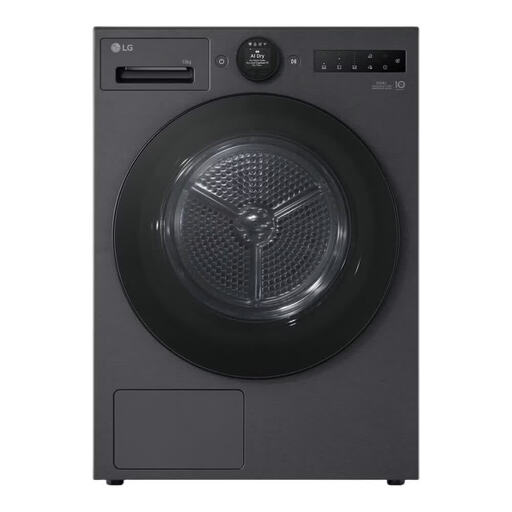 Image unavailable
Its stated 10 kg capacity may suit a household that runs several loads. Check that it matches the size of your usual loads.
Heat pump; energy rating C shown in the product name.
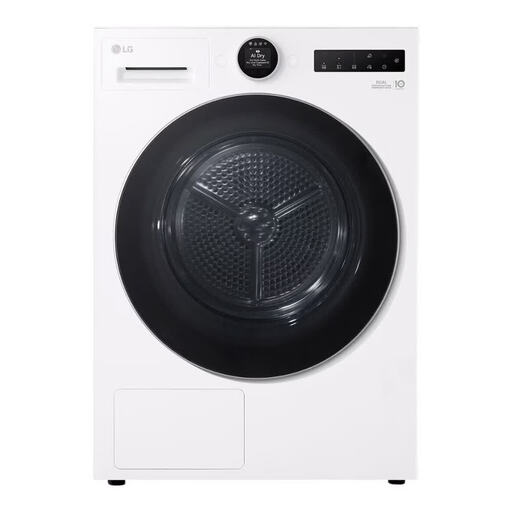 Image unavailable
Compare its stated 9 kg capacity with the amount of laundry you dry regularly.
Technology stated in the product name: heat pump.
 Image unavailable
Its stated 8 kg capacity may suit smaller loads. Check programme limits for different fabrics.
Heat pump; energy rating C shown in the product name.
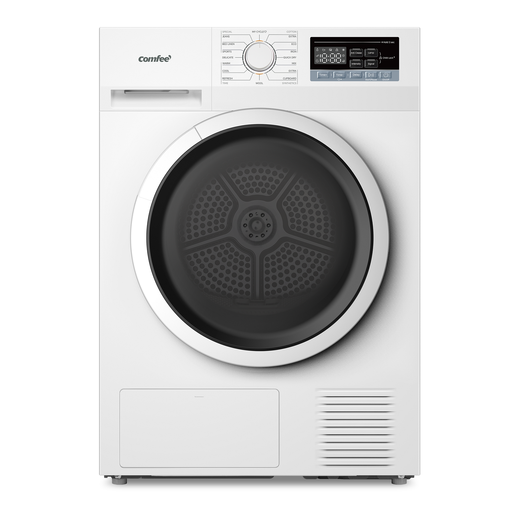 Image unavailable
The stated 8 kg capacity makes it easy to compare this model with the size of your usual loads.
The product information specifies installation in a ventilated room of at least 4 m² and direct connection to an earthed 220–240 V socket, without an extension lead. Check these requirements before installation.
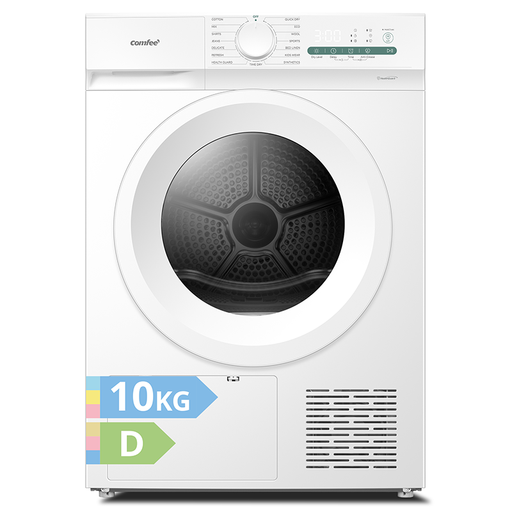 Image unavailable
Check its stated 10 kg capacity against the amount of laundry you have and the programmes you use most.
Heat pump; energy rating D shown in the product name. The product information specifies installation in a ventilated room of at least 4 m² and direct connection to an earthed 220–240 V socket, without an extension lead.
No, not to vent moist air: condenser dryers collect water in a tank or, depending on the model, can drain it away. Check the manual for placement, room ventilation and condensate management. Not needing a vent hose doesn’t mean there are no installation requirements.
Follow the model’s manual for the filter, tank and condenser. Whirlpool’s general guidance recommends removing lint from the filter after every cycle. A self-cleaning condenser doesn’t mean you can skip all other maintenance.
Compare energy-use figures calculated on the same basis, such as the kWh per 100 cycles on the new energy label, and use comparable programmes. An old A+++ rating, annual consumption and per-cycle consumption can’t be compared directly. Your household’s energy use will also depend on how many cycles you run and your electricity tariff.
The statutory legal guarantee of conformity applies to new, second-hand and refurbished goods sold by a professional to a private individual, according to France’s Ministry of the Economy and Finance. For a new item, you have two years to claim under it; any commercial warranty does not replace it.
The new rule doesn’t mean that all appliances already on the market have disappeared from sale. The European Commission states that, since 1 July 2025, new tumble dryers placed on the EU market have been heat pump models. Check the product identity, the applicable energy label and whether the model you’re considering is available.