
Livraison le jour même ou le lendemain

Qualité garantie

Débloquez vos offres de bienvenue: Livraison GRATUITE | Jusqu'à -80 % | 30 jours d'essai gratuits à JoyPlus
Téléchargez l'application
Eating well isn't just about choosing the right ingredients—it's also about using the right tools. But with a bewildering array of pans and technical acronyms (PFOA, PTFE, ceramic…), it's hard to know where to start. Are you looking for the ideal healthy non-stick pan? One that combines performance, durability, and safety for the whole family?
As the head of product testing at Joybuy, my mission is to separate fact from fiction. Forget the marketing jargon: this guide provides clear information and practical advice to help you make an informed choice.
Before we get to our top picks, let's review the essential factors that will make all the difference.
This is the most critical factor: the type of non-stick coating.
To ensure your purchase is a good investment, your pan must fit your kitchen and your cooking habits.
The lifespan of your pan will largely depend on how you care for it. Even the best coatings, including ceramic, can wear down over time. To maximise their longevity, opt for hand washing with a soft sponge. Avoid metal utensils that can scratch the surface, and use wood, silicone, or nylon instead.
We've selected models that stand out for the quality of their materials, design, and versatility to help you cook healthier every day.
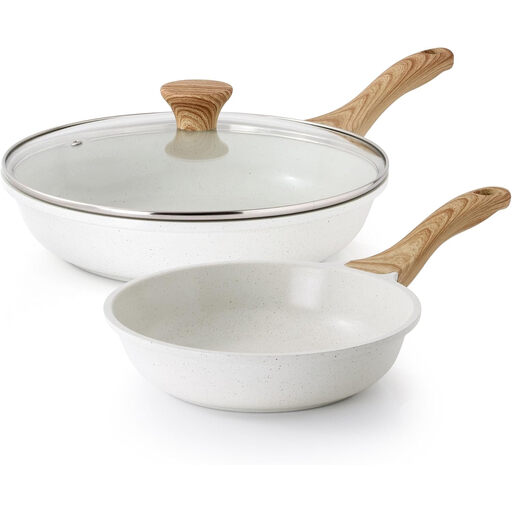
Why it stands out: This set is distinguished by its ceramic coating, designed for cooking with very little oil. Its composition is guaranteed free of PFAS, PTFE, PFOA, lead, and cadmium, making it a top-tier choice for healthy cooking.
Advantages:
Who is it for? For families and everyday cooks who want a complete, versatile pan set and prefer an alternative to classic non-stick coatings.
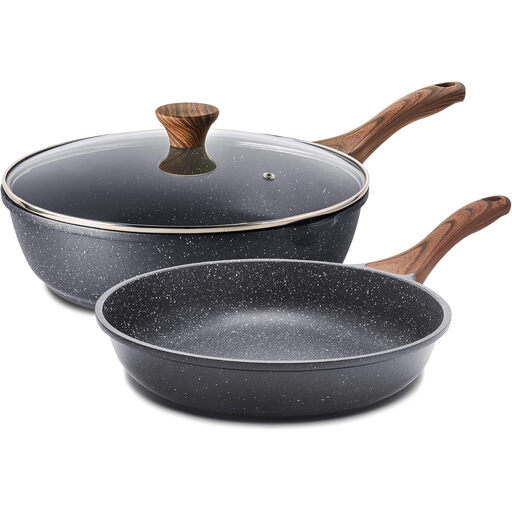
Why it stands out: This set features a Swiss-made ILAG non-stick coating, renowned for its exceptional durability. Its die-cast aluminium body ensures excellent heat distribution and high resistance to warping.
Advantages:
Who is it for? For those looking for a high-performance, low-maintenance induction pan set for intensive use, from morning eggs to evening steak.
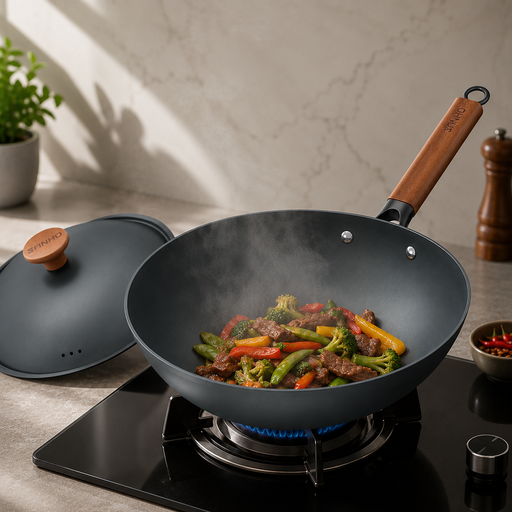
Why it stands out: This wok stands out with a radical approach: zero chemical coating. Its non-stick properties are achieved through a micro-etched pattern on the stainless steel base. It is therefore inherently 100% free of PFAS, PFOA, and PTFE.
Advantages:
Who is it for? For fans of Asian cuisine and stir-fries, as well as for anyone who wants an ultra-durable utensil with zero compromises on its composition.
This selection is just a glimpse of the options available for healthier cooking. Other sizes, materials, or features might be better suited to your needs.
? Explore our full range of cookware with lids to find the perfect model for you.
To put it simply, PTFE (Teflon) is a plastic-based (polymer) coating, while a ceramic pan's coating is mineral-based, derived from silica (sand). Both are effective at preventing food from sticking, but ceramic is often chosen by those who want a plastic-free alternative in their kitchen.
Yes, because PFOA is a chemical of concern that is now banned in the manufacturing of pans in Europe. Today, nearly all models sold are PFOA-free. The real question to ask is whether to choose a pan with or without PTFE (Teflon). This choice depends on your personal preferences.
To preserve its coating, follow three golden rules: