
Livraison le jour même ou le lendemain

Qualité garantie

Débloquez vos offres de bienvenue: Livraison GRATUITE | Jusqu'à -80 % | 30 jours d'essai gratuits à JoyPlus
Téléchargez l'application
Breathing pure air, sleeping in pristine bedding, and cooking without lingering odours: these are the details that make all the difference to our daily well-being. Whether you're a family, an allergy sufferer, or a pet owner, turning your home into a healthy sanctuary is often a top priority. But with a bewildering array of options, how do you choose the right healthy home appliances?
This guide is here to help you make an informed decision. As the Head of Product Recommendations at Joybuy, my role is to break down a selection of appliances that meet real-world needs, analysing their technical specifications and everyday relevance.
Before we dive into our selection, let's review some key criteria to help you make the right choice and invest in health-focused home appliances that are genuinely suited to your needs.
The indoor air quality primarily depends on your appliances' ability to trap pollutants. For fine particles, pollen, and allergens, a HEPA (High Efficiency Particulate Air) filter is essential. A HEPA H13 filter, for instance, is designed to capture 99.97% of particles as small as 0.3 microns. For odours and gases, an activated carbon filter is the perfect complement.
Every problem has its dedicated solution:
Don't be swayed by design alone. Focus on the objective technical data:
Here are three appliances that stand out for their targeted features, designed to address the most common issues in our homes.
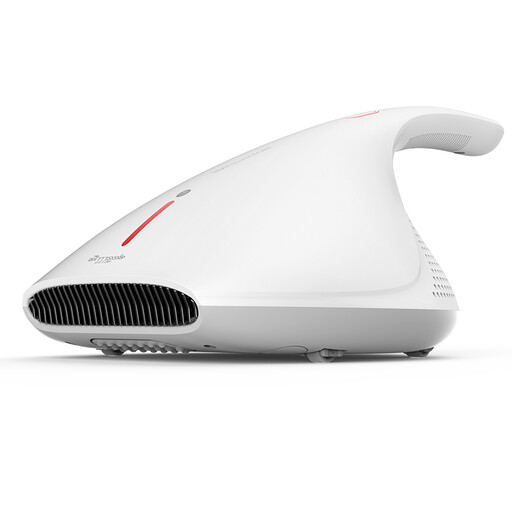
Why it stands out
The Deerma CM800 is much more than a simple handheld vacuum. It's a specialised device for cleaning mattresses, sofas, and other textile surfaces. Its attack method combines four actions: a high-frequency tapping system (8,000 beats/minute) to dislodge embedded dust mites and dirt, powerful suction of 13,000 Pa, a stream of 50°C hot air to dry out the area, and a UV-C lamp to sterilise surfaces.
Advantages
Who is it for? This device is a valuable ally for people with dust mite allergies, families with young children who spend time on carpets and sofas, and pet owners concerned about the hygiene of their textiles.
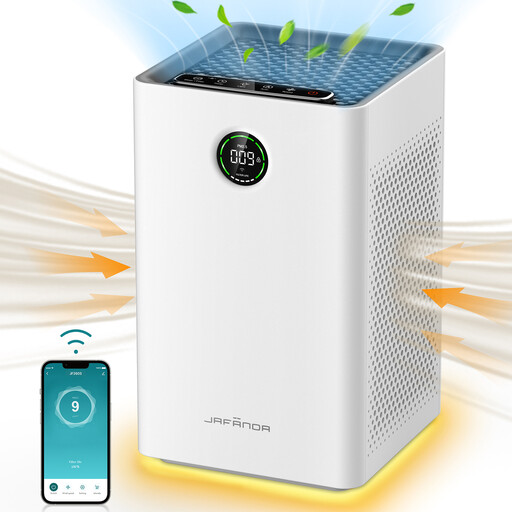
Why it stands out
The Jaf?nda JF260S purifier combines filtration performance with smart features. Its three-stage filtration system, including a pre-filter, an H13 HEPA filter, and an activated carbon layer, tackles both particles (dust, pollen, pet dander) and odours. Its PM2.5 particle sensor allows for automatic speed adjustment based on the real-time indoor air quality.
Advantages
Who is it for? A must-have for city dwellers exposed to pollution, people with pollen allergies, pet owners, and generally anyone who wants to breathe healthier air in their living spaces or bedroom.
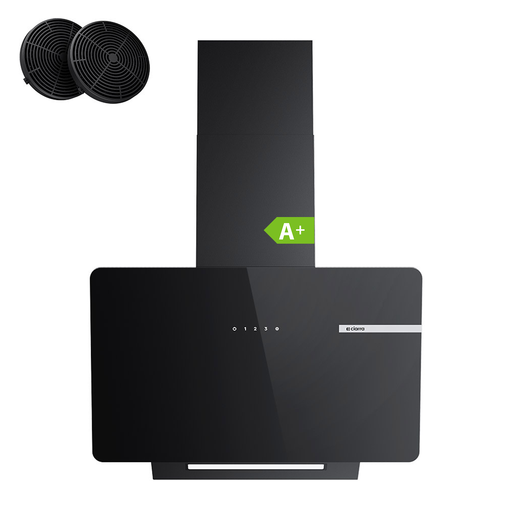
Why it stands out
This designer cooker hood from Ciarra combines modern aesthetics with great installation flexibility. Its angled black glass panel frees up visual space above the hob while optimising airflow. It can be installed in either extraction mode (venting air outside) or recirculation mode (filtering and releasing purified air back into the kitchen), making it compatible with almost any home layout.
Advantages
Who is it for? Essential for cooking enthusiasts who want to maintain healthy air, whether their kitchen is open-plan or enclosed. Its contemporary design and versatility make it a smart choice for both renovation projects and new builds.
The quest for a healthier home involves targeted solutions. If air purifiers have particularly caught your eye, we have selected a complete range to suit all room sizes and budgets.
? Discover our complete collection of air purifiers
1. Is an air purifier really useful? Absolutely. An air purifier's job is to filter airborne particles in a room (dust, pollen, pet dander, etc.). By trapping these allergens in its filters, it significantly reduces their concentration in the air you breathe. Its effectiveness is especially noticeable for allergic or sensitive individuals, and in urban areas where air quality is often poor.
2. How can you effectively get rid of dust mites in a mattress?Mattress cleaning for dust mites requires a targeted approach. The ideal method is to use an anti-dust mite vacuum with a tapping or beating function to dislodge allergens embedded deep within the fibres. Powerful suction then removes them. Additionally, daily airing of bedding and washing sheets at 60°C are essential steps to limit their proliferation.
3. What is the difference between an extraction hood and a recirculation hood? An extraction hood draws stale air from the kitchen and expels it outside the home through a duct. This is the most effective mode for eliminating fumes and moisture. Conversely, a recirculation hood operates in a closed loop: it draws in air, purifies it through a grease filter and then a carbon filter (which neutralises odours), before releasing it back into the room. This solution, which requires no ducting, is much simpler to install.