
Livraison le jour même ou le lendemain

Qualité garantie

Débloquez vos offres de bienvenue: Livraison GRATUITE | Jusqu'à -80 % | 30 jours d'essai gratuits à JoyPlus
Téléchargez l'application
Choosing a new healthy cookware set can quickly become a headache. Between the promises of revolutionary coatings and clever marketing claims, it's hard to know what to believe. Yet, the goal is simple: find durable, health-safe utensils that fit your daily routine, without overpaying for products that won't stand the test of time.
As a product expert at Joybuy, I'm here to separate fact from fiction and help you identify the criteria that truly matter. Before we dive into our top picks, let's break down the 3 common pitfalls to avoid and the key points to check before any purchase.
To make the right choice, focus on these three pillars. They are your guarantee for the durability, safety, and versatility of your future cookware set.
The choice of material is crucial for cooking performance, durability, and maintenance. Let's review the most reliable options:
If you cook on an induction hob, this is the number one checkpoint. For an induction cookware set, the base of the utensil must be ferromagnetic.
The hunt for PFAS is on. More and more consumers are looking for PFAS-free cookware, a large family of persistent chemical substances often found in non-stick coatings. Opting for raw materials like stainless steel and cast iron, or for certified PFAS- and PFOA-free ceramic coatings, is the best answer in this quest for healthier everyday cooking.
Rather than an overwhelming catalogue, here are our targeted recommendations for different types of cooks.
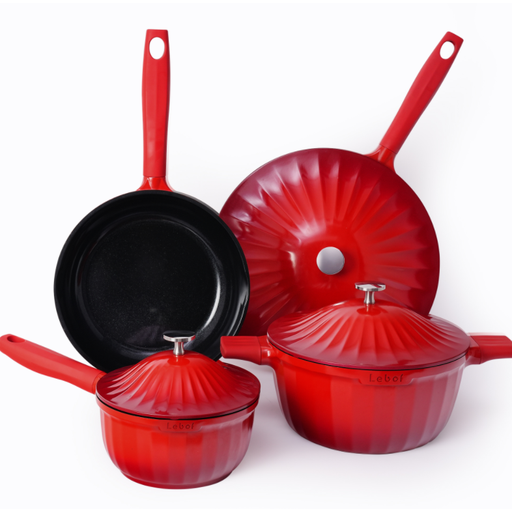
Why we recommend it: This comprehensive set covers all the daily essentials, from a frying pan for searing meat to a stockpot for soups. Its compatibility with all hobs, including induction, makes it a versatile solution for modern kitchens.
Its titanium-reinforced ceramic coating promises better scratch resistance and fast, even heating. This helps counter the problem of coatings that lose their effectiveness too quickly.
Cooking surface guaranteed free of PFAS, PFOA, and PTFE. Smart design with pouring spouts and cool-touch handles.
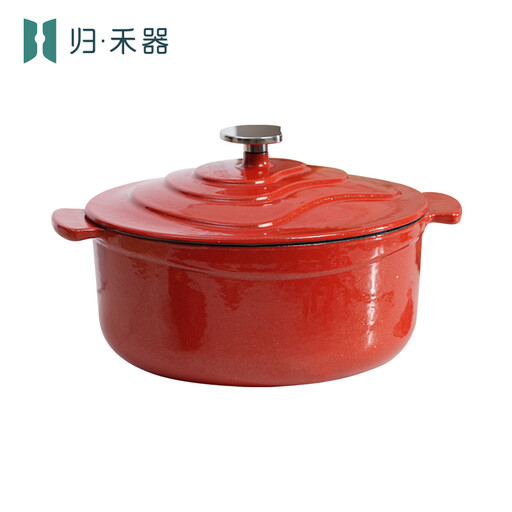
Why we recommend it: The perfect utensil for stews, soups, or even baking bread in the oven. Enameled cast iron ensures slow, even cooking that enhances flavours. Its 3.3L capacity is perfect for a family meal.
Here, there's no fragile coating, but a time-tested material: cast iron. The enamel is an ultra-durable vitrified finish that, with proper care, won't chip and contains no PFAS.
Unmatched heat retention and distribution. Compatible with all hobs (including induction). A lid with self-basting spikes ensures continuous moisture, keeping dishes tender.
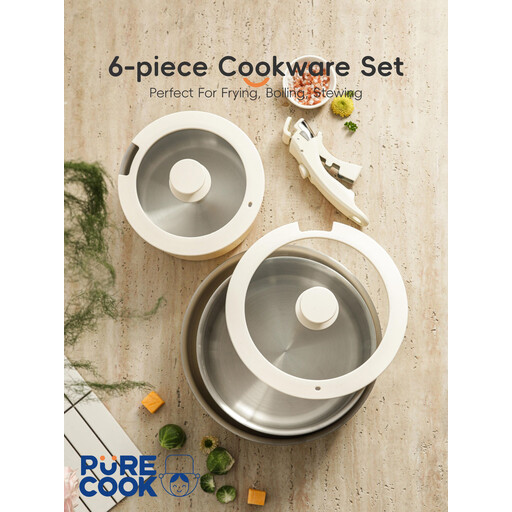
Why we recommend it: The ultimate space-saving solution. Thanks to the removable handle, the pieces stack perfectly in cupboards, go in the oven, and are stored in a flash. The 304 stainless steel is a guarantee of robustness and food safety.
This set bets everything on the quality of the raw material (304 stainless steel), not a coating. The ceramic exterior simplifies cleaning without sacrificing the durability of the stainless steel interior.
Stackable design for maximum space saving. Ultimate versatility: hob, oven, serving at the table, refrigerator. Compatible with all hobs and dishwasher-safe.
Discover our full selection of products that meet our quality criteria and the latest safety standards.
The lifespan of a ceramic-coated pan depends on its quality and how you care for it. On average, a good model, used and cleaned carefully (no metal utensils, abrasive sponges, or thermal shock), will retain its non-stick properties for 2 to 3 years.
To care for your enameled cast iron Dutch oven, the golden rule is to avoid thermal shock. Let it cool completely before cleaning it with warm, soapy water and a soft sponge. Drying it thoroughly after washing will prevent rust from forming on the rims, which are sometimes un-enameled.
No, stainless steel is not inherently a non-stick material. But with the right technique, it performs brilliantly! The secret? Properly preheat your stainless steel pan or stockpot on medium heat while it's dry. Then add your fat or oil, wait for it to get hot (it should shimmer slightly), and then add your food. This is the Leidenfrost effect: a thin layer of vapour forms and prevents food from sticking. It just takes a bit of practice.