
Livraison le jour même ou le lendemain

Qualité garantie

Débloquez vos offres de bienvenue: Livraison GRATUITE | Jusqu'à -80 % | 30 jours d'essai gratuits à JoyPlus
Téléchargez l'application
Do your original halogen headlights seem lacklustre, and does their yellowish glow feel a bit dated? Rest assured, you're not alone. Many drivers are looking to improve their night-time visibility for greater safety and comfort behind the wheel. Upgrading to an LED car headlight is undoubtedly the best solution to modernise your lighting.
But here's the catch: faced with an overwhelming number of options and sometimes obscure technical jargon, it's hard to know where to start. This guide is here to help you see more clearly. As a product expert at Joybuy, my mission is simple: to guide you step-by-step in finding the perfect HB3 LED kit for your car, all without the marketing fluff.
Before diving into our selection, let's review the key points to check to ensure you make the right choice.
The biggest advantage of modern LED kits? Their ease of installation. A plug-and-play bulb can be fitted in place of your halogen bulb without modifying the headlight or the electrical harness. A crucial point: its dimensions must be nearly identical to the original bulb. This guarantees it will fit without forcing it and that you can properly close the headlight's dust cover.
Another point to watch for on recent cars: the onboard computer (OBC) monitors the proper functioning of the bulbs. Since an LED consumes far less power than a halogen, the computer might interpret this as a fault and display an alert. This is where the error-free CANbus system comes in. Integrated into the bulb, it "tricks" the onboard computer to prevent any unwanted error messages or flickering headlights.
The light output of an LED is measured in lumens (lm). While high brightness is obviously a plus, it's not everything. The secret is a precise and well-defined light beam. A well-designed LED bulb must mimic the filament position of the original halogen. This is essential for the light to be projected exactly where it's needed on the road and, most importantly, to avoid dazzling oncoming drivers.
Next comes the colour temperature, measured in Kelvin (K), which determines the hue of the light. The 6000K cool white is a popular classic. Highly appreciated, its output is close to daylight, which enhances contrasts and reduces eye strain on long night drives.
Contrary to popular belief, LED chips get hot. This heat must be dissipated to preserve their performance and lifespan. Two systems compete:
The choice between the two will depend on the power of the LEDs and, above all, the space available behind your headlight housing.
Let's move on to our selection. Here are several models of 9005 LED bulb (as a reminder, HB3 and 9005 refer to the same base) that will meet different needs and budgets.
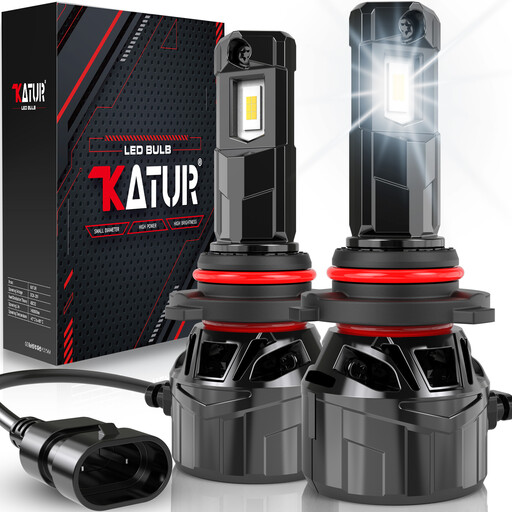
Key Feature: With a colossal 120?W of power and 30,000 lumens per pair, this kit is clearly aimed at drivers seeking the ultimate lighting performance for their halogen replacement.
Advantages:
Who is it for? For those who often drive on country roads or poorly lit streets and want maximum range to see far ahead and anticipate any hazard.
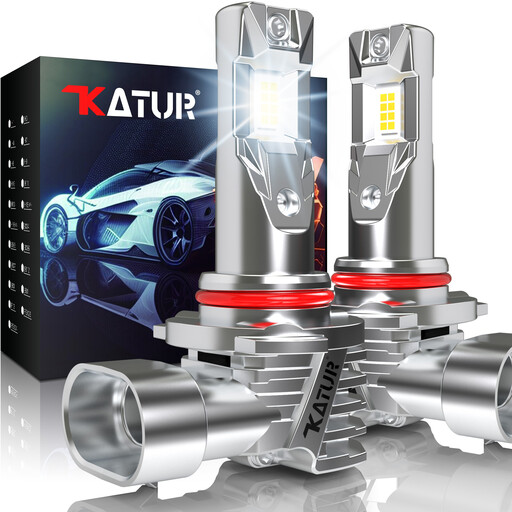
Key Feature: This model focuses on reliability and absolute silence with its fanless design, without sacrificing light output.
Advantages:
Who is it for? For those who prioritise ease of installation, peace of mind, and dead-silent operation, while still enjoying a spectacular increase in brightness.
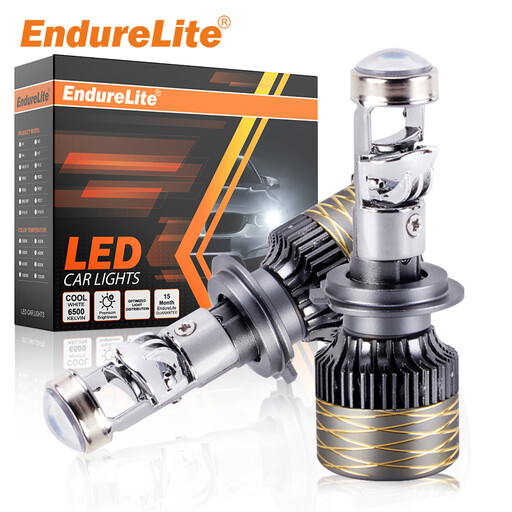
Key Feature: This kit is the perfect balance of performance, longevity, and compatibility. A solid choice that will suit the vast majority of users.
Advantages:
Who is it for? For the everyday driver who wants to take their lighting to the next level with a reliable, high-performance, and easy-to-install product.
The HB3 (or 9005) base is used for the high beams on many models, but there are dozens of other standards (H7, H4, H11...). Every car is different.
Does your vehicle use another type of bulb, for example, for a Citro?n DS3? Take a look at our dedicated category to find the model you need: discover our selection of DS3 Bulbs.
Let's be clear: in France, the use of aftermarket LED conversion kits on public roads is highly regulated. To be 100% legal, these bulbs must have European approval (ECE standard), which is rarely the case. Their use is therefore, in theory, restricted to a closed circuit or private land. We advise you to check the latest legislation before proceeding with the installation.
The easiest way is to check your car's owner's manual. It lists all the bulb types. Another, more direct solution: remove the original bulb. The reference (e.g., HB3 or 9005) is almost always engraved on the base.
For the majority of cars produced after 2005, an error-free CANbus system is almost essential to avoid triggering alerts on the dashboard. On older models without advanced electronic monitoring, it's not always necessary, but it's better to be safe than sorry: its presence causes no issues.