
Livraison le jour même ou le lendemain

Qualité garantie

Débloquez vos offres de bienvenue: Livraison GRATUITE | Jusqu'à -80 % | 30 jours d'essai gratuits à JoyPlus
Téléchargez l'application
Your vehicle's lighting is a cornerstone of your safety. If your original halogen headlights lack punch on country roads or in rainy weather, rest assured, you're not alone. Upgrading to an HB3 LED bulb (also known by the reference 9005 LED bulb) is the ultimate modern solution to dramatically boost your night-time visibility while giving your car a fresh, modern look.
Faced with an overwhelming and highly technical market, it's easy to get lost. This guide is here to demystify the topic, help you understand the criteria that truly matter, and choose a reliable model, without the unnecessary marketing jargon. The goal? To give you all the keys to a successful HB3 halogen bulb replacement.
Before diving into our selection, let's review the key points to ensure you make the right choice.
There are two key figures to remember when judging the performance of an LED bulb: lumens (lm) for light output, and kelvins (K) for the colour of the light.
The main advantage of a modern HB3 LED kit is its ease of installation. Opt for "plug-and-play" models, which are designed to mimic the size of original halogen bulbs. They require no modification to the headlight or wiring.
Be aware that recent vehicles have an electronic monitoring system (the on-board computer, or OBC). To avoid error messages or an annoying flicker, choose a Canbus 9005 LED. This integrated system communicates with the vehicle's electronics to ensure flawless operation.
Contrary to popular belief, LEDs generate heat. An effective cooling system is therefore crucial to guarantee their performance and longevity. Quality models often combine a silent turbo fan and an aviation-grade aluminium body to dissipate heat as quickly as possible. Proper thermal management can extend a bulb's lifespan to over 50,000 hours, giving you peace of mind for a long time.
Here are a few models that stand out for their features and design, catering to different needs.
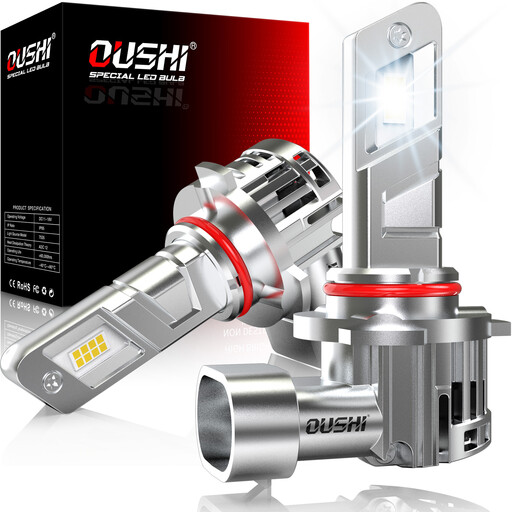
Why it stands out: This model is all about raw power. The manufacturer claims a brightness up to 600% greater than halogen, with an output of 30,000 lumens per pair. Its cooling system, combining a turbo fan and an aluminium body, is designed to maintain consistent performance.
Advantages:
Who is it for? For drivers who want the maximum light output for their night-time journeys on poorly lit roads. It's also a great choice for owners of recent European vehicles, which are often more sensitive to on-board computer errors.
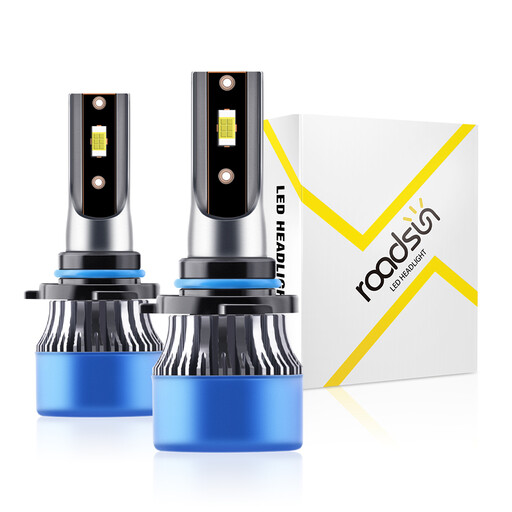
Why it stands out: The number one selling point here is durability. With its IP68 certification, it is completely waterproof and dustproof, making it perfect for tackling the worst weather conditions or off-road adventures. Its 6000K colour temperature provides a very comfortable, cool white light.
Advantages:
Who is it for? The perfect choice for 4x4 adventurers, utility vehicle owners, or simply those who live in regions with unpredictable weather and demand reliable lighting in all circumstances.
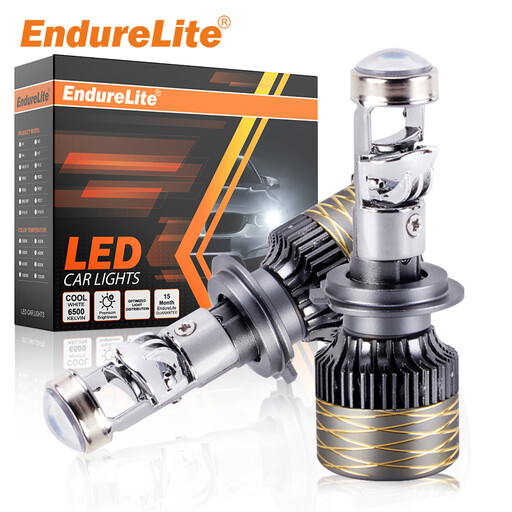
Why it stands out: The keyword here: balance. With 20,000 lumens per pair and a 6000K temperature, the improvement over halogen is already spectacular. The manufacturer highlights its advanced CSP chips, which ensure a sharp light beam and a wide field of view, without dazzling oncoming drivers.
Advantages:
Who is it for? The smart, versatile choice for the everyday driver who wants much better lighting, a hassle-free installation, and maximum compatibility.
Did none of these models catch your eye? Every car and every driver is unique. To explore a wider range of power outputs and technologies, take a look at our complete selection.
? Explore our collection of LED Headlights for Vehicles
1. What is the difference between an HB3 and a 9005 bulb? Absolutely none. HB3 and 9005 are simply two names for the exact same bulb base. Whether your manual specifies one or the other, an HB3/9005 model will be perfectly compatible.
2. Is installing an HB3 LED kit complicated? Generally, no. The vast majority of current kits are "plug-and-play." This means you just unplug the old halogen bulb and clip the new LED into the original connector, with no modifications needed. However, you should still check your car's manual to find out how to access the headlight assemblies.