
Livraison le jour même ou le lendemain

Qualité garantie

Débloquez vos offres de bienvenue: Livraison GRATUITE | Jusqu'à -80 % | 30 jours d'essai gratuits à JoyPlus
Téléchargez l'application
Driving at night with yellowish headlights that barely light up the road? It's not just exhausting—it's downright dangerous. If your old halogen bulbs are struggling, it's high time for an upgrade. Installing an HB3 LED bulb kit (also known as 9005) does more than just modernise your car's look: it's a genuine safety enhancement that radically transforms your night driving experience.
To help you make the right choice when replacing your 9005 halogen bulbs, we're breaking down the essential criteria and showcasing the best models on the market today.
Before you pull out your credit card, let's review the few criteria that make all the difference. Here are the key points to check to find the perfect kit for your car and your driving habits.
The performance of an LED bulb rests on two pillars: lumens (lm) for brightness and kelvins (K) for colour.
Nobody wants to spend hours in their garage, so ease of installation is a major factor. Opt for a plug-and-play HB3 LED to save yourself from any risky modifications. These "1:1" models perfectly match the dimensions and connector of your original halogen bulb. Installation is just a simple swap: unplug the old one, and clip in the new one. No tools, engineering degree, or electrical harness modifications required.
LEDs generate heat! This heat must be effectively dissipated to ensure stable performance and a long lifespan. Two main technologies compete:
Don't overlook this point: a good cooling system is the key to a lifespan measured in years, not months like halogens.
Enough theory—let's get practical. After scouring spec sheets and user reviews, here are three models that caught our eye.
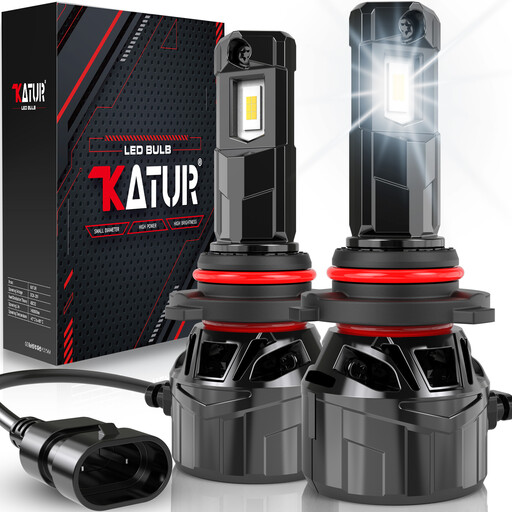
What sets it apart: This model goes all-in on extreme light output, with a claimed 30,000 lumens per pair. It's built for drivers who demand absolute visibility on the darkest roads.
Advantages:
Who is it for? For those who frequently drive on country roads or poorly lit streets and want to turn night into day. Power above all else.
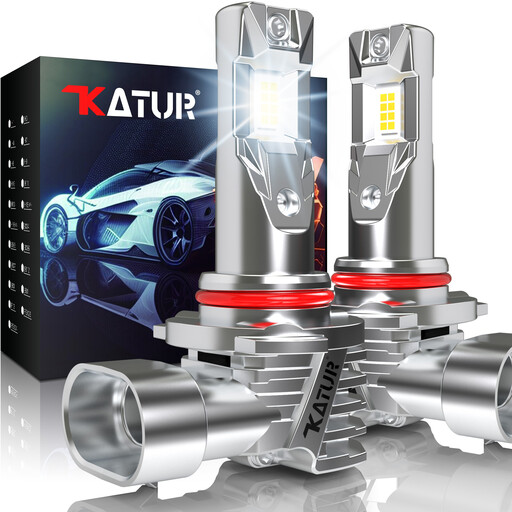
What sets it apart: Its fanless design. It guarantees completely silent operation and rock-solid reliability by eliminating all mechanical parts.
Advantages:
Who is it for? For drivers with tight headlight housings and anyone looking for a zero-noise, zero-maintenance solution.

What sets it apart: The perfect balance of performance, longevity, and simplicity. It's the ultimate simple and effective upgrade.
Advantages:
Who is it for? For those who want a turnkey solution: effective, easy to install, and compatible with most cars, completely hassle-free.
The HB3/9005 format is a common standard, but it's not universal. If your vehicle requires a different type of bulb, feel free to explore our other selections.
Discover our full range of lighting, including our selection of D1S headlight bulbs.
1. Is it complicated to replace a 9005 halogen bulb with an LED? Not at all, as long as you choose a plug-and-play HB3 LED model. The installation is a breeze: turn off the ignition, unscrew the old bulb, clip in the new one, and reconnect it. The job is done in minutes!
2. What's the difference between an HB3 and a 9005 bulb? None. They are two different names for the exact same bulb base. HB3 = 9005, so you can search for either one.
3. Do I need a CANbus anti-error adapter? Generally, no. Most modern HB3 LED kits have a built-in CANbus system to prevent dashboard error messages (the infamous "bulb failure" warning). However, some cars, particularly European brands, can be more finicky. If a warning light appears after installation, an external CANbus decoder will solve the problem.