
Livraison le jour même ou le lendemain

Qualité garantie

Débloquez vos offres de bienvenue: Livraison GRATUITE | Jusqu'à -80 % | 30 jours d'essai gratuits à JoyPlus
Téléchargez l'application
Replacing halogen bulbs with HB3 9005 LED bulbs might seem straightforward. However, a poorly chosen reference can produce an uneven beam, trigger dashboard errors, or make installation impossible inside the headlight housing. Product listings often boast thousands of lumens and impressive lifespans, without always explaining what those figures actually mean.
Before ordering HB3 LED headlight bulbs, check three essential points: the base type on your vehicle, heat management, and electronic compatibility. You also need to distinguish between on-road and off-road use, taking into account the approval regulations that apply to your vehicle.
Claims of "20,000 lumens" or "30,000 lumens" usually refer to a value quoted for a pair, sometimes measured using the manufacturer's own testing method. They don't guarantee better range or a more controlled beam.
A good replacement bulb must keep its light source close to the position of the original halogen filament. A poorly positioned LED chip can create dark spots or dazzle oncoming drivers. LED 9005 bulbs with a 1:1 design are therefore the ones to go for.
The HB3 marking generally corresponds to the 9005 base, but this alone isn't enough to confirm compatibility with your car. The space behind the headlight, the dust cover, and the connector polarity can vary from one model to another.
A CANbus-compatible LED bulb can reduce flickering and error messages, but this feature isn't universal. Some particularly sensitive vehicles may still need an additional decoder. Consult your car's manual and check the lighting works properly after installation.
An LED gives off less heat towards the front than a halogen bulb, but its electronics still need to dissipate the heat it generates. A model with an inadequate heatsink risks losing brightness or failing prematurely.
LED bulbs with an active fan dissipate heat through airflow. However, they can produce a slight noise and need enough space behind the headlight. When space is tight, a passive model with an aluminium body and heatsink may be more suitable.
Start by confirming that your vehicle accepts the 9005/HB3 format. This reference can be used for main beams, dipped beams depending on the vehicle's configuration, some auxiliary spotlights, or even fog lights in the HB3 format.
Then check:
A compact 1:1 design often simplifies replacement, but it doesn't remove the need to check the beam after installation.
6000K LED bulbs produce a cool white light, visually close to daylight. Models advertised at 6500K generally appear more blueish. This difference changes how road signs and markings look, but a higher colour temperature doesn't necessarily mean better range.
For everyday driving, prioritise a uniform light and a correctly positioned beam over a high number of kelvins. After installation, check the headlight aim so you don't inconvenience other road users.
An IP65 or IP68 rating tells you about resistance to dust and water under defined conditions. It doesn't guarantee the whole assembly is watertight if the headlight seal is poorly positioned or the rear cover is left slightly open.
Advertised lifespans of 50,000 or 60,000 hours are figures provided by the manufacturer, not a guarantee valid in all environments. Heat, vibration, switching cycles, and power supply quality all play a significant role. 9-32 V ratings, where stated, cover many vehicles, but you still need to check your circuit voltage.
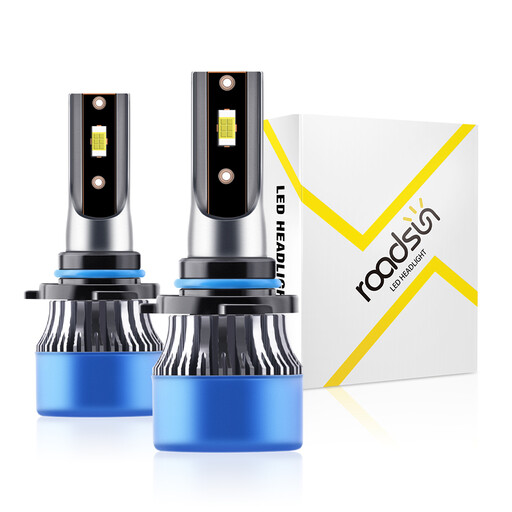
Why this choice suits this profile: Its plug-and-play design suits drivers who want to replace their halogen bulbs without complex modifications, for everyday journeys or general use.
The manufacturer claims a 1:1 fit, an integrated fan and IP68 protection. Nevertheless, check the available space and compatibility with your vehicle.
Advertised 6000K light, installation without extra wiring and compatibility with vehicles fitted with a 9005/HB3 socket.
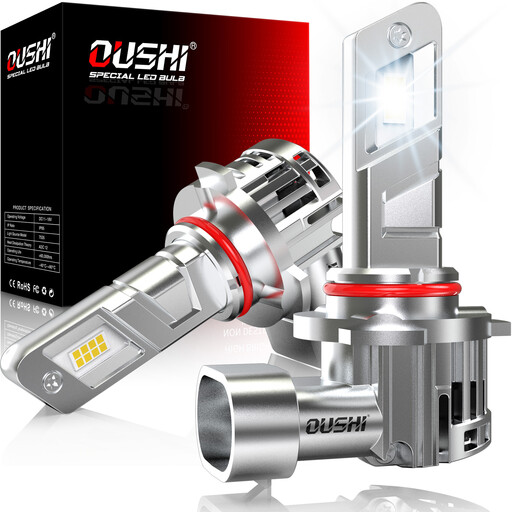
Why this choice suits this profile: This model is aimed at motorists looking for a compact design, high claimed power output and electronic management suited to modern vehicles.
The manufacturer claims a mini 1:1 format, an integrated fan and a CANbus system. Some vehicles may still require an additional decoder.
Advertised 6500K colour temperature, 90 W per pair according to the product sheet and installation without extra wiring.
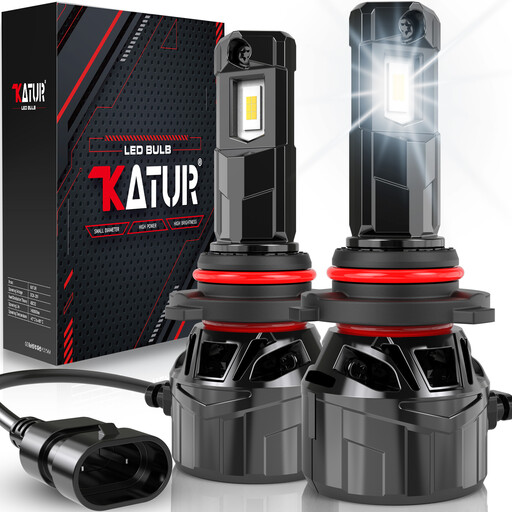
Why this choice suits this profile: Its design targets drivers of SUVs, vans, quads or off-road vehicles looking for active cooling and high claimed brightness.
The manufacturer details a fan spinning at 16,000 rpm, an aluminium body and IP65 protection. Installation still requires maintaining the headlight's seal.
1:1 format, advertised 6000K colour temperature, integrated CANbus system and claimed operating life of up to 60,000 hours.
We've put together a comprehensive, real-time updated list of products that fully meet these strict selection criteria and European safety regulations.
For on-road use, always check the French and European requirements that apply to the type of headlight and vehicle. A bulb advertised as plug and play is not automatically approved in every configuration.
The 9005 format is generally referred to as HB3. However, you should confirm the reference in your vehicle's manual or on the original bulb, because the base alone isn't enough to verify full compatibility with the headlight unit.
Product sheets often claim a lifespan of 50,000 to 60,000 hours. This is a manufacturer's estimate. The actual lifespan depends particularly on cooling, vibration, moisture and frequency of use.
They generally produce a slight noise from the fan rotation. Before buying, check the space available behind the headlight and the ventilation of the headlight unit. On a vehicle used in a very dusty environment, the sealing and protection of the cooling system deserve special attention.