
Livraison le jour même ou le lendemain

Qualité garantie

Débloquez vos offres de bienvenue: Livraison GRATUITE | Jusqu'à -80 % | 30 jours d'essai gratuits à JoyPlus
Téléchargez l'application
Swapping out old, yellowish halogen bulbs for crisp, white LED lighting is one of the most dramatic and accessible upgrades for your car. Beyond the instant modern look, it's a major improvement in visibility—and therefore safety—for night driving. However, the market is flooded with options, and choosing the right hb3 9005 led kit can quickly become a headache.
This guide is here to help you see things more clearly. Our goal is simple: to give you concrete, reliable information to make an informed choice, far from misleading marketing jargon. Let's break down the essential criteria together before presenting our selection of kits that caught our eye.
Before you buy, there are a few technical criteria to understand. They will make all the difference. A good halogen to LED bulb replacement isn't just a race for the highest lumen count.
Luminous output is measured in lumens (lm) and its tint in Kelvin (K). A colour temperature of 6000K has become the de facto standard for a car led bulb. It produces a pure white light, similar to daylight, which enhances contrast and reveals colours on the road more effectively. A good powerful white led bulb must offer a beam that is both long and wide, but without ever dazzling other drivers. The beam's cutoff must be sharp, with no dark spots or scattered light.
The main advantage of modern kits is their simple installation. Prioritise plug and play led headlight models. These bulbs perfectly replicate the size and connector of the original halogen models. In practice, this means you can install them yourself in minutes, without modifying the headlight, needing adapters, or doing any electrical guesswork. It's the ideal solution for a quick, hassle-free upgrade.
Modern cars (generally, those made after 2005) feature an on-board diagnostics (OBD) system that communicates via a Canbus network. This system constantly monitors the status of electrical components, including the bulbs. Since an LED uses far less power than a halogen, the car's computer may think a bulb is burnt out and display an error on the dashboard. To prevent this, a canbus 9005 led bulb includes a built-in resistor (a "dummy" load) or a smart driver that mimics the original bulb's power consumption. This ensures compatibility with 98% to 99% of vehicles on the road.
After analysing technical specifications and customer reviews, here are three models that caught our attention, each with its own unique strengths.

What sets them apart: These bulbs focus on their 1:1 design, which is modelled directly on original halogens. Their promise: an incredibly simple installation that anyone can do.
Advantages:
Who is it for? For the driver looking for a reliable, durable, and above all, ultra-simple solution to install, without worrying about compatibility issues.
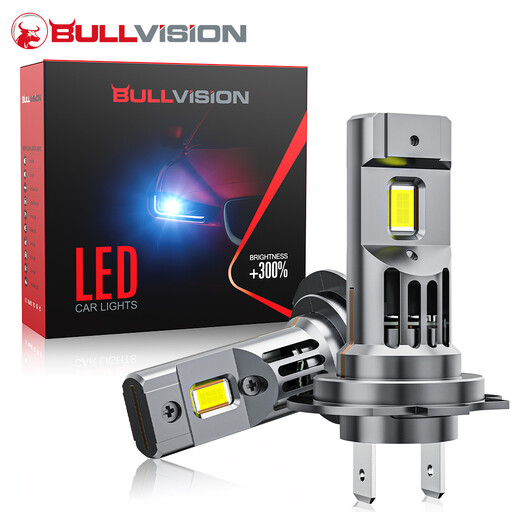
What sets them apart: Here, the focus is on the quality of the light beam. The brand claims 300% more brightness than halogen, but more importantly, a precise beam that avoids dazzling oncoming traffic.
Advantages:
Who is it for? For the discerning driver who wants more power without sacrificing beam quality and the safety of others. Manufacturer's note: an external Canbus decoder may be necessary for some notoriously sensitive models (Volkswagen, Mercedes-Benz, BMW...).
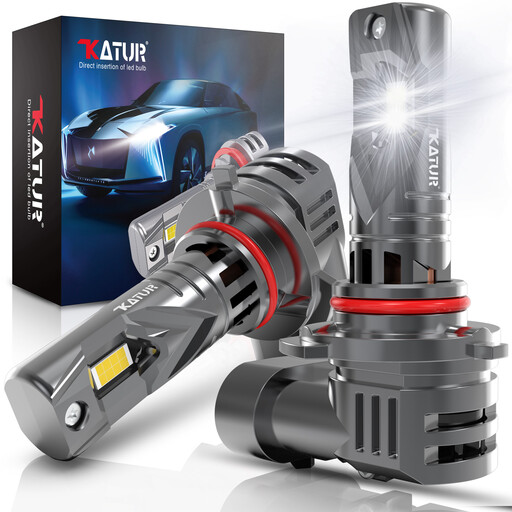
What sets them apart: This kit is for those seeking raw performance and maximum lumens. With a manufacturer-claimed 100W and 30,000 lumens per pair, the promise is an extremely long and wide beam of light.
Advantages:
Who is it for? For performance enthusiasts or those who frequently drive on unlit country roads and for whom maximum beam distance is the number one priority.
Our selection covers the most common use cases, but every car and driver has specific needs. To explore other models, compare power ratings, or find bulbs for different sockets, feel free to browse our complete catalogue.
? Explore our full range of LED car bulbs
1. Is it legal to replace halogen bulbs with LEDs? Regulations vary by country and region. To be 100% legal for use on public roads, an LED conversion kit (or "retrofit") often needs to have a specific certification (like ECE or DOT) for your exact vehicle model. In practice, most aftermarket kits sold online do not have this certification. Their use is therefore theoretically restricted to off-road or private track use. In any case, it is imperative to have your headlights professionally aimed after installation to avoid dazzling other road users. This is a matter of safety and courtesy.
2. Is an HB3 9005 LED bulb for high beams or low beams? The HB3 (or 9005) socket is almost exclusively used for high beams. Low beams typically use a different type of socket, most often H7, H11, or HB4. The surest way to check is to consult your vehicle's owner's manual, which will specify the exact bulb type for each headlight function.
3. How do I know if my car needs a Canbus error-free module? If your car was manufactured after 2005, there's a high probability it uses a Canbus network. The classic symptoms after installing LEDs are unmistakable: a "bulb out" error message on the dashboard, flickering (rapid flashing) of the headlights, or headlights that refuse to turn on at all. Choosing a canbus 9005 led bulb resolves the issue in the vast majority of cases.