Parents who prepare snacks at home
A 750 g to 1 kg jar can be used to make several slices of toast. This format is different from individually packaged portions designed for a snack box.


If you regularly make toast at home, a large jar of hazelnut spread is ideal for sharing, but it isn’t a substitute for individual portions in a snack box. Before packing it for school, check the allergens in your chosen product and the school’s rules. Compare the nutritional information, too, without assuming that every jar has a Nutri-Score.
A 750 g to 1 kg jar can be used to make several slices of toast. This format is different from individually packaged portions designed for a snack box.
The recipe and the school’s rules matter more than the product name alone, such as “praline” or “hazelnut and cocoa”. The Nutella 1 kg and Auchan Pasta Cao 750 g products described by Auchan list hazelnuts and milk; the former also lists soya.
Nutritional information lets you compare like-for-like products. According to the DGCCRF and Santé publique France, Nutri-Score labelling is voluntary in France, so if it’s not shown, you’ll still need to read the label.
First, decide whether the snack will be eaten at home or taken out: a jar’s weight doesn’t tell you whether it contains individual portions. Then check the exact recipe and compare the nutritional information for products in the format you need.
| Criterion | What to check | Who it matters to |
|---|---|---|
| Format and portability | Net weight, type of container and whether individual portions are included. | If I’m making several slices of toast at home, I’d choose a jar to share; if the snack is going to school, I also need to think about how to pack it. Around 44% of consumers would put this format choice first. |
| Allergens and school | Ingredients, highlighted allergens, “may contain” statements and the school’s rules. | Before putting a snack in the school bag, I want to know exactly what’s in the product and whether the school allows it. Around 33% of consumers would prioritise this check. |
| Nutrition label | Nutritional values per 100 g and, where shown on the packaging, the Nutri-Score for comparable products. | If several jars are suitable for the snack I’m planning, I want to compare their sugar and fat content, as well as the portion I’ll serve. Around 23% of consumers would make this their top criterion. |
A family-sized jar doesn’t necessarily come with portions ready to take out. Auchan’s product pages for Nutella 1 kg and Pasta Cao 750 g both state that individual sachets are not included.
For a snack at home, choose a size that suits how you’ll use it. For a snack box, check the packaging for your chosen product or portion some into a suitable food container.
Dividing up the contents of a large jar means using a separate container and spending time preparing it.
According to the DGCCRF and Santé publique France, Nutri-Score labelling is voluntary in France. So if the logo isn’t on a jar, that alone doesn’t tell you whether the product complies with regulations or what its nutritional make-up is.
If Nutri-Score is shown, use it to compare like-for-like products, and also check their nutritional values per 100 g and their ingredient lists.
“Praline” and “hazelnut and cocoa” aren’t enough to establish what’s in a particular product, including whether it contains gluten. The Nutella 1 kg and Pasta Cao 750 g products featured by Auchan don’t show the same allergen information.
Read the label on the jar you buy, including any “may contain” statements, and check the school’s rules before packing it for a school snack.
These examples show jar formats for hazelnut or hazelnut and cocoa spreads. Check the recipe and packaging for each variant before assuming it’s a praline spread or a multipack.
Carrefour lists an 825 g jar of hazelnut and cocoa spread; Auchan also features a 1 kg product.
Carrefour lists its hazelnut spread in 400 g, 750 g and 1 kg jars.
Auchan lists this cocoa and hazelnut spread in a 750 g jar.
ALDI lists Tartichoc hazelnut spread in a 750 g jar.
These four Nutella products come in jars ranging from 630 g to 3 kg, for preparing snacks from a jar to share. If you’re looking for portions ready to pop into a snack box, check the packaging for your chosen product before buying.
 Image unavailable
This 1 kg jar is a good choice if you regularly make toast at home. Auchan’s product page for Nutella 1 kg says it doesn’t contain individual sachets and lists hazelnuts, milk and soya. Check the label on the jar you buy before packing it for a school snack.
 Image unavailable
This 750 g jar is suitable for making toast at home. If you’re packing a snack to take out, check whether the packaging gives you the portions you need. Remember to check the label on your chosen jar for allergen information, too.
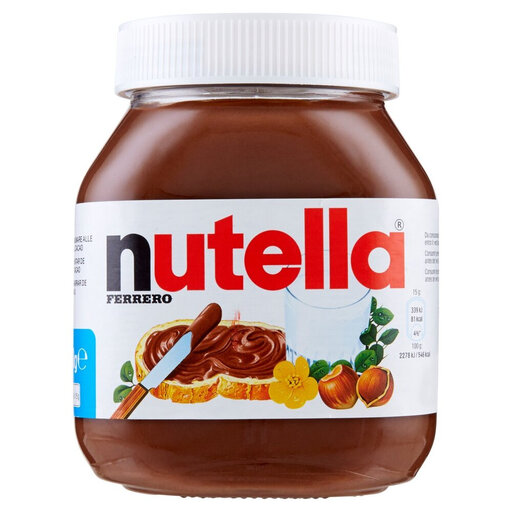 Image unavailable
The 630 g jar is smaller than the 750 g and 1 kg jars featured here for making toast at home. If you plan to pack a snack to take out, check the packaging and the allergens listed on the label.
 Image unavailable
This 3 kg jar is intended for larger-scale use at home, rather than just for a snack to take out. Check that this size suits your needs, and check the packaging and allergens on the product you buy.
No. According to the DGCCRF and Santé publique France, Nutri-Score labelling is voluntary in France. Nutrition information is still compulsory for most prepacked foods, and the absence of the logo alone doesn’t mean a product is non-compliant or a less healthy choice.
No, you can’t make that assumption about the whole category. Check the ingredients, highlighted allergens and any “may contain” statements for the exact product. If it’s for a school snack, check the school’s rules as well.
No. A large jar doesn’t necessarily contain several individually wrapped portions. Auchan’s product pages for Nutella 1 kg and Pasta Cao 750 g say that individual sachets are not included. If you choose one of these jars for a snack to take out, you’ll need a separate food container.
Follow the instructions on the jar you buy. For the Nutella 1 kg product described by Auchan, the advice is to store it in a cool, dry place, away from heat, and not to refrigerate it.