What should you look for first?
Start by deciding what you want from the spread: a clearly stated amount of protein, hazelnuts to share, or a format suited to the people you’re serving. A hazelnut-flavoured bar and whole hazelnuts serve different purposes.
| What matters |
What to check |
Who is it for? |
| Protein content |
Compare the protein in the portion you’ll eat, then identify any other sources of protein on the platter. |
After exercise, I want to know what my portion actually provides, rather than relying on the word ‘protein’. Around 45% of consumers would prioritise this measurable contribution. |
| Hazelnuts to share |
Check the ingredients and choose between plain and roasted according to your taste. |
When hosting a savoury spread, I prefer a crunchy ingredient everyone can add to their plate. Around 33% of consumers would put this simple option first. |
| Allergens and how they’re served |
Read the allergen information and any ‘may contain’ warnings; don’t serve whole nuts to children under 6. |
If someone at the table has an allergy or there are young children present, I need to be able to choose something suitable for them. Around 22% of consumers would prioritise ingredient safety and how the food is served. |
Retailers to consider
These examples show the difference between whole hazelnuts and hazelnut-flavoured snacks. The details below apply to the products named, not every product sold by each retailer.
Carrefour
The retailer offers Carrefour Bio roasted shelled hazelnuts and an NXT Level hazelnut-flavoured protein bar: two formats for different occasions.
- The NXT Level bar’s product information states that it contains 16 g of protein per 50 g and 7% roasted hazelnuts.
- Carrefour Bio roasted hazelnuts are listed as being from Italy or Turkey. Check the origin on the bag you choose if this matters to you.
Auchan
Auchan product information lets you compare plain shelled hazelnuts with Sainte Lucie roasted hazelnuts for a drinks-party spread.
- Auchan shelled hazelnuts contain 19 g of protein per 100 g, while Sainte Lucie roasted hazelnuts contain 17 g per 100 g.
- These figures apply to two specific products, so check the nutritional information on the pack you choose.
Monoprix
Monoprix’s product information describes its 125 g pack of shelled hazelnuts as a snack for drinks parties.
- The product information lists hazelnuts as the ingredient and France as the country of origin for this product.
- The fact that Monoprix has a separate sports-snack category doesn’t tell you how much protein these hazelnuts contain.
ALDI
ALDI offers a product of chopped roasted hazelnuts, which may be better suited to adding to a dish than serving as whole hazelnuts.
- The product information distinguishes roasted hazelnuts from chopped nuts.
- Check the product and its nutritional information when you buy it before comparing it with whole hazelnuts.
An option on Joybuy
This hazelnut-flavoured wafer is a single-serve snack. For a sharing platter, treat it as a different option from plain or roasted hazelnuts.
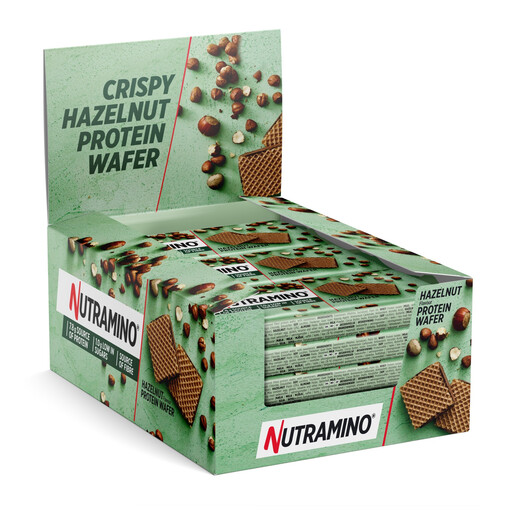 Image unavailable
Nutramino Protein Wafer Hazelnut, 12 x 39 g
Worth considering if you’re looking for a crunchy, hazelnut-flavoured snack for one, rather than a bag of hazelnuts to share around the table.
The product information states that each 19.5 g wafer contains 3.5 g of protein and 0.3 g of sugars. Hazelnuts aren’t listed in the ingredients provided, so check the recipe if you want hazelnuts as an ingredient, and check the allergen information on the packaging.
View on Joybuy
Frequently asked questions
Are hazelnuts enough for a protein-focused post-workout spread?
They provide protein, but how much they contribute depends on the portion and the other foods on the platter. Auchan and Sainte Lucie product information lists 17 to 19 g of protein per 100 g of hazelnuts, or 5.1 to 5.7 g per 30 g. If protein is your priority, include another source that suits your diet too.
How can I include hazelnuts in a drinks-party spread?
Serve plain or roasted shelled hazelnuts for a satisfying crunch, or add them to a dish. If you’d also like to offer protein in other forms, pulses, eggs or dairy products can be part of the spread, depending on your guests’ needs.
Does a cocoa and hazelnut snack necessarily contain lots of hazelnuts?
No: check the ingredients. Carrefour’s product information for its Nakd cocoa and hazelnut bar lists 5% hazelnuts, compared with 38% dates and 35% peanuts. Its flavour doesn’t make it equivalent to a serving of hazelnuts.
Which allergens should I check before serving these products?
Check for hazelnuts, then look for other ingredients and warnings on each pack, including peanuts, other nuts, milk or soya, depending on the recipe. For pre-packed food in France, the DGCCRF states that allergens present among the ingredients must be highlighted in the ingredients list.
Can you give whole hazelnuts to a young child?
Not before the age of 6: Manger Bouger advises against giving whole nuts to children under 6 because of the risk of choking. If you use ground nuts in a dish, also check that they’re suitable given the child’s allergies.


