Anyone who wants to fill pancakes without any preparation
A spread described as ready to spread is better suited to this than praline paste that needs to be added to a cream or another recipe. Check the recommended use for the product you choose.


To fill pancakes without any extra preparation, choose a spread labelled as ready to spread, then check that its container is definitely made of glass. A praline paste intended for baking may not be suitable for the same purpose. Also check the allergens and storage instructions after opening. In France, the Nutri-Score is voluntary, as the DGCCRF explains; to compare recipes, check the nutritional information per 100 g.
A spread described as ready to spread is better suited to this than praline paste that needs to be added to a cream or another recipe. Check the recommended use for the product you choose.
If you like the look of a glass jar or want to reuse the container, look for an explicit mention of “glass pot” or “glass jar”. The word “pot” on its own doesn’t tell you what it’s made from.
The ingredients list, allergens, nutritional information and instructions for after opening are particularly important when several people will be sharing the pancakes.
For Pancake Day, first decide whether you want to spread the product straight from the jar or use it to prepare a filling. Then check the container, the recipe and the product-specific instructions.
| Criteria | What to check | Who it matters to |
|---|---|---|
| Use on pancakes | The “spread” description or recommended use; praline paste for baking may need to be mixed or prepared first. | I want to fill pancakes as soon as they’re ready, without adding the praline to another recipe. Around 36% of consumers make immediate use their main priority. |
| Nutritional composition | Values per 100 g, including sugars and fat, as well as the ingredients list. Check the Nutri-Score if one is displayed. | When choosing between recipes, I prefer to compare their nutritional information on the same basis rather than rely on the size of the jar. Around 29% of consumers prioritise this. |
| Allergens | Allergens highlighted in the ingredients and any “may contain” warnings for each product. | If anyone eating with me needs to avoid certain ingredients, I check the recipe before choosing a filling, even if it’s described as plant-based. Around 21% of consumers put checking allergens first. |
| Jar and storage | An explicit mention of glass, the net weight and the instructions for after opening. | I want a glass jar and a size I can use while following the storage instructions. Around 14% of consumers make these their main priority. |
The DGCCRF explains that this logo is voluntary in France. If it’s not shown, check the nutrition declaration instead; this is generally mandatory for pre-packed foods.
Compare the values per 100 g and the ingredients. Use the Nutri-Score as an additional guide when it’s displayed.
The name of the container alone doesn’t tell you what it’s made from. By contrast, the product listings for Loumaë and Maison Adam explicitly state that the praline products described here come in glass containers.
If glass is essential, look for this detail on the listing for your chosen size or on the packaging.
The recipes we looked at vary. They may contain hazelnuts, almonds, milk or soya, among other ingredients, and may warn of traces of other allergens. A plant-based description doesn’t mean you can skip these checks.
Read the ingredients list and any “may contain” warnings on the product you plan to serve.
Instructions vary by recipe. Funkie says to refrigerate its spread and consume it soon after opening; the E.Leclerc listing for ScrapCooking praline paste says to keep it chilled for up to ten days after opening.
Choose a size that suits your needs and follow the instructions on the product you buy.
Rigoni di Asiago describes La Bianca, a hazelnut and milk spread, as a praline spread. The Auchan listing for this product states that it contains 30% hazelnuts.
Funkie describes its praline spread as a plant-based recipe made with ingredients including red bean purée, roasted hazelnuts and cocoa.
Loumaë specifies that its hazelnut and almond praline-cocoa spread comes in a 200 g glass jar.
Maison Adam describes its spreadable praline, made with milk chocolate, almonds and roasted hazelnuts, as coming in a resealable 300 g glass jar.
These products are hazelnut, cocoa or chocolate spreads to consider as sweet pancake fillings; their names don’t all describe them as praline spreads. If a glass jar is a must, confirm the material of your chosen size before buying.
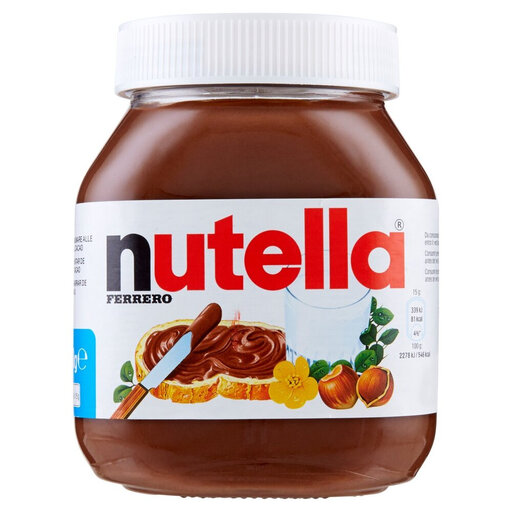 Image unavailable
One option to consider for filling pancakes without preparing praline paste for baking.
630 g size. Check the material of the container and the allergen list if anyone eating with you needs to avoid hazelnuts, milk or soya.
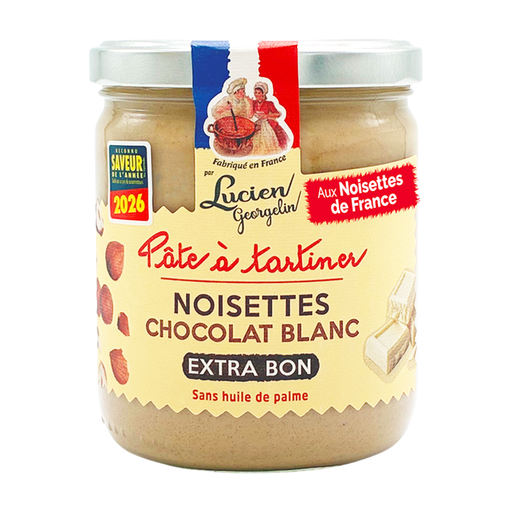 Image unavailable
A spread to consider if you’d like a hazelnut and white chocolate filling.
400 g size. Confirm the material of the container, and check the allergens and instructions for after opening.
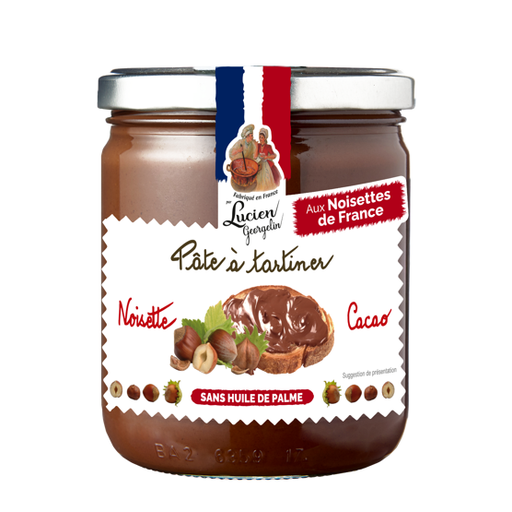 Image unavailable
Another spread to consider if you’d prefer hazelnut and cocoa on your pancakes.
400 g size. Check the container and the allergen information for this version, which is different from the white chocolate one.
 Image unavailable
The 3 kg size is worth considering in light of how many pancakes you need to fill and how you’ll use the rest after Pancake Day.
Check the material of the container, the allergens and the storage instructions before choosing this large size.
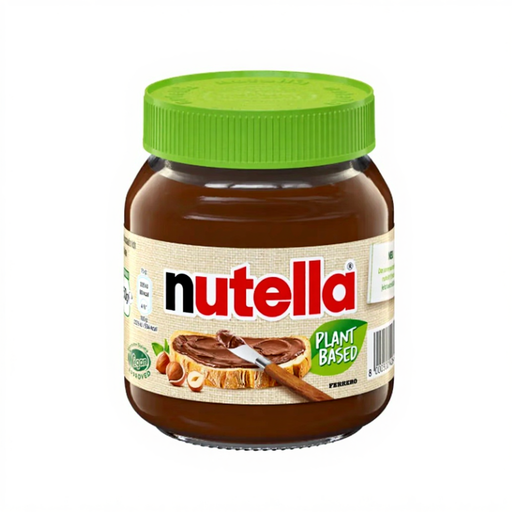 Image unavailable
If you’re looking for the Plant Based version, check its exact recipe before serving it with pancakes.
350 g size. Check the product for ingredients, allergens, nutritional information, instructions for after opening and a mention of glass if this type of container is essential.
No. According to the DGCCRF, the Nutri-Score is voluntary in France. A nutrition declaration is generally mandatory for pre-packed foods. Use the values per 100 g to compare jars of different sizes, and don’t assume a product is right for you just because it displays a logo.
Yes, if you want to mix it into a filling or follow a recipe that uses it. If you want to spread it straight onto pancakes, check the recommended use first. The ScrapCooking praline paste featured by E.Leclerc is intended mainly for baking and needs to be stirred before use.
Look for an explicit mention of “glass pot” or “glass jar” for the product and size you’re considering. The listings for Loumaë and Maison Adam specify this for the products mentioned above; the word “pot” alone isn’t enough to be sure.
Before serving, check the ingredients, highlighted allergens and any “may contain” warnings for the specific product. The praline recipes mentioned may contain hazelnuts or almonds; depending on the product, other allergens or traces may also be listed.
Follow the instructions for your chosen product rather than assuming the same rules apply to every spread. Funkie says to refrigerate its spread and consume it soon after opening; the E.Leclerc listing for ScrapCooking praline paste says to keep it chilled for up to ten days after opening.