
Livraison le jour même ou le lendemain

Qualité garantie

Débloquez vos offres de bienvenue: Livraison GRATUITE | Jusqu'à -80 % | 30 jours d'essai gratuits à JoyPlus
Téléchargez l'application
Far more than a simple block of paper, a good notebook is the guardian of your ideas, the partner for your projects, and the confidant for your thoughts. Among all the available sizes, the hardcover A6 notebook has established itself as the ideal compromise between portability and durability. The problem? The market is a jungle where the best products sit alongside the worst. To help you see more clearly and invest in a model that will stand the test of time, here are the pitfalls to avoid and the criteria that never fail.
Don't fall for slick marketing promises. An attractive package often hides critical flaws. Here are three that are guaranteed to turn a promising purchase into a real disappointment.
To avoid these pitfalls, rely on objective technical criteria. They are the true indicators of the quality and longevity of your future A6 notebook.
Expressed in grams per square meter (gsm), paper weight measures the paper's thickness and density. For an optimal writing experience, this is the number one criterion. It's non-negotiable.
The purpose of a hardcover? To protect your precious notes. For a faux leather pocket notebook, inspect the quality of the PU (polyurethane) coating: it should be thick and securely bonded to the cardboard. A close look at the corners is essential: they must be clean and perfectly finished, as this is where wear and tear strikes first.
The little extras are only real assets if they are built to last.
Enough with the endless, impersonal lists. We've chosen to select specific models for concrete uses, strictly applying the quality criteria we've just detailed.
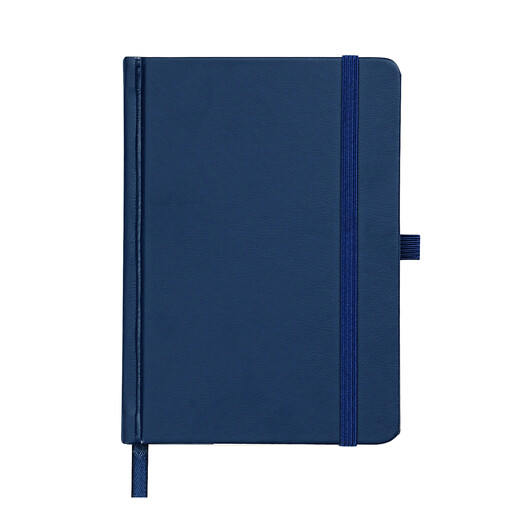
Why this choice? Its understated colour and clean design are perfect for a professional setting. Compact and all-in-one with its pen loop and elastic band, it's the ideal companion for meetings and travel.
The 100 gsm paper prevents ink bleed-through, even with a fountain pen. The PU cover is built for daily use, and the accessories are designed to last.
Combines a professional aesthetic with serious technical features, led by high-quality paper and impeccable finishes.

Why this choice? Its wide range of colours, including this trendy Sage Green, lets you express your style. Its durability is a real plus for surviving the rough treatment of a student's backpack or a creative's tote bag.
The hardcover provides an effective barrier against dog-eared pages. The integrated accessories (pen loop, elastic band) are designed to go the distance, sparing you the disappointments of low-end models.
Style and colour, yes, but without sacrificing the essentials: the quality of the paper (100 gsm) and the overall sturdiness.
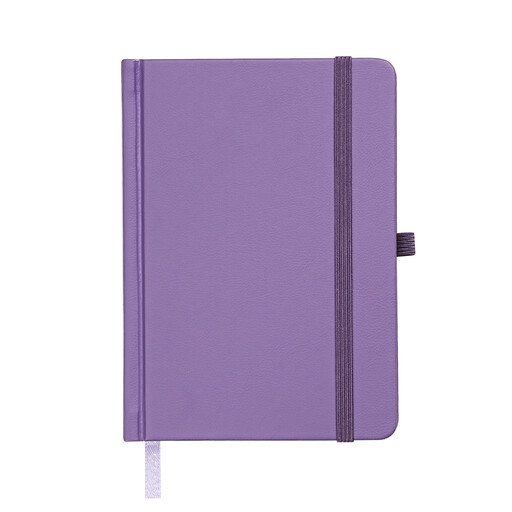
Why this choice? Perfect for an undated A6 planner or a personal diary. Its ivory paper, which is easier on the eyes, and its perfectly smooth surface guarantee the writing comfort essential for a daily practice.
Its thick 100 gsm paper is the best insurance against ghosting. It allows you to use both the front and back of each page without fear, a crucial point for journaling.
Writing comfort is the priority here. It's the number one criterion for those who fill pages daily.
We have prepared a complete selection of notebooks that all meet our quality criteria.
A 100 gsm paper is an excellent all-rounder. It handles ballpoint pens, gel pens, and rollerballs without issue, with almost no ghosting. Most fountain pen inks also perform very well, although the wettest ones might leave a very slight shadow on the reverse side. In short, it's nothing like standard 70 or 80 gsm papers.
It couldn't be simpler. A wipe with a soft, slightly damp cloth is enough to remove dust or small stains. Above all, do not use chemical products, alcohol, or too much water, as this could damage the coating. Then let it air dry.
The A6 size (10.5 x 14.8 cm) is the champion of portability. It's perfect for jotting down ideas, managing to-do lists, keeping a journal, or taking a few notes in a meeting. However, for more intensive note-taking (in a class, for example), the more generous A5 size will likely be more comfortable.