
Livraison le jour même ou le lendemain

Qualité garantie

Débloquez vos offres de bienvenue: Livraison GRATUITE | Jusqu'à -80 % | 30 jours d'essai gratuits à JoyPlus
Téléchargez l'application
A hardback notebook can be used for taking notes in class, preparing for a meeting, keeping a diary, or jotting down creative ideas. But a pretty cover alone isn't enough to guarantee the right purchase. Some models look appealing at first glance, only to become impractical once they're filled up or carried around every day.
Here are the criteria to consider to avoid nasty surprises and choose a notebook that's truly suited to your needs.
A product listing might boast a high page count without clearly stating whether it refers to sheets counted on both sides. A notebook with 96 sheets therefore contains 192 pages, while 80 sheets equals 160 pages. This distinction is essential for making a fair comparison between different models.
An A5 notebook offers a comfortable writing surface for classes, meetings and detailed lists, but it also takes up more space in your bag. Conversely, a pocket-sized A6 notebook is easy to carry around, at the cost of a smaller writing area. Rely on the stated dimensions rather than just terms like "compact" or "large format".
A floral pattern, a textured finish or a neat binding can make a visual difference, but these elements tell you nothing about the quality of the paper, the closure system or the internal organisation. In daily use, a notebook with an elastic closure and a notebook with a bookmark can prove far more practical than a model that relies solely on its looks.
The A5 size measures approximately 14.8 × 21 cm. It's suitable for work, study, goal tracking and detailed notes. When it offers pages organised into monthly and weekly calendars, an A5 notebook can even replace an undated diary.
The A6 size measures approximately 10.5 × 14.8 cm. It slips easily into a small messenger bag or handbag and is particularly good for quick notes, lists, sketches and short journal entries. If you often use a pen, a notebook with a pen loop will save you from hunting for one at the bottom of your bag.
100 gsm offset paper is a good benchmark for assessing the writing feel and the durability of the surface. The models featured here use cream or ivory, lined, 100 gsm paper. This weight can help limit show-through with some inks, but the result also depends on the type of pen, the pressure you apply and the drying time.
Before choosing a premium notebook, therefore, check:
A hard cover protects the pages better during transport and provides a stable surface for writing, even without a desk. The elastic band keeps the notebook closed, while the ribbon bookmark lets you quickly find a page or section.
These accessories are, however, delicate: avoid pulling hard on the ribbon or over-stretching the elastic. The product listings also recommend keeping notebooks away from moisture, excessive heat and sharp objects. Small parts should not be left within reach of children under 3 years old.
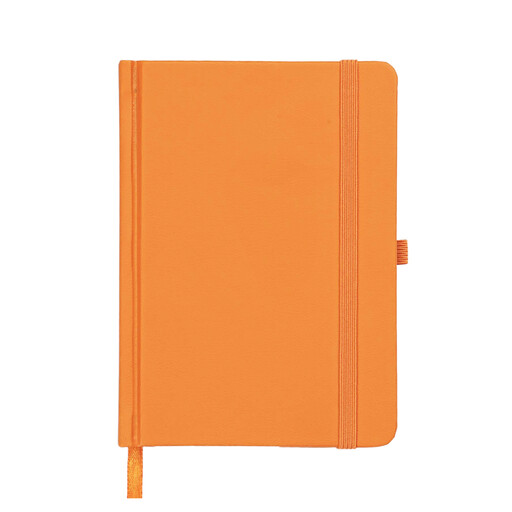
Why this choice suits this profile: its A6 size is ideal for first lists, quick notes and writing on the go. It contains 80 sheets of 100 gsm offset paper and is easy to carry.
The listing specifies the size, number of sheets and paper weight, making it easy to compare clearly with other notebooks.
PU hard cover, cream lined 100 gsm paper, elastic closure, ribbon bookmark and pen loop.
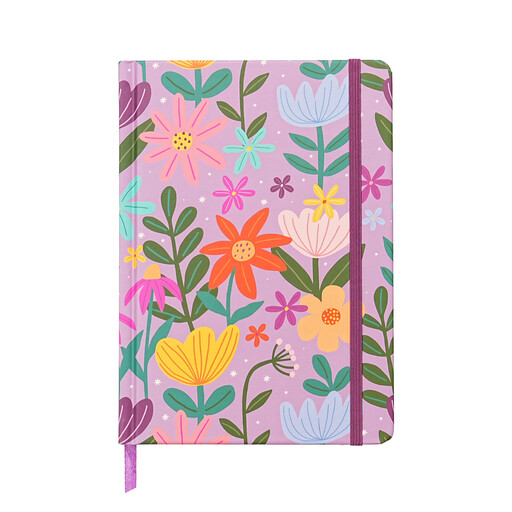
Why this choice suits this profile: its A5 size and decorative finishes are well suited to a journal, a work or study notebook, or even a particularly thoughtful gift.
The features detail the 100 gsm paper, finishes, ribbon and elastic, rather than just focusing on the notebook's appearance.
A5 size, 96 sheets, ivory lined offset 100 gsm paper, textured cover, bookmark and elastic closure.
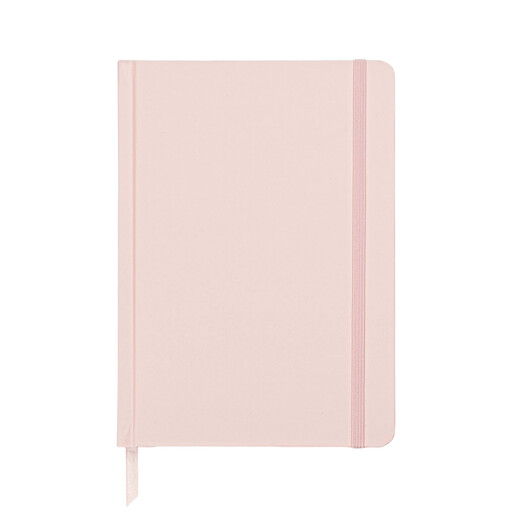
Why this choice suits this profile: its undated monthly and weekly pages are ideal for professional planning, goal tracking and daily organisation, without a fixed calendar.
The undated format prevents wasted pages when the diary isn't used for certain periods.
112 sheets, 224 pages, cream lined offset 100 gsm paper, customisable first page and note spaces.
We've put together a comprehensive, real-time updated list of products that meet these strict selection criteria and European safety regulations.
To keep your hardback notebook in good condition:
The A5 size is suitable for classes, meetings, a diary and detailed lists. The A6 size is more practical for jotting down an idea, an address or a task when you're on the move.
It depends on the ink and nib you use. A weight of 100 gsm is a good benchmark, but it doesn't on its own guarantee a complete absence of show-through or feathering. For heavy use, test a few pages first with your usual pen.
A lined notebook is mainly for free writing. An undated diary typically offers monthly, weekly or daily spaces for you to fill in yourself. The choice therefore depends on your need: to keep texts and ideas, or to structure deadlines and goals.