
Livraison le jour même ou le lendemain

Qualité garantie

Débloquez vos offres de bienvenue: Livraison GRATUITE | Jusqu'à -80 % | 30 jours d'essai gratuits à JoyPlus
Téléchargez l'application
A hardback lined notebook can be used for lessons, meetings, making lists or keeping a diary. But looks aren’t everything. If a notebook is too thin, poorly protected or impractical, it may end up at the back of a drawer after just a few weeks.
Before placing your order, three mistakes are particularly common: confusing the number of pages with the number of sheets, choosing an attractive cover without checking its material and underestimating the value of useful everyday accessories. Here are the criteria to consider when choosing a notebook suited to your needs in France.
A product listing may state 96 sheets, equivalent to 192 usable pages. These two details do not mean the same thing. When comparing several lined notebooks, always check the number of sheets, the number of pages and the size.
An A5 notebook with 96 sheets offers more writing space than an A6 notebook with 80 sheets, but it will also take up more room in your bag. The right choice depends on how much writing you plan to do and how portable you need it to be.
A printed, textured, gilded or embossed finish immediately gives a notebook a polished appearance. However, it says nothing by itself about the durability of the binding or the care it requires. A hardback cover will generally protect the pages better when the notebook is carried between home, university and the office. It should nevertheless be kept away from damp and high temperatures.
Fabric, rigid card and PU faux leather do not offer the same feel or long-term durability. Check the material stated in the product listing rather than relying solely on the photo.
Paper weight is a useful indicator, but it does not guarantee the same results with every writing instrument. 100 g paper is generally better suited to everyday use than very thin paper, particularly when using a fountain pen or felt-tip pen. Even so, take the time to check the product listing and avoid exposing the notebook to water.
For taking notes, diary writing or making lists, ivory or cream paper may also be easier on the eye than bright white paper. Ultimately, it comes down to personal preference.
For use in the office or during your studies, A5 is generally more comfortable for structuring a page. For noting down an address, task or idea while travelling, A6 is more discreet.
The term lined notebook refers to paper covered with horizontal lines that guide your handwriting. Check the paper colour, its weight and the number of pages. The models featured here use 100 g offset paper, described as cream, ivory or off-white depending on the reference.
Thicker paper can reduce ink showing through on the reverse side, but the result also depends on the pen you use and the pressure applied. For a diary or a notebook dedicated to journaling, the softness of the paper and how easily it opens may matter more than its exterior appearance.
A ribbon bookmark makes it easy to find a specific page quickly. An elastic closure keeps the notebook shut in your bag and prevents loose sheets from falling out. On some compact models, a pen holder also means you won’t have to search for a pen separately.
These details are particularly useful for students, professionals who regularly move between rooms and anyone using an undated planner notebook.
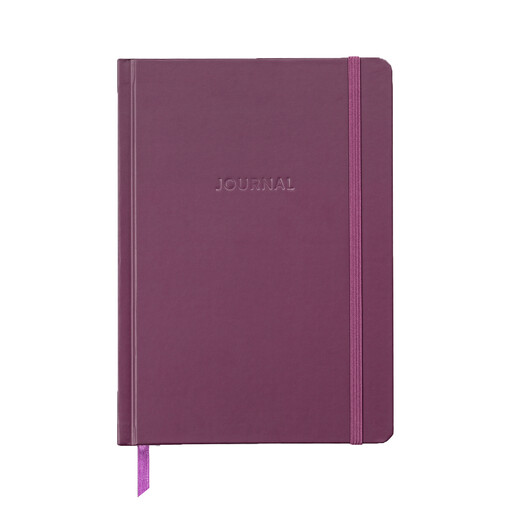
Why this choice suits this profile : Its A5 size is suitable for lessons, lists and office notes, without the need for a host of accessories.
The listing specifies 96 sheets of 100 g cream lined paper, a hardback cover, a ribbon and an elastic closure.
148 × 210 mm size, 100 g offset paper, ribbon bookmark and elastic closure.
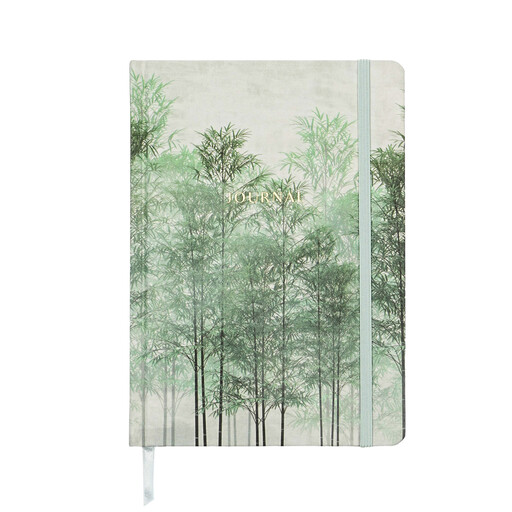
Why this choice suits this profile : Its fabric cover and decorative details are ideal for people who care about how their notebook feels and looks.
The listing specifies the cover material, 100 g ivory paper and the number of pages, rather than relying solely on the decoration.
192 pages, 100 g wood-free ivory paper, fabric cover and a choice of designs.
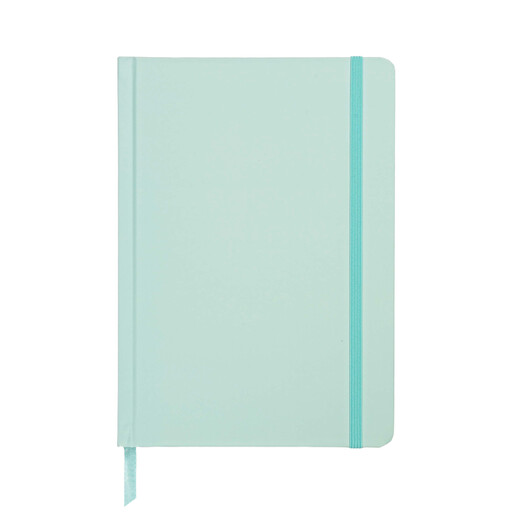
Why this choice suits this profile : Its undated monthly and weekly pages are ideal for flexible organisation, with no wasted pages when plans change.
The undated format means you don’t pay for unused weeks and clearly states the advertised planning period.
224 pages, 100 g lined offset paper, hardback cover, ribbon and elastic closure.
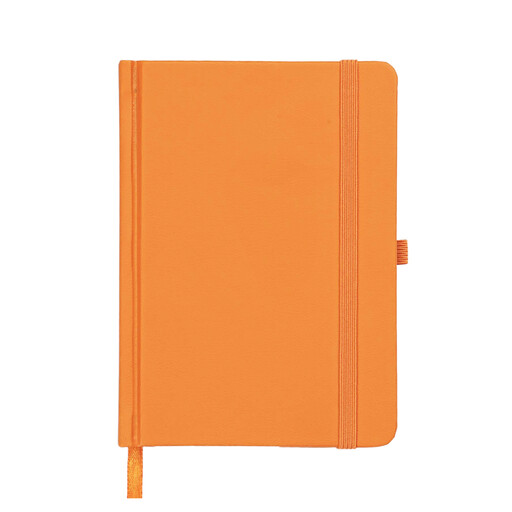
Why this choice suits this profile : Its compact size and integrated pen holder are ideal for travelling, appointments and jotting down personal notes.
The A6 dimensions are clearly stated, while the accessories meet a practical need when you’re out and about.
160 pages, 100 g lined offset paper, bookmark, elastic closure and pen holder.
We’ve selected a complete, real-time updated list of products that meet these exacting criteria while complying with European safety regulations.
A notebook’s lifespan depends on how often it is used, the pressure applied to the pages and the conditions in which it is carried. To protect a hardback or fabric cover :
Ribbons, elastics and pen holders are small parts : keep them out of reach of children under 3 years old.
A5 provides enough room for writing at length, sticking in a few items or organising a page into several sections. A6 is better suited to short entries, spontaneous thoughts and use on the go.
100 g offset paper provides a reliable base for everyday writing and can reduce ink showing through on the reverse compared with lighter paper. However, the result depends on the ink, nib and pressure applied : test it on one page before filling the entire notebook.
Yes, an undated planning notebook allows you to start at any time and avoid unused pages during holidays or busy periods. However, check its internal layout : some models offer monthly and weekly views, while a classic lined notebook gives you more freedom.