Households buying a dishwasher for a hard-water area
You’re choosing a dishwasher and want to check how to set its water softener for the water supplied to your home, while also considering installation and capacity.


If your current dishwasher suits your kitchen and works properly, first check the water hardness, the water softener setting and the products you use. Marks alone aren’t a reason to replace it. If you’re buying a new appliance, compare the installation requirements, dimensions and capacity, then check the manual for your exact model to set the water softener according to the water supplied to your home.
You’re choosing a dishwasher and want to check how to set its water softener for the water supplied to your home, while also considering installation and capacity.
You want to find out whether adjusting the settings or using suitable products could solve the problem before replacing an appliance that still works.
You’re comparing consumption, noise and maintenance, while bearing in mind that water hardness can affect the settings and product dosage.
Check your local authority’s drinking water quality results, published by the Ministry of Health, and note the total hardness (TH), the date and the unit. Compare this with the instructions in the manual for your exact model before changing any settings or products.
| What matters | What to check before buying | Who it matters most to |
|---|---|---|
| Water softener setting | The local TH value, its date and unit; the range and procedure given in the model’s manual. | I want to adjust the settings to suit the water at home before drawing conclusions from marks. Around 36 % of consumers prioritise adapting the settings to hard water. |
| Choice of products | The manual’s instructions for salt and rinse aid; detergent dosage according to water hardness and how dirty the dishes are. | If I’m choosing between an all-in-one tablet and separate products, I want to know what to use and how much. Around 29 % of consumers prioritise their choice of products. |
| Installation and capacity | The exact model’s dimensions and installation type, the available space and a capacity suited to your usual loads. | I want an appliance that fits in my kitchen and holds the dishes I usually wash. Around 21 % of consumers put installation and capacity at the top of their list. |
| Energy, water and noise | Water and energy consumption on the reference programme, as well as the noise level in dB. | I compare resource use and noise under the reference conditions, taking the cycles I use into account. Around 14 % of consumers prioritise consumption and noise. |
In hard-water areas, some brands recommend using salt and rinse aid even with multi-function tablets. Built-in functions don’t automatically replace the appliance’s settings.
Before stopping a refill, compare your local water hardness with the instructions in your appliance manual and on the detergent packaging.
Marks alone don’t mean you need to replace your dishwasher. The hardness setting, salt, rinse aid and dosage can all make a difference too.
If the appliance works and suits your kitchen, first check the water hardness and follow the instructions in its manual.
ADEME explains that the energy and water figures on the label relate to a reference programme, not every programme.
Compare appliances on the same basis, then take into account the programmes you expect to use.
Getting the dimensions of your chosen model wrong can make installation difficult. Bosch lists the dimensions of the Bosch SMV25AX06E as 815 × 598 × 550 mm.
Check the dimensions of the exact model in the manufacturer’s documentation and compare them with your available space before buying.
Worth considering if you’re looking for guidance on setting the water hardness for an integrated dishwasher.
Worth considering for its guidance on the water softener and dishwasher salt.
Worth considering for its guidance on multi-function tablets and the salt and rinse aid indicators.
Worth considering for its first-use instructions on water hardness, rinse aid and detergent.
Worth considering for examples of slimline and standard-width models in a dated French selection.
This selection includes dishwasher salt, detergents and rinse aids. Check your local water hardness and your appliance manual before choosing a product or changing its dosage.
 Image unavailable
For the dedicated salt reservoir when its use is recommended by your appliance manual and water hardness.
The product listing states that it contains 100 % sodium chloride. Follow the manual and keep the product out of the reach of children.
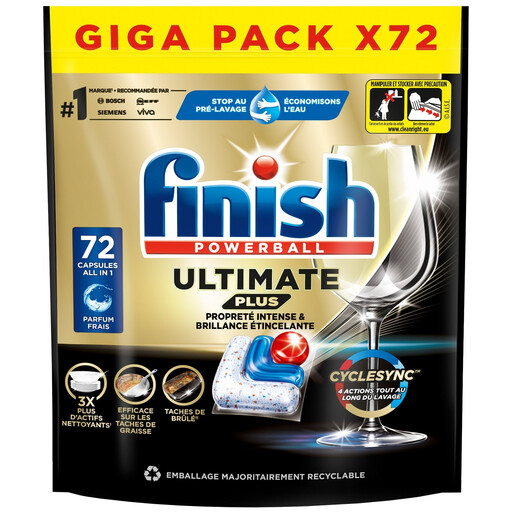 Image unavailable
An option in tablet form to compare with the detergent instructions and your dishwasher manual for the water supplied to your area.
The product listing states that the pack contains 72 tablets for use in dishwasher programmes. It warns of a risk of skin irritation and serious eye damage: avoid contact with eyes and keep the product out of the reach of children.
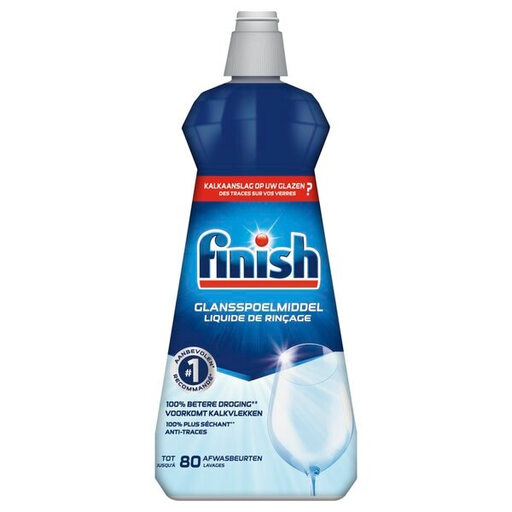 Image unavailable
Worth considering if you’re looking for a rinse aid to use according to your appliance’s instructions and level indicator.
The product listing claims up to 80 washes. It warns of a risk of serious eye damage and an allergic reaction: follow the label precautions and keep the product out of the reach of children.
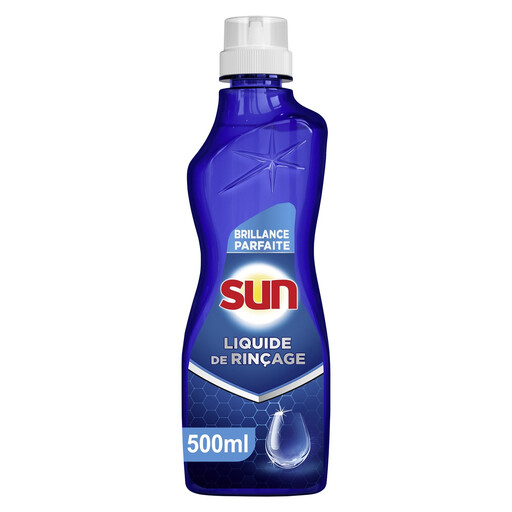 Image unavailable
The product listing says the dosage can be adjusted according to water hardness and your dishwasher manual.
Pour the product into the dedicated compartment. The product listing warns of a risk of serious eye damage: avoid contact with eyes and keep it out of the reach of children.
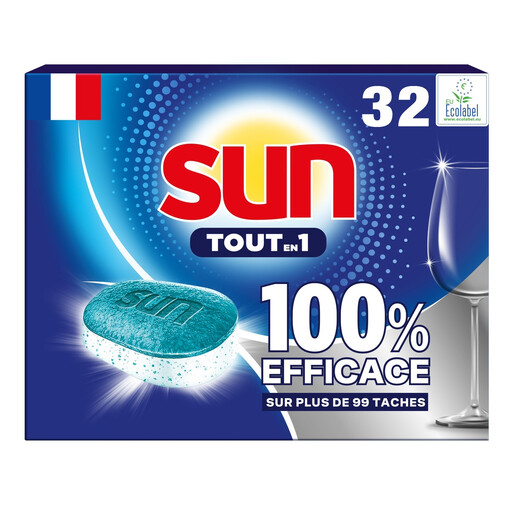 Image unavailable
The product listing describes tablets with anti-limescale and rinse aid agents. Check your appliance’s instructions separately before relying on built-in functions in hard water.
Place the tablet in the dispenser and store it in a dry place; the product listing recommends not handling it with wet hands. It warns of a risk of serious eye damage: avoid contact with eyes and keep the product out of the reach of children.
Check the local drinking water quality results available from the Ministry of Health and look for the total hardness (TH), the date and the unit. The French National Consumer Institute also says you can ask your local authority or regional health agency.
No. Check the hardness of the water supplied to your home, then follow the procedure in the manual for your exact appliance model. General guidance isn’t a universal setting.
No. Dishwasher salt regenerates the water softener, detergent cleans the dishes, and rinse aid helps with rinsing and drying. Use the compartments and products specified in the manual, taking local water hardness into account.
Compare the cost of the appliance, any installation, water, electricity and products. If you’re a private individual buying goods from a professional seller, the statutory legal guarantee of conformity applies to defects that meet the legal conditions. It’s separate from a commercial warranty, as the Ministry of the Economy explains.
According to information from the Ministry of the Economy, the repairability index applies to dishwashers. Don’t confuse it with the durability index, which doesn’t apply to dishwashers according to the categories listed by the Ministry.