Households dealing with everyday marks
Splashes and mealtime mess mean you often need to clean your tiles or vinyl flooring. Your priority is to make wet cleaning less of a chore, without expecting the appliance to remove stubborn stains every time.


If you regularly clean tiles or vinyl flooring marked by mealtimes, consider a floor cleaner or a wet-and-dry vacuum cleaner, as long as you’re happy to empty and clean the appliance after use. If dry dust and debris are the main issue, keep a separate vacuum cleaner: UFC-Que Choisir points out that floor cleaners are primarily designed for washing, and their suction may not replace that of a conventional vacuum cleaner. Steam cleaning requires an extra check to make sure your flooring is suitable; wooden flooring is excluded from the uses covered here.
Splashes and mealtime mess mean you often need to clean your tiles or vinyl flooring. Your priority is to make wet cleaning less of a chore, without expecting the appliance to remove stubborn stains every time.
Crumbs, hair or pet hair add to wet messes. Before combining vacuuming and washing in one appliance, decide whether its functions can handle this debris or whether you’ll still need a separate vacuum cleaner.
The time spent cleaning the appliance after each session matters just as much as the time spent on the floor. Emptying tanks, rinsing the roller or pad, drying parts and replacing consumables all form part of your decision.
Start with the mess you need to tackle: marks to wash away, dry debris to vacuum up, or both. Then check that the appliance suits your flooring and consider the maintenance it requires.
Worth considering: for regular wet cleaning of compatible hard floors, especially when light marks are more of a concern than dry debris.
What to bear in mind: rollers or pads and tanks need cleaning. According to UFC-Que Choisir, this type of appliance does not necessarily replace a vacuum cleaner.
Worth considering: if you want to combine vacuuming and washing on hard floors, and the model explicitly states that it collects the types of dirt you need to deal with.
What to bear in mind: the advertised function doesn’t guarantee that it will replace your vacuum cleaner for dry dust. UFC-Que Choisir’s tests highlight suction limitations in appliances in this category.
Worth considering: when crumbs, pet hair and dust need to be vacuumed up separately before washing the floor.
What to bear in mind: you’ll have two steps rather than trying to vacuum and wash in one go.
Worth considering: only if both the appliance instructions and your flooring manufacturer’s guidance say steam is suitable for your floor.
What to bear in mind: steam alone won’t vacuum up crumbs. UFC-Que Choisir advises against using it on wooden surfaces.
| Criteria | What to check | Best suited to |
|---|---|---|
| Frequent wet cleaning | Type of roller or pad, and how easy it is to handle the clean- and dirty-water tanks. | After meals, I want to remove marks from the floor regularly without having to go through lots of cleaning steps. Around 36% of consumers rank this as their top priority. |
| Dust and dry debris | A function specifically designed to pick up dry debris from the floor, as distinct from collecting dirty water. | When crumbs, hair or pet hair build up, I don’t want to lose the vacuuming capability I rely on every day. For around 29% of consumers, dry debris is the top priority. |
| Maintenance and consumables | Emptying, rinsing and drying steps, plus the product codes for compatible rollers, filters and cleaning products. | I may wash the floor often, but I don’t want to spend just as much effort getting the appliance ready after every session. Maintenance time comes first for around 21% of consumers. |
| Floor compatibility | Floor types permitted in the model’s instructions and the flooring manufacturer’s guidance, especially before using steam. | If I’m considering steam or a wet-cleaning appliance, I first need to make sure my flooring can withstand it. Compatibility is the top priority for around 14% of consumers. |
A product category name or combined function alone doesn’t prove how well it handles dry dust. UFC-Que Choisir notes that floor cleaners are primarily designed for washing and that their suction can be limited.
If crumbs, hair or pet hair are common, check the model’s instructions to see whether it collects dry debris. If necessary, plan to keep a separate vacuum cleaner.
An automatic cleaning cycle doesn’t eliminate every task: depending on the model, you’ll still need to deal with dirty water, rollers or pads, and filters.
Compare the steps required after each session, how easy the tanks are to access and how the parts need to be left to dry.
Rollers, filters and detergents may be specific to a brand or appliance. UFC-Que Choisir recommends factoring in the need to replace them, not just the appliance’s initial use.
Before choosing a model, note down the exact product codes and the recommended replacement frequency.
Tiles, vinyl flooring and other surfaces don’t all need the same treatment. Heat from steam calls for a separate compatibility check; UFC-Que Choisir advises against using steam on wooden surfaces.
Check both the instructions for the exact appliance and the flooring manufacturer’s guidance. Don’t assume that a compatibility claim for another material or model applies to your floor.
These product ranges illustrate different functions to compare. Manufacturers’ claims are not the same as independent test results.
The FC range uses rollers to clean hard floors. Kärcher describes the cordless FC 7 as a four-roller model that can collect both wet and dry dirt.
The X-Clean range brings together cordless wet-and-dry vacuum cleaners for hard floors. Rowenta says the X-Clean 4 vacuums and washes in one pass, while some models also offer automatic maintenance functions.
The FLOOR ONE range includes wet-and-dry vacuum cleaners for hard floors. Tineco offers models that can lie flat, with roller self-cleaning and drying functions.
The F25 range includes wet-and-dry vacuum cleaners. Roborock says the F25 GT can vacuum and wash at the same time, and offers appliance cleaning and drying functions.
The appliances below offer two ways to care for hard floors: combine vacuuming and washing, including with a robot mop, or use steam on flooring that’s suitable for it. Whichever you choose, check the instructions for your floor. If you often have dry debris to deal with, consider separately whether you also need a conventional vacuum cleaner.
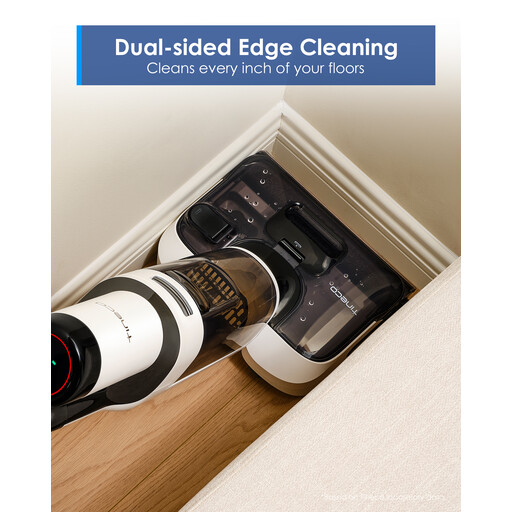 Image unavailable
A wet-and-dry vacuum cleaner to consider for regular wet cleaning of hard floors, especially if reaching under furniture is important to you.
The product information lists a 180° flat-lying position, 13 cm clearance, a 70 °C FlashDry cycle and 40 minutes of battery life. These features don’t mean you can assume it will replace a conventional vacuum cleaner for frequent dry debris.
Check that your flooring is compatible and note the product codes for the parts that need maintenance. Wooden flooring is excluded from the uses covered here.
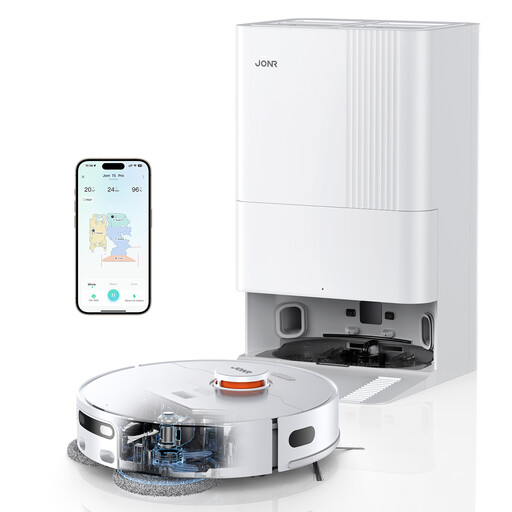 Image unavailable
This robot combines vacuuming and mopping for regular floor care, with a docking station designed to take care of some tasks after the cleaning cycle.
The product title lists 8 150 Pa suction, laser navigation and hot-air drying. This advertised suction figure alone isn’t enough to conclude that it will replace your vacuum cleaner for all types of dry debris.
The description advises against vacuuming liquids or damp dust: this restriction is separate from mopping. Also check how much room the docking station needs, the set-up requirements and whether your floor is compatible. Wooden flooring is excluded from this article’s recommendations.
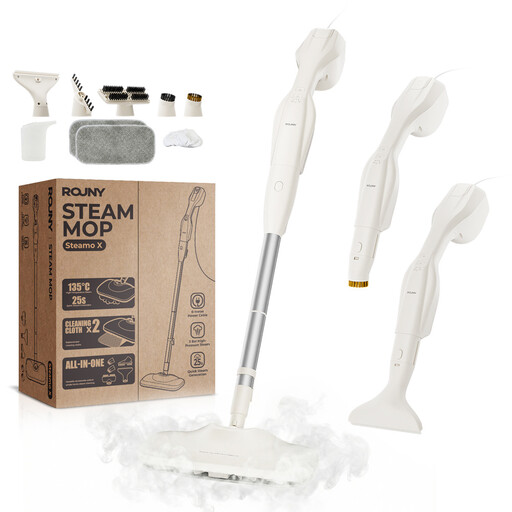 Image unavailable
The mop format makes it an option for steam-cleaning hard floors, provided both the flooring manufacturer and the appliance instructions say this is suitable.
The product title lists 1 200 W power, 3 bar steam pressure, a 6 m cord and five accessories, as well as a handheld cleaner mode. Steam doesn’t replace vacuuming up dry crumbs and dust.
Don’t use steam on wooden flooring as part of this choice. Check that every other surface is compatible before use, too.
 Image unavailable
This steam cleaner is an option for hard floors confirmed as suitable for steam, as well as other surfaces permitted in the instructions.
The product title lists a 1.6 L tank, 3.5 bar pressure and an accessory kit. These specifications don’t guarantee that stubborn stains will be removed, and the appliance isn’t a substitute for vacuuming dry debris.
Before use, read the guidance on water and sensitive surfaces. Wooden flooring is excluded from the uses covered here.
Not always. UFC-Que Choisir says floor cleaners are primarily designed for washing and may struggle to vacuum dust and dry debris. Some models claim to collect both wet and dry dirt, but if dry debris is a common problem in your home, check the specific model’s functions and keep a separate vacuum cleaner if necessary.
Plan to empty the dirty water, clean the tanks, roller or pad and filters, then leave the parts to dry as instructed. Self-cleaning or self-drying functions may take care of some steps, but they don’t make the appliance maintenance-free.
Wooden flooring is excluded from the uses discussed in this article. UFC-Que Choisir advises against using floor cleaners on this type of flooring and advises against steam on wooden surfaces. Kärcher does list some wooden floors as suitable for its FC 7 Cordless, but don’t assume this applies to another appliance or type of flooring. Always check the model’s instructions and your flooring manufacturer’s guidance.