If you frequently wet-clean compatible hard floors, a floor washer can make quick touch-ups easier, provided you’re happy to empty the tanks and maintain the roller after use. If dry dust and debris are the main issue, keep your vacuum and add a mop as needed. A non-electric spray mop is also suitable for small touch-ups, as long as you pick up loose debris separately. Tests by UFC-Que Choisir remind us that floor washers are primarily designed for wet cleaning, and that they have limited results on stubborn stains.
Who are these cleaning routines for?
People who often need to wet-clean
After meals or everyday activities, you want to clean a hard floor quickly and don’t mind emptying the tanks and maintaining the appliance afterwards. On some models, self-cleaning makes part of this routine easier, but doesn’t eliminate it altogether.
Households that rely on dry vacuuming
If you regularly pick up dust, crumbs and other dry debris, keeping a separate vacuum may matter more than combining two tasks in one appliance. UFC-Que Choisir distinguishes between floor washers’ primary wet-cleaning function and full dry vacuuming.
People who think about long-term maintenance
You want to know how to clean the rollers and filters, which consumables are suitable for the model, and whether replacement parts are available. Checking these details helps you decide whether the routine will be practical in your home.
How do the options compare?
To choose between these three routines, start with the type of mess you deal with most often: regular wet cleaning, dry debris, or small touch-ups without a powered appliance. Then check your flooring and what you’ll need to do after each use.
Floor washer
Worth considering: if you frequently clean a hard floor that’s explicitly compatible with your chosen model.
Bear in mind: according to UFC-Que Choisir, the appliance won’t always replace a vacuum for dry dust or targeted treatment for stubborn stains. The tanks and roller also need attention.
Vacuum, then mop
Worth considering: if picking up dust and dry debris is your priority before mopping.
Bear in mind: you’ll need to do two separate jobs whenever you need to both vacuum and mop.
Non-electric spray mop
Worth considering: for wet touch-ups if you’d rather rinse and wring out a pad than maintain a powered appliance.
Bear in mind: you’ll need to pick up debris first and, depending on the system, rinse and wring out the pad and manage a bucket.
| What matters to you |
What to check before buying |
Who is this for? |
| Quick wet touch-ups |
Which functions are combined on the exact model, and what you’ll need to do after use. |
After meals, I want to clean the floor without organising a full house clean, but cleaning the appliance is part of my routine too. Around 33% of consumers prioritise quick touch-ups like these. |
| Dust and dry debris |
Its dry pick-up capabilities and the model’s stated restrictions, rather than its marketing name alone. |
When crumbs and dust are the main problem, I want to be able to vacuum them up before thinking about mopping. This comes first for around 27% of consumers. |
| Flooring and maintenance |
Whether the manual approves your floor’s finish, and what emptying, cleaning and drying are required after use. |
With a delicate floor, I’d rather check that it’s compatible and make sure I can keep up with the maintenance routine. This is the priority for around 20% of consumers. |
| Consumables and repairs |
Which rollers, filters and parts are suitable for the model, and whether they’re available. |
If I plan to use the appliance for a long time, I want to be able to replace wear parts and have it repaired. Around 20% of consumers put this need first. |
Mistakes to avoid
-
Assuming a vacuum mop always replaces your vacuum
UFC-Que Choisir says floor washers are primarily designed for wet cleaning and notes their limitations when it comes to dry dust.
If crumbs and dust are your main concern, keep a dry vacuuming solution or check the capabilities of the model you’re considering carefully.
-
Assuming all hard floors can be cleaned in the same way
Compatibility depends on the model and the finish of your flooring. Kärcher says some parquet floors are compatible with its FC 7, while UFC-Que Choisir warns against using floor washers on wooden parquet.
Identify your floor’s finish and read the manual for the exact model before using it. Don’t assume it’s compatible just because another appliance is.
-
Forgetting about rollers, filters and suitable cleaning products
UFC-Que Choisir points out that consumables are generally brand-specific, so replacing them is part of regular appliance use.
Check which parts are approved, how often they need replacing and whether they’re available for the model you’re interested in.
-
Confusing self-cleaning with maintenance-free operation
A self-cleaning cycle doesn’t necessarily mean you can skip emptying the tanks or checking the roller and filters. Automatic drying also depends on the model.
Check the manual for the steps required after each use, and make sure you have room for the docking station at home.
Brands to compare
Kärcher
The hard-floor washer range includes the FC 7 Cordless and dedicated rollers.
- Kärcher describes the FC 7 Cordless as suitable for several types of hard flooring, including some parquet, and claims up to 45 minutes of run time for this model.
- This compatibility doesn’t apply to every wood floor or the entire range. Check your floor’s finish and the roller reference; Kärcher says its compatible FC rollers are machine-washable at 60 °C.
Rowenta
The X-Clean range includes cordless vacuum mops for hard floors, with maintenance features that vary by model.
- Rowenta says the X-Clean 4 has a self-cleaning function, while the X-Clean 10 has an automatic cleaning and drying cycle at 65 °C.
- These features belong to two different models. Check the manual and accessories, and find out what manual steps are still required for the one you’re considering.
Tineco
The Floor One range is designed for powered wet cleaning of hard floors, with features that vary by model.
- Tineco says the Floor One S5 can be used on hard floor surfaces.
- The brand says this model isn’t suitable for carpets and recommends testing it on an inconspicuous area of delicate surfaces. Check the guidance for your particular flooring too.
Vileda
Flat mops and microfibre pads offer a non-electric option for wet cleaning.
- Vileda says its flat mops can be used on several types of hard flooring, including tiles, laminate and vinyl.
- For delicate flooring, adjust how damp the pad is. Pick up debris first if needed, and allow time to rinse and wring out the pad.
Products for hard-floor touch-ups
These Joybuy products include powered floor washers and a non-electric spray mop for wet touch-ups. First, choose a solution that suits the type of mess you deal with, then check the manual for compatibility with your flooring and any maintenance required.
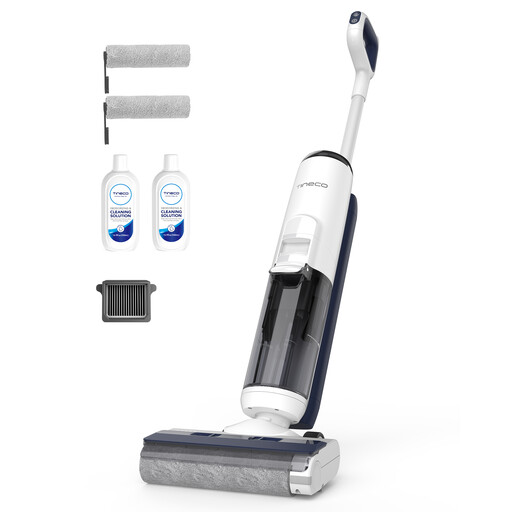 Image unavailable
Tineco iFLOOR 5 Breeze Complete
Worth considering for wet touch-ups on compatible hard floors, without the hassle of a cord. The product listing claims up to 35 minutes of run time, edge cleaning and self-cleaning. Check the manual for approved floor types and what you’ll need to do after use.
View on Joybuy
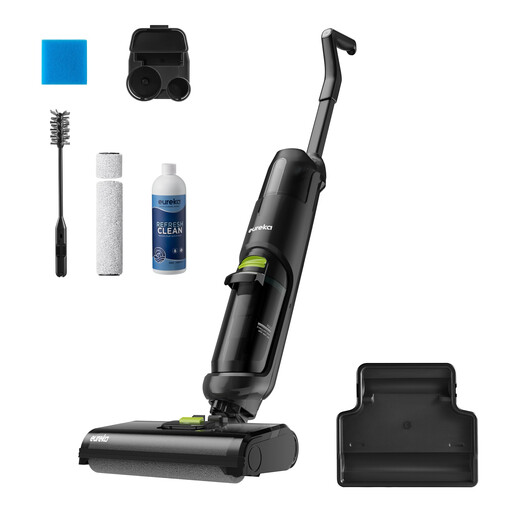 Image unavailable
Eureka NEW400 cordless vacuum mop
Worth a look if you want to combine wet cleaning and debris pick-up as part of a routine for compatible hard floors. The product name mentions a self-cleaning system; check the manual for approved floor finishes and the maintenance needed after use.
View on Joybuy
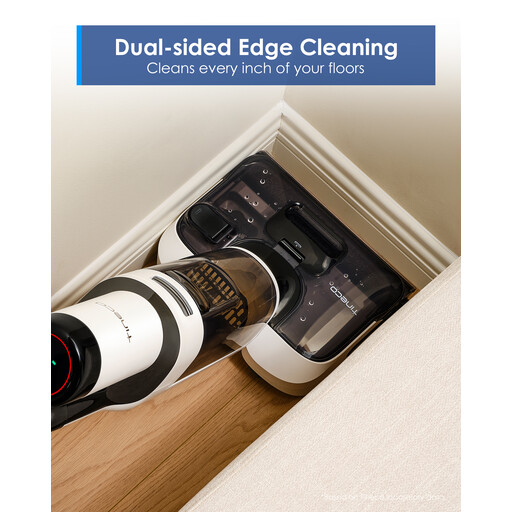 Image unavailable
Tineco Floor One Stretch S6
Worth considering for wet touch-ups under furniture, as long as it’s compatible with your flooring. The product listing claims it can lie flat at 180°, has a height of 13 cm, offers up to 40 minutes of run time and features FlashDry self-cleaning at 70 °C. Check what manual steps are needed after the cycle.
View on Joybuy
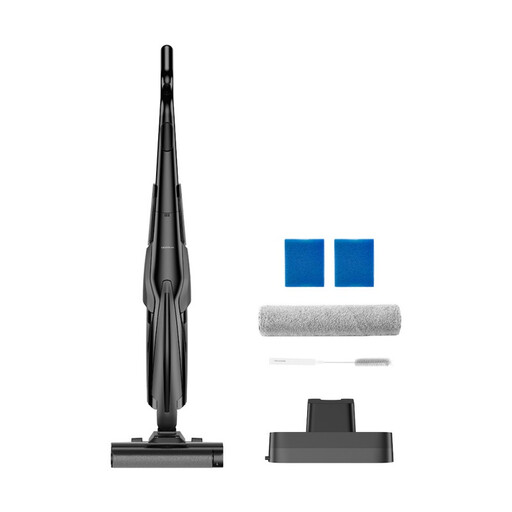 Image unavailable
Deerma VX100 Ultra S
Worth considering if you’d like a head that can lie flat for touch-ups. The product listing claims a 180° recline, up to 50 minutes of run time, and roller washing at 70 °C followed by drying at 100 °C. Check the manual to confirm which floors are suitable and what maintenance is still required.
View on Joybuy
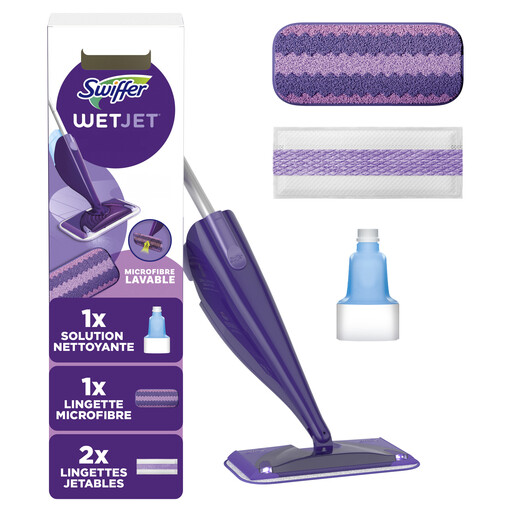 Image unavailable
Swiffer WetJet SK Mops + Washable Refill
Worth considering for wet touch-ups without a powered floor washer. Pick up dry debris first if needed. The product name mentions a washable refill; check the recommendations for your flooring and which cleaning solution is approved.
View on Joybuy
Frequently asked questions
Can you use any floor washer on parquet flooring?
No. Check both the finish of your parquet and the manual for the exact model. UFC-Que Choisir warns against using these appliances on wooden parquet, while Kärcher says some parquet floors are compatible with its FC 7. This guidance doesn’t apply to every parquet floor or other models.
Does self-cleaning mean you don’t have to empty the tanks?
Not necessarily. On models with this feature, self-cleaning may take care of some of the rinsing, but it won’t remove every task required after use. Check the manual for instructions on emptying the tanks, maintaining the rollers and filters, and whether the model has automatic drying.
Is a floor washer enough to remove set-in stains?
Don’t expect it to remove every stubborn stain. In its March 2026 test, UFC-Que Choisir found limited results on these stains and likened its use to damp dusting. Be prepared to treat stubborn marks separately.
Which parts should you be able to replace?
Check which rollers, filters and cleaning products are approved for your chosen model, then find out whether they’re available and how often they should be replaced. UFC-Que Choisir notes that these consumables are generally specific to each brand.


