
Livraison le jour même ou le lendemain

Qualité garantie

Débloquez vos offres de bienvenue: Livraison GRATUITE | Jusqu'à -80 % | 30 jours d'essai gratuits à JoyPlus
Téléchargez l'application
Whether you're a professional tradesperson or a passionate DIYer, you know that a good tool bag isn't a luxury—it's a necessity. The problem? The market is flooded with models that promise the world but give out after just a few weeks of use. A torn base, failing seams, chaotic internal organisation... and your investment turns into a constant source of frustration.
Before you decide, watch out for these two common traps:
This guide will walk you through the essential criteria for finding a hard-bottom tool bag that will be a true work partner—both durable and functional.
To avoid unpleasant surprises, focus on the technical details that truly make a difference in daily use. Here are the three non-negotiable points to scrutinise.
The number one criterion is, without a doubt, the bag's base. A true hard-bottom tool bag must have a molded shell, most often made of hard plastic (like polypropylene).
A good professional tool bag is one where you can find what you're looking for in under three seconds. To achieve this, the layout of the storage compartments is key.
A large capacity is tempting, but a bag that's too heavy quickly becomes a chore to carry. The volume should, above all, match your actual needs.
Rather than a simple product list, here are concrete solutions for different user profiles, selected based on their durability and smart design.
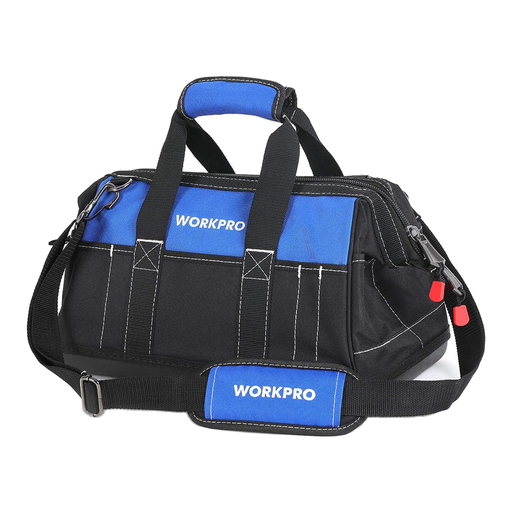
Why we recommend it: This model is the perfect ally for pros juggling multiple job sites. Its 40 cm size offers an excellent balance between capacity and portability, and its design is built for intensive daily use.
It features a genuine molded rigid and waterproof base. Unlike simple fabric 'reinforced' bottoms, it truly protects tools from moisture and impacts.
Its 600D polyester fabric, renowned for its durability; its wide opening, reinforced with a metal frame, provides perfect access and visibility.
Why we recommend it: For the DIYer who is serious about their equipment, this bag delivers pro-level organisation. It's ideal for keeping essential tools at hand and moving them easily from one end of the house to the other.
It puts an end to the chaos of toolboxes where everything jumbles together. Its multi-pocket structure (13 external, 8 internal) means no more wasting time searching for a screwdriver or pliers.
Versatile organisation with 21 total pockets and 8 internal straps; adjustable shoulder strap and padded handle for comfortable transport.
Why we recommend it: Electricians, plumbers, and other technicians need specific storage for their pliers, precision screwdrivers, measurement devices, and consumables. This bag offers the exact modularity required to organise all this equipment safely and accessibly.
It avoids the 'all-in-a-pile' trap where fragile tools get damaged. The internal pockets and straps allow you to dedicate a spot for each tool, thereby protecting sensitive equipment.
High load capacity (supports up to 15 kg, according to the manufacturer); the rigid base ensures excellent stability when the bag is open on the ground.
Explore our complete selection of products that meet our quality criteria and industry standards.
Regular maintenance is the key to making it last. Empty it completely and shake it out to remove dust and debris. A damp cloth is all you need for the rigid base. For the fabric, use a soft brush with a little soapy water on any stains, then let it air dry. Most importantly, never put it in the washing machine!
A so-called 'reinforced' bottom often consists of just a few extra layers of fabric or a piece of cardboard sewn inside. Its protection is therefore limited. In contrast, a hard bottom is a true external shell made of molded plastic, integrated with the bag. It offers unparalleled protection against water, punctures, and impacts.
It all depends on your trade. For a maintenance technician, an electrician, or for quick service calls, a 40 cm tool bag is perfect for carrying the essentials. For trades that require bulkier tools (a carpenter, for example), it makes an excellent secondary bag for a specific job kit.