
Livraison le jour même ou le lendemain

Qualité garantie

Débloquez vos offres de bienvenue: Livraison GRATUITE | Jusqu'à -80 % | 30 jours d'essai gratuits à JoyPlus
Téléchargez l'application
Buying a food vacuum sealer can make batch cooking much easier, reduce freezer burn and help you organise portions more effectively. The key is to choose a model that does more than seal dry foods, handles liquids properly and works with bags that are easy to find.
Before comparing models, it’s worth knowing the most common pitfalls and which features really matter for everyday use in a UK kitchen.
A high wattage doesn’t guarantee effective suction. The sealing strip’s width, the quality of the seal and the ability to adjust the suction level are just as important. If you’re sealing bread, delicate fruit or foods that squash easily, a manual mode or gentle suction can make all the difference.
A machine can remove the air very effectively without creating a reliable seal. A vacuum sealer needs to produce a sufficiently wide, even seal to prevent leaks. Also check for a ‘seal only’ mode, which is useful for making bags from a roll or resealing opened packaging.
Marinades, fish, juicy meat and prepared vegetables can allow liquid to reach the pump. Without a wet mode, drip tray or easy-clean design, the machine can quickly become a hassle to use. Remember, too, that vacuum sealing doesn’t replace the cold chain: perishable foods must still be kept in the fridge or freezer, following the usual food-storage guidance.
For a versatile option, choose a vacuum sealer for dry and wet foods. Dry mode is suitable for cereals, biscuits, nuts and hard cheeses. Wet mode is designed for foods with more liquid. Manual settings let you monitor the suction so you don’t crush delicate foods.
An automatic programme can make sealing part of your routine, but you still need to position the bag correctly. Leave enough room at the open end to create a neat, reliable seal.
A width of around 20 to 28 cm is enough for most family-sized portions. A 30 cm sealing bar gives you more flexibility for larger cuts of food. If you use rolls, check that they’re compatible with the machine and whether it has a built-in bag cutter.
For sous-vide cooking, choose bags designed for food contact and suitable for the temperature specified by the manufacturer. The KitchenCook CUISIOSEAL_BAG roll, for example, measures 22 cm by 5 m, has a microchannel structure and can be used for sous-vide cooking at up to 100 °C. However, it must not be used in the oven, placed over a flame or put on a hotplate.
A removable drip tray makes it easier to collect liquids. The instructions should also explain the precautions to take around the heating strip, pump and power cable. For hygiene reasons, bags that have held meat, raw fish or fatty foods should not be reused, even if they’re described as reusable.
Silicone bags with a pump can complement a kitchen vacuum sealing system. The set on offer includes two containers with capacities of 1 and 2 litres, stated to be suitable for the fridge, freezer and microwave reheating. Always check the instructions before heating a sealed bag.
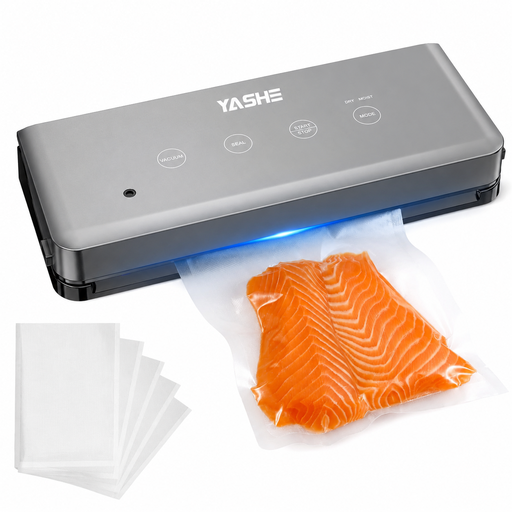
Why it suits this type of user : Measuring 39.5 × 11 × 20 cm, it’s easy to fit into a kitchen where every centimetre counts. Manual and seal-only functions, along with dry and wet modes, make it easier to get to grips with the machine at your own pace.
Choosing between dry and wet modes helps prevent mistakes with juicy foods, while manual mode helps protect delicate ingredients.
Stated suction power of 60 kPa, tool-free removable lid and five 20 × 30 cm bags included.
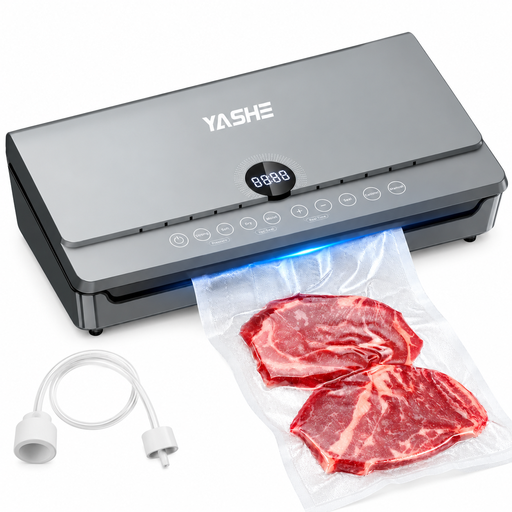
Why it suits this type of user : It’s designed for households that regularly prepare portions, marinades or meals for the freezer and want several functions in one place.
Dry, wet and container settings, plus strong or gentle suction, mean you don’t have to rely on a single programme.
Motor rated at 130 W, stated suction power of 80 kPa, roll storage, bag cutter and removable drip tray.
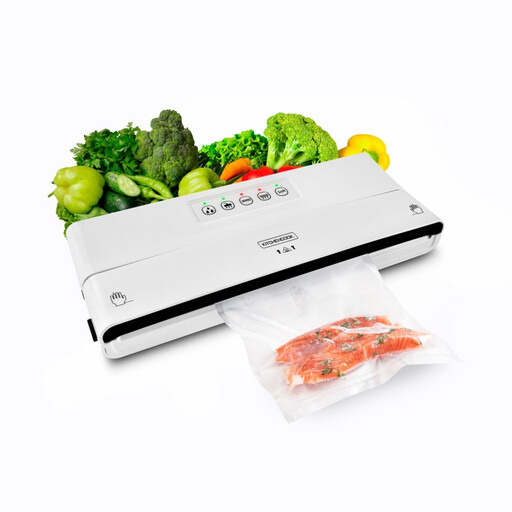
Why it suits this type of user : Its 300 mm sealing bar and built-in roll cutter make it a good fit for families and anyone who often seals large portions.
Dry, wet and seal-only modes cover different types of preparation, while the drip tray helps contain splashes.
Stated power of 120 W, 300 mm sealing width and an external port for certain containers.
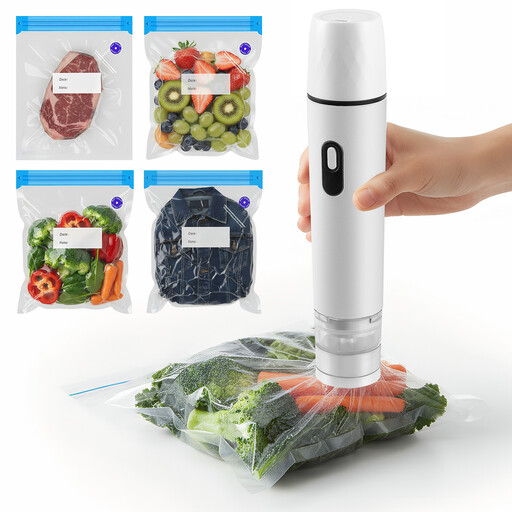
Why it suits this type of user : With a stated weight of 290 g and a rechargeable USB-C battery, it slips easily into your luggage for camping, boating, picnics or use in a small kitchen.
Its portable design means you don’t have to carry a countertop appliance, and valve bags are included.
Stated suction power of up to 60 kPa, USB-C cable and 20 reusable bags in various sizes.
We’ve put together a comprehensive selection, updated in real time, of products that meet these demanding criteria as well as European safety standards.
It reduces the amount of air in the packaging, which can help limit oxidation and freezer burn. However, storage life varies depending on the food, how fresh it is, the storage temperature and hygiene conditions. Vacuum sealing doesn’t make perishable food safe to store at room temperature.
No. External suction machines generally use embossed or microchannel bags, which let air escape during vacuuming. Before buying, check which sizes the machine accepts, whether the bags are suitable for sous-vide cooking and what the manufacturer says about food contact.
Most of the cost comes from bags and rolls, rather than electricity, as the machine is generally used intermittently. A roll lets you cut bags to suit each portion and reduce waste. To keep costs under control, choose a machine that works with standard sizes and save reusable bags for dry or already-cooked foods, following the hygiene guidance.