
Livraison le jour même ou le lendemain

Qualité garantie

Débloquez vos offres de bienvenue: Livraison GRATUITE | Jusqu'à -80 % | 30 jours d'essai gratuits à JoyPlus
Téléchargez l'application
Regaining a sense of freedom while continuing to provide the best for your baby: that's the promise of the hands-free breast pump. For new mothers returning to work, or simply for those who want to make time for themselves and their projects, this innovation is a game-changer. However, in a market saturated with models making tempting promises, it's easy to make a mistake and a purchase you'll quickly regret. As the Head of Product Recommendations at Joybuy, my mission is to guide you beyond the marketing hype to help you make a truly informed decision.
Before you commit, watch out for the 3 most common pitfalls that can turn a promising investment into a device that ends up in the back of a closet:
To avoid these disappointments, focus on objective criteria. Here are the 3 technical points you absolutely must check before you head to checkout.
An effective portable electric breast pump does more than just suction. It should mimic a baby's nursing rhythm, which occurs in two phases:
Ensure the model you're considering offers both of these modes, with multiple intensity levels for each. This customisation is the key to comfortable and efficient pumping, tailored to your sensitivity and flow.
The flange is the funnel-shaped part that fits over the breast. An improper size is the number one cause of discomfort and low milk output. If it's too small, it can pinch the nipple; if it's too large, it can compress the areola and block milk ducts.
A good manufacturer should offer several flange sizes (typically from 17?mm to over 27?mm), either included in the package or available for purchase separately. Don't hesitate to measure your nipple diameter before buying to choose the most accurate size. Models with soft silicone rims often provide better comfort and a more secure seal.
A wearable breast pump should free you from constraints, not create new ones. Check these three aspects:
Every mother has different needs. To help you find the model that will perfectly fit your daily life, here are our targeted recommendations.
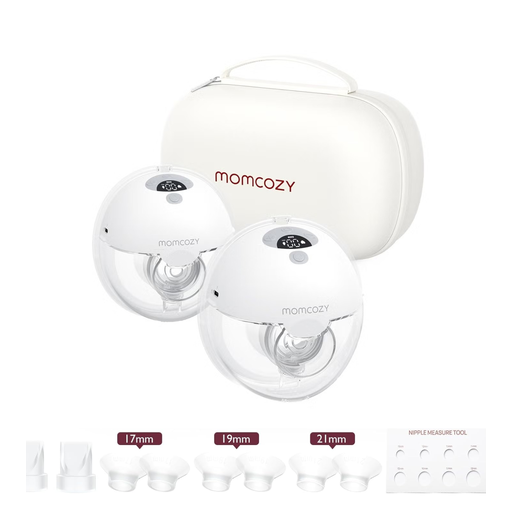
Why we chose it : The double electric breast pump format is a huge time-saver, a major asset for optimising breaks at the office. Its wearable design allows you to use it discreetly at your desk or in a dedicated room.
It sidesteps the raw power trap with its baby-suckling imitation technology and 3 modes (stimulation, expression, mixed) with 9 levels, prioritising comfort and efficiency over brute force.
The pack includes 4 flange sizes (17/19/21/24 mm), which eliminates the risk of a poor fit and ensures optimal comfort from the very first use.
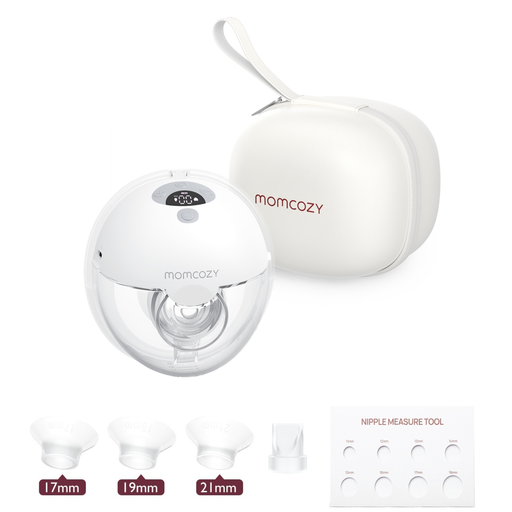
Why we chose it : For a first introduction to hands-free pumping or as a gift for a new mom, a single pack is a smart option. It allows you to get familiar with the technology without a heavy initial investment.
It avoids the complexity trap with a limited number of parts and intuitive assembly. Cleaning is simplified, a critical feature for a new mother with no time to waste.
Its feather-light weight (around 225 g) and compact design make it an excellent discreet breast pump for use at home or during occasional outings, without feeling weighed down.
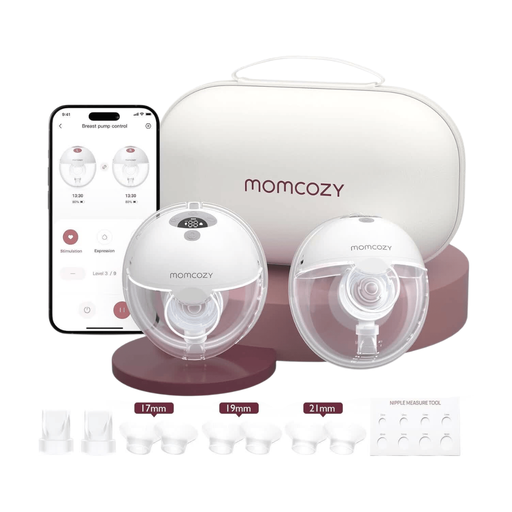
Why we chose it : For those who love precision and data tracking, this connected model offers complete control from a smartphone app. It allows you to customise, save your favourite settings, and track the duration and volume of each session.
The app control offers a level of fine-tuning far superior to physical buttons, allowing for ultra-precise suction adjustments for customised comfort, a world away from standard settings that can sometimes be painful.
Connectivity and data tracking. The mobile app lets you control both pumps simultaneously and keep a history, which is ideal for monitoring your milk production over time.
We've compiled a complete, up-to-date list of products that meet our strict selection criteria and current safety standards.
The choice mainly depends on your need for speed and your budget.
Safety and hygiene are paramount. Always separate the parts that come into contact with milk (flange, valve, collector) from the motor block. The motor should never be submerged in water; a simple wipe with a damp cloth is sufficient. The other parts should be washed in hot, soapy water after each use, then rinsed and air-dried on a clean cloth. Most silicone and plastic (BPA-free) parts can be sterilised with steam or in boiling water, but always consult the manufacturer's instructions.
The motor's lifespan is typically measured in hundreds of hours, which corresponds to several years of normal use. However, the silicone parts (valves, diaphragms, flanges) are consumables. They lose their elasticity over time, which can reduce suction power. It is recommended to replace them every 2 to 3 months, or as soon as you notice a drop in performance, to maintain impeccable efficiency and hygiene.