
Livraison le jour même ou le lendemain

Qualité garantie

Débloquez vos offres de bienvenue: Livraison GRATUITE | Jusqu'à -80 % | 30 jours d'essai gratuits à JoyPlus
Téléchargez l'application
A handheld steam cleaner can be useful in the kitchen, bathroom, on windows or inside the car. However, you need to know how to read between the lines of technical specifications, which sometimes highlight pressure or the number of accessories without explaining what these figures really mean in everyday use.
Before buying, focus on three things: the runtime provided by the water tank, the heat-up time and whether the accessories are suitable for the surfaces you plan to clean. This approach helps you avoid ending up with a bulky, limited or awkward appliance after just a few uses.
Measured in bars, pressure indicates the force at which steam is released. High pressure can help lift ingrained dirt, particularly from grout or around hobs. However, it does not guarantee good results on every surface.
Steam flow, measured in grams per minute, as well as the nozzle shape and working distance, also play a part. A high-pressure steam cleaner should be used with care on sensitive materials, fragile grout, untreated wood or certain types of paint.
An accessory steam cleaner may come with a window squeegee, precision nozzle, brush or flat head. However, a large number of attachments does not necessarily mean the appliance is more versatile. Above all, check that they match your needs and are easy to fit.
For household use, a concentrated nozzle for awkward corners, a brush for grout and a squeegee for windows will often be more useful than a case full of accessories that end up at the back of a cupboard.
A small tank generally helps keep the appliance compact and easy to handle, while reducing heat-up time, but it means more frequent refills. A larger capacity provides greater runtime, at the cost of an appliance that may be heavier. Cable length also affects comfort, especially in the bathroom or around a car.
A compact steam cleaner is sufficient for occasional tasks. If you are cleaning several rooms in succession, choose a tank capacity and cable length suited to the layout of your home.
When comparing two models, consider these three figures together:
For example, the H.Koenig NV60 states 4 bars, a flow rate of 30 g/min and a heat-up time of 3 minutes. The BISSELL SteamShot B2635J offers 4.5 bars, 1 050 W of power and a heat-up time of 60 seconds. These figures provide a practical basis for comparing appliances, although they do not guarantee the same results on every type of dirt.
A 250 ml tank helps keep the appliance lightweight and easy to handle for small tasks. With 0.36 l, you have a little more capacity for everyday cleaning in the kitchen and bathroom. However, operating time also depends on the steam flow rate and how often you press the control.
For a flat or targeted cleaning jobs, a small tank may be perfectly suitable. If you need to clean grout, windows or several areas one after another, a larger capacity will reduce interruptions.
Steam reaches a high temperature. Make sure the appliance has a child lock, a steam indicator or, failing that, sufficiently clear operating instructions. Before using it for the first time, always test the appliance on an inconspicuous area and check the manufacturer's recommendations.
Never point the jet at skin, an animal, a power socket or a live appliance. Unplug the cleaner before carrying out maintenance and only use the water recommended in the instructions. Steam can reduce the need for household cleaning products, but it is not suitable for every surface.
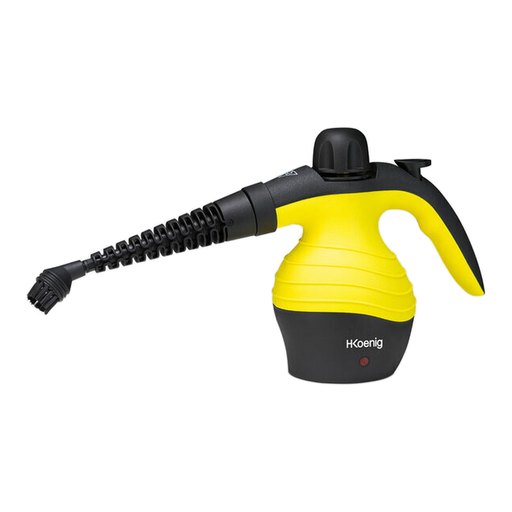
Why this choice suits this profile : Its portable design and 250 ml tank are ideal for small jobs in the kitchen, bathroom or around windows.
The specifications state the 3-minute heat-up time, 30 g/min flow rate and tank capacity. You can therefore assess the appliance based on more than just its pressure rating.
4 bars, 1 000 W, child lock, 2 m cable and accessories for grout and windows.
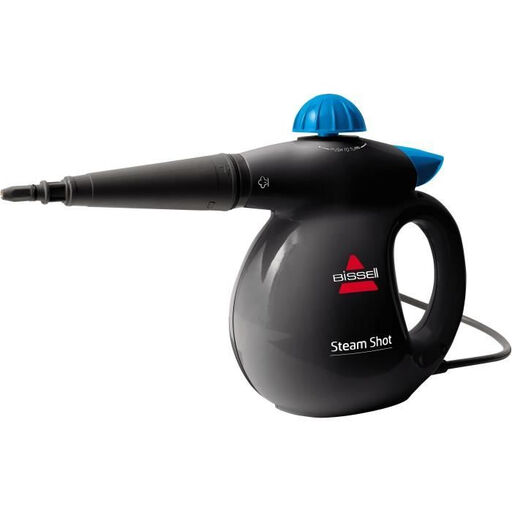
Why this choice suits this profile : Its stated 60-second start-up time and 4.8 m cable make longer cleaning sessions across different rooms easier.
The cable length and 0.36 l tank help offset the limitations generally associated with compact models during extended use.
4.5 bars, 1 050 W, steam indicator, 0.8 m hose and several attachments for flat surfaces, corners and windows.
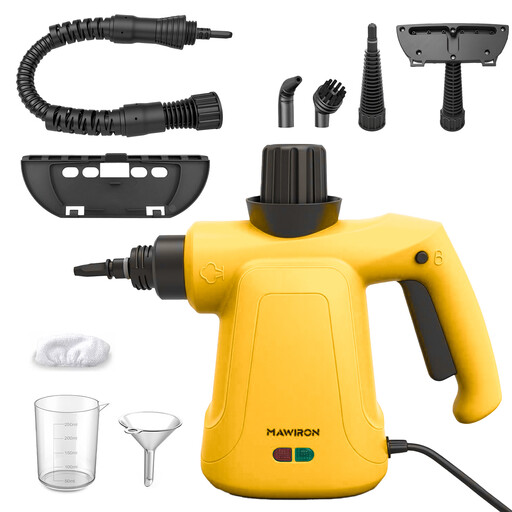
Why this choice suits this profile : Its stated 400 ml tank and 9 accessories are aimed at people who regularly move between upholstery, the car, household surfaces and hard-to-reach corners.
The tank capacity and number of attachments are clearly stated in the product title. This lets you check the advertised versatility rather than relying on a general promise.
Stated power of 1 000 W, 400 ml tank and a set of 9 accessories. Check the product details for the full list of attachments.
We have selected a comprehensive, real-time updated range of products that meet these demanding criteria as well as European safety standards.
To use your appliance regularly while limiting wear and tear, a few simple habits are all you need:
Steam is particularly suitable for heat-resistant hard surfaces, grout and certain compatible textiles. For delicate materials, preliminary testing is still essential.
Yes, provided the manufacturer supplies a suitable squeegee or nozzle and the surface can withstand heat. On grout, apply steam in short bursts to avoid saturating the material. For cold glass, move slowly to reduce the risk of thermal shock.
It all depends on the tank capacity and steam flow rate. A 250 ml model is suitable for targeted tasks, while a 0.36 to 0.4 l tank gives you more scope to clean several areas. Never exceed the maximum level and use the water recommended in the instructions.
Its lifespan depends on how often it is used, the quality of maintenance and whether safety instructions are followed. If recommended in the manual, empty the tank after each use, clean the accessories and regularly check the condition of the cable. With proper care, the appliance will remain more reliable and pleasant to use over time.