
Livraison le jour même ou le lendemain

Qualité garantie

Débloquez vos offres de bienvenue: Livraison GRATUITE | Jusqu'à -80 % | 30 jours d'essai gratuits à JoyPlus
Téléchargez l'application
With summers getting hotter, a handheld fan is no longer a gadget but an essential everyday companion—whether you're on crowded public transport, at the office, or at an outdoor festival. The problem? The market is flooded with models and marketing promises that rarely deliver. To help you cut through the noise, here are the common pitfalls to avoid and the real technical specs to look for before you buy.
Too many users end up with a device that's headed for the trash after just a few weeks. These are the classic mistakes that lead to quick buyer's remorse.
To find a reliable and powerful handheld fan, ignore the marketing hype and focus on a few key technical specs.
The true endurance of a long-lasting battery fan is directly tied to its battery capacity, measured in milliampere-hours (mAh). To last a full day, don't settle for anything less than 4000 mAh. Charging speed is just as crucial. A USB-C port is now the standard, ensuring faster charging and universal compatibility—a must-have for any travel fan.
True power isn't measured in decibels, but in airflow speed. Reputable manufacturers will list the motor's rotation speed in RPM (revolutions per minute) or the airflow in m/s (meters per second). A good model often exceeds 5000 RPM. The blade design is also critical: "turbine-style" models create a concentrated, focused channel of air that is far more powerful and precise.
A good USB pocket fan should be lightweight and compact. Foldable models are especially convenient for transport. An increasingly common and incredibly practical feature is the fan with an LED display, which lets you see the remaining battery percentage and selected speed at a glance. No more unpleasant surprises when the battery dies!
We've scrutinized several models to bring you a selection tailored to different needs, based solely on their technical specifications and design.
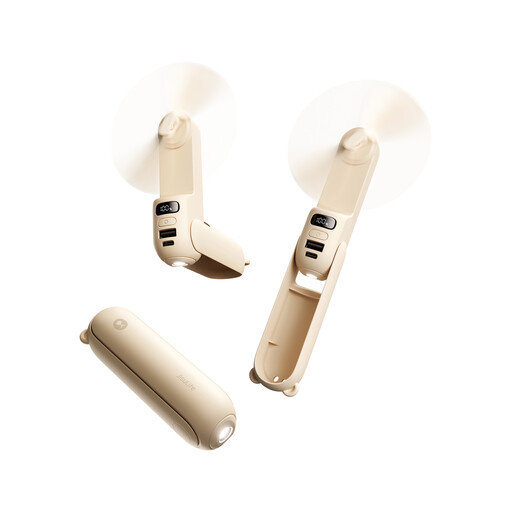
Why it stands out: Ideal for daily commutes, its foldable design and feather-light weight (around 130g) let it slip into any bag. Its 3-in-1 versatility (fan, power bank, flashlight) makes it a handy tool for the unexpected.
It beats the phantom battery life trap thanks to its LED display, which shows the exact battery percentage. This lets you manage its runtime (up to 24h advertised on low speed) without being caught off guard.
3-in-1 versatility and an ultra-compact foldable design.
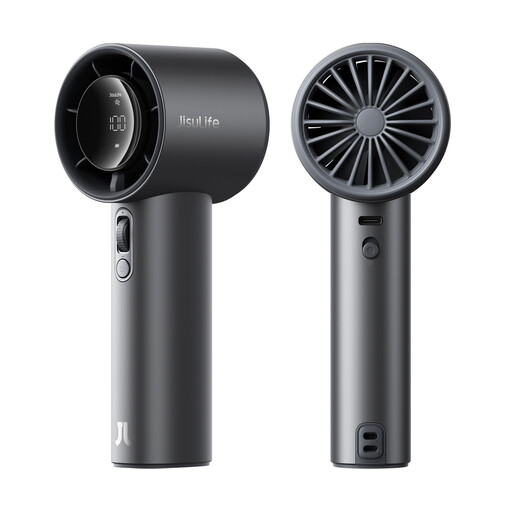
Why it stands out: For those who refuse to compromise on cooling power. Its turbine technology and high-powered motor are designed to tackle intense heat, concerts, or outdoor sporting events.
It shatters the "placebo" effect with numbers that speak for themselves: a motor that revs up to 9700 RPM and a dial offering 100 speed levels. The power is not only raw but also precisely adjustable.
Turbine-style power, 100 speeds, and a full charge in 2 hours.
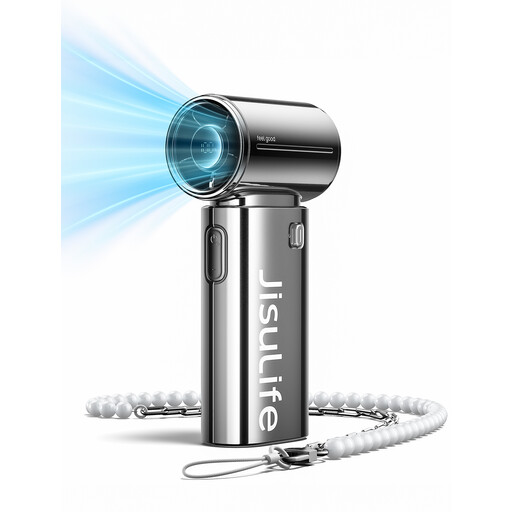
Why it stands out: Designed for long days far from a power outlet. Its high-capacity battery and ultra-compact design with a safety lock make it the ideal travel companion for hiking, camping, or long trips.
It tackles the battery life trap head-on with its 5000 mAh battery, promising up to 22 hours of cooling (manufacturer's claim). The LED screen lets you keep a close eye on consumption.
Extra-long battery life and an ultra-compact design with a safety lock.
We've curated a complete selection of products that meet our performance criteria and current safety standards.
The lifespan primarily depends on the quality of its lithium-ion battery and how it's maintained. On average, a good quality battery can handle several hundred full charge cycles. To preserve it, it's best to avoid frequent deep discharges and not expose it to extreme temperatures.
Absolutely. Don't underestimate the power of a well-designed pocket fan. It's all in the specs: a high-speed motor (over 5000 RPM) and optimized blades (turbine-style) can generate an impressively strong airflow for such a small device. A powerful handheld fan isn't a myth—it's a technical reality.
Simple but regular maintenance is key. Dust the blades and grilles with a dry cloth or a small brush to ensure optimal airflow. If you're not using it for a long period (like over the winter), charge the battery to about 50% before storing it in a cool, dry place. This is the best way to preserve its lifespan.